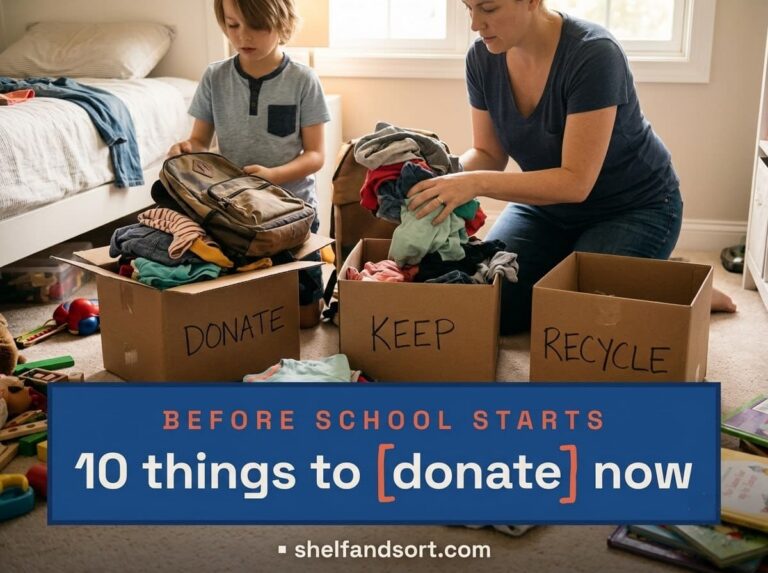
9 Household Items Thrift Stores Actually Reject, and Why
Not everything in your donate pile is a donation. Thrift stores turn away a long list of common household items, sometimes for safety law, sometimes because reselling them costs more than they’re worth. This guide covers the 9 items most likely to get rejected, the reason behind each one, and the recycler, take-back program, or disposal route that will actually take it.
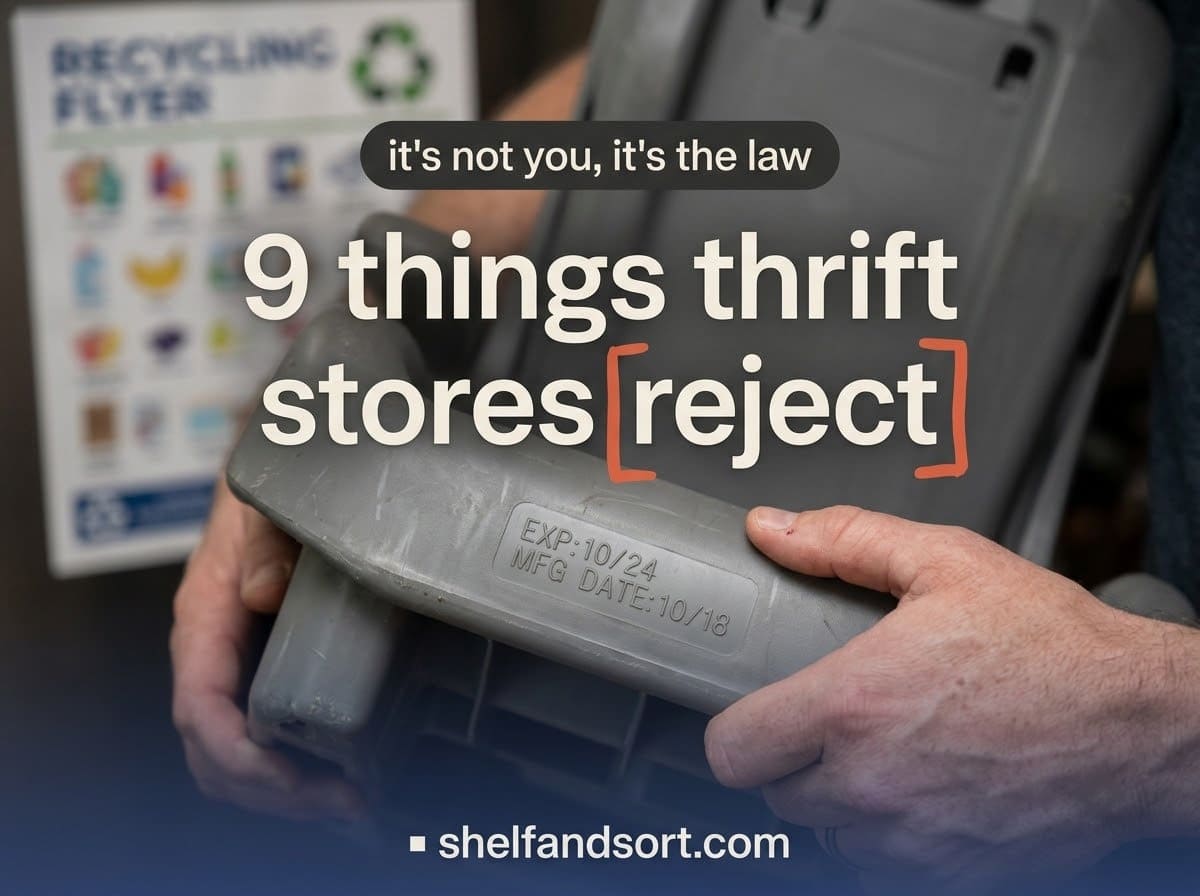
Thrift stores reject mattresses, cribs, car seats, tube TVs, stained upholstered furniture, recalled or broken small appliances, used helmets, opened cosmetics, and hazardous materials like paint and propane. The reasons fall into three buckets: safety and recall liability they can’t verify, hygiene rules they can’t meet, and resale value too low to cover their handling and recycling costs.
Reselling a recalled product is a violation of federal law, so anything a store can’t check against a recall list gets refused on sight. Before you load the car, call your local store and ask, or check its online accepted-items list. For the rejected items, the real routes are manufacturer take-back programs, municipal bulky-waste pickup, textile and mattress recyclers, and household hazardous waste drop-off days.
Why thrift stores say no more often than you’d think
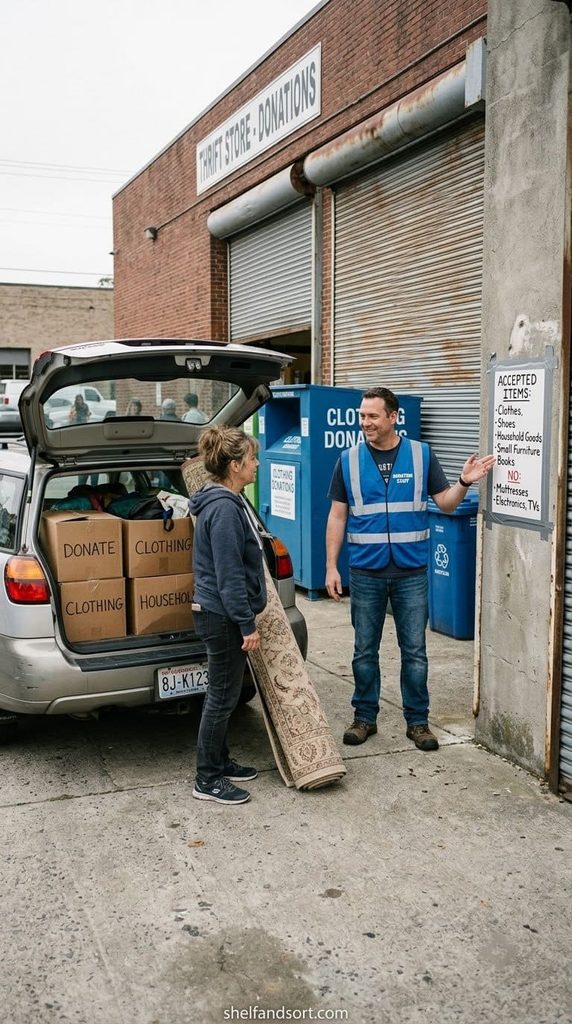
A donation center is a retail store first. Every item that comes in has to be sorted, cleaned, priced, shelved, and sold inside a few weeks, or it becomes a cost. Anything that can’t clear that bar gets pulled and sent to a landfill or a recycler, and the store pays for that.
Goodwill is direct about this. Its donation guidelines list what stores can and can’t take, and the “can’t” list is long. Staff have to protect workers, avoid recalled products, manage pests and odors, and use limited floor space wisely.
Then there’s the law. The U.S. Consumer Product Safety Commission is blunt in its Resellers Guide: reselling a recalled product breaks federal law. A store can’t check every crib and space heater against the national recall database in the ten seconds it has at the donation door, so it refuses the whole category.
And honestly, most of what gets left at the door isn’t a close call. From what I’ve seen at drop-off, it’s broken small appliances, a stained mattress, and a bin of cables, over and over.
3 questions to ask before it goes in the donate box
Run these before you drive anywhere. They sort the real donations from the stuff you need a different plan for.
Question 1: Could this item hurt someone if it failed, and can a stranger verify it’s safe? Car seats, cribs, helmets, and space heaters all fail this. There’s no way for a store to confirm the history, so they won’t take the risk.
Question 2: Would a shopper buy this used, at a price that covers the store’s time? A tube TV, a 20-year-old treadmill, and a set of encyclopedias all fail here. No buyer means no donation.
Question 3: Is it genuinely clean, complete, and odor-free right now? Not “after a wash,” right now. A stained couch or a half-used bottle of lotion fails, and the store eats the disposal fee.
If an item fails any one of these, it’s not a donation. Skip to the “where it actually goes” note under each item below.
1. Mattresses, box springs, and bed pillows
Almost no thrift store takes a used mattress. Some states ban the resale of used bedding outright, and even where it’s legal, a mattress can carry bedbugs, mold, and stains that no cleaning removes.
Bed pillows get refused for the same reason. They absorb sweat and skin over years, and a store can’t sanitize them to a sellable standard.
The exception: a few stores accept a mattress that’s still in its factory plastic, unopened. That’s rare, so call first.
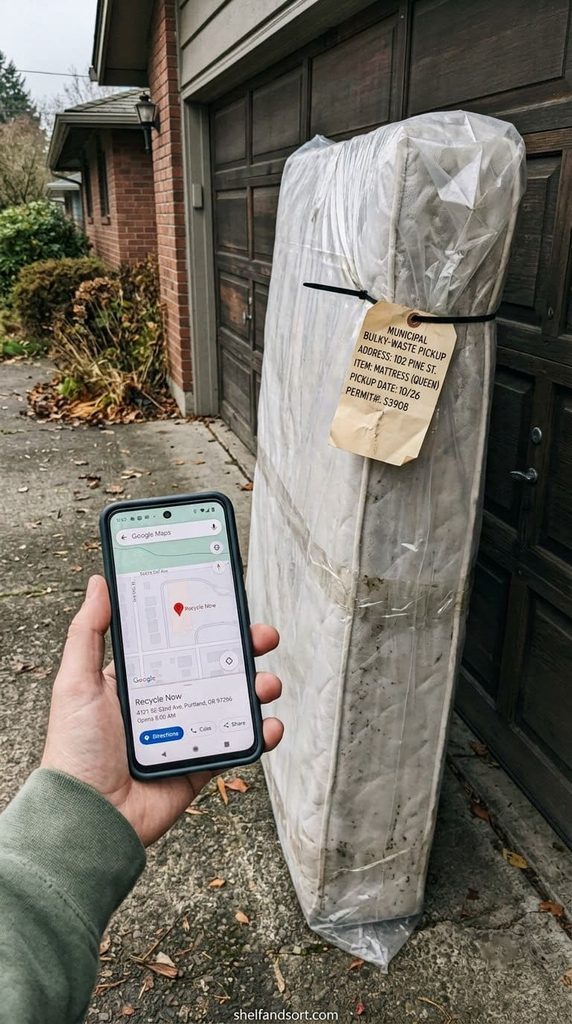
Where it actually goes: many metro areas have a mattress recycler that strips the steel, foam, and fiber for reuse. The Mattress Recycling Council runs drop-off sites in California, Connecticut, Oregon, and other states through its Bye Bye Mattress program, often for a small fee or free. Otherwise, most cities pick up a mattress through bulky-waste collection if you schedule it and wrap it in a disposal bag.

This covers the "wrap it in a disposal bag" step in item 1. Most cities require a mattress to be sealed before bulky-waste pickup, and a recycler wants it dry and intact.
Shop NowThis post contains affiliate links. We may earn a commission on qualifying purchases at no extra cost to you.
Common mistake: leaving a mattress leaned against the donation bin after hours. It gets rained on, the store pays to haul a now-ruined item, and some places have started billing repeat offenders or installing cameras.
If you’re short on time: book the city bulky-waste pickup online first, since those slots fill up a week or two out in spring and after the holidays.
2. Cribs, bassinets, and play yards
Nursery furniture has been recalled more than almost any other product category, in the millions of units. Drop-side cribs were banned from sale nationwide in 2011 after they were linked to infant deaths, and a store has no fast way to tell a banned crib from a compliant one.
The CPSC tells resellers not to sell any nursery item that’s broken, wobbly, or missing parts, even if it was never formally recalled. Most stores just decline all of it.
The exception: almost none. A newer crib with the manual, all hardware, and a verifiable model number might be accepted by a specialty children’s resale shop, not a general thrift store.
Where it actually goes: check the manufacturer’s site for a trade-in or take-back offer. If the crib is solid wood and post-2011, offer it directly to a specific family you know, with the model number so they can check it against SaferProducts.gov. A broken crib is disassembled and split into wood and metal recycling.
Common mistake: donating a crib “so someone who needs it can have it.” A family shopping secondhand for a crib is exactly the person a recalled unit hurts. Hand it off only with the model info attached.
Variant for renters or small spaces: if storage is the reason you’re rushing this, a mini crib or a pack-and-play that folds flat is the item worth keeping for a future guest, and the full-size crib is the one to move out.
3. Car seats, boosters, and other expiring baby gear
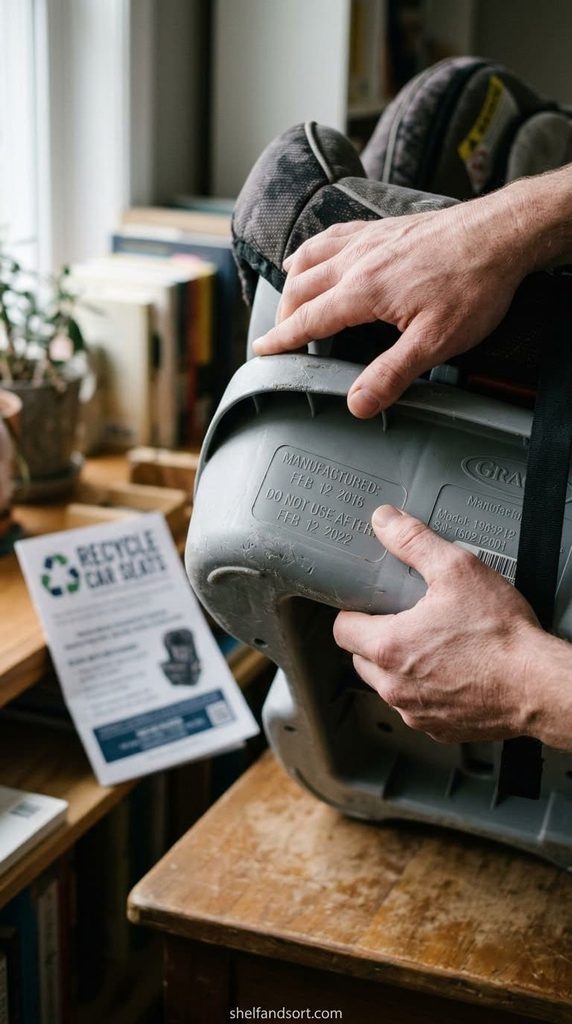
Car seats have an expiration date, usually six to ten years from the manufacture date molded into the plastic. The materials degrade, the standards change, and a seat that’s been in even one crash may have invisible damage.
A thrift store can’t verify a seat’s crash history or age quickly, and the liability if a resold seat fails in a wreck is enormous. So they don’t take them.
The exception: none for resale. This is one of the firmest no’s in the donation world.
Where it actually goes: Target runs a car seat trade-in event, usually in September, that takes any seat in any condition, expired or damaged included, and gives you a coupon toward new baby gear. Outside that window, recycleyourcarseat.org lists year-round recyclers, and some municipal programs accept them if you cut the straps off first to show it’s retired.
Common mistake: passing an expired seat to a friend “just for the grandparents’ car.” An expired seat is retired for every car, not a backup. The plastic is the problem, and it doesn’t care whose driveway it’s parked in.
If you’re short on time: cut the harness straps and the cover off now, drop the shell in the trade-in bin next September, and store the small pile in a closet until then.
4. Tube (CRT) TVs and big console electronics
A cathode-ray-tube TV weighs 50 to 100 pounds, contains several pounds of lead, and has essentially no resale value. No one is shopping the thrift store for one.
Stores refuse them because they can’t sell them and can’t cheaply recycle them. CRT glass disposal is one of the most expensive e-waste streams there is.
The exception: a working flat-screen from the last five to seven years is often accepted. The line is roughly “would this look current in a rental listing photo.”
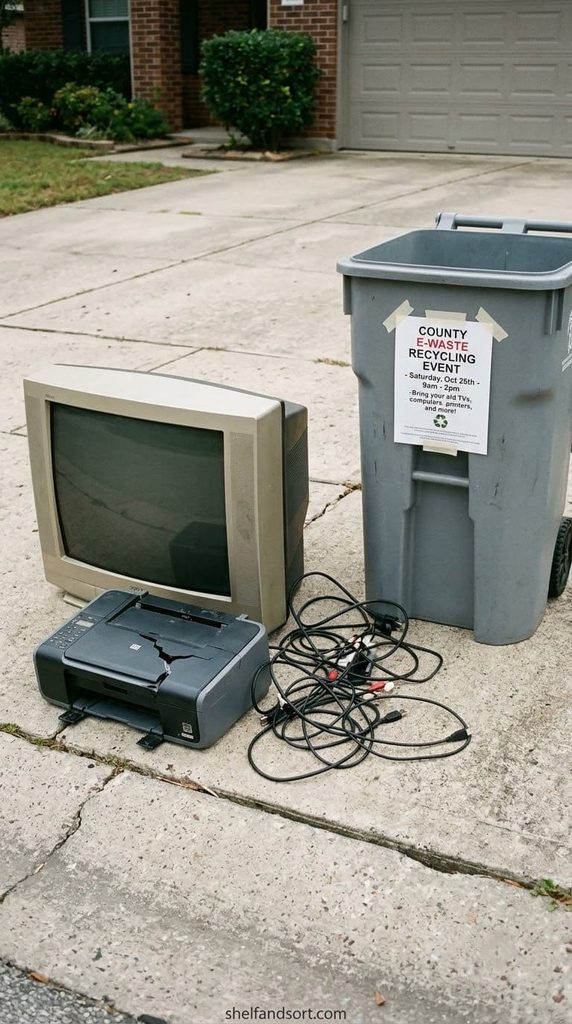
Where it actually goes: most counties run an e-waste recycling day, and many Best Buy stores take electronics year-round, though CRTs may carry a fee. Some manufacturers have mail-back programs for smaller devices.
Common mistake: stacking an old TV, a broken printer, and a bin of cables by the donation door. Staff have to pay to recycle all of it, and a pile like that can get a whole drop-off site closed to donations for the day.
Variant for a whole-house cleanout: rent a single e-waste haul or split a junk-removal load with a neighbor, since per-item recycling fees add up fast when you have five devices.
5. Upholstered furniture with stains, odors, or pet damage
A clean, structurally sound sofa is a great donation. A sofa with pet-urine odor, cat-scratched arms, water stains, or a sag in the frame is a rejection, and often an automatic one.
Fabric furniture can hide bedbugs, and a store has no way to treat a piece cheaply. Odor and stains also can’t be fixed on a retail timeline, and the piece takes up floor space the whole time it sits unsold.
The exception: minor wear on an otherwise solid, clean frame is usually fine, especially for mid-century or solid-wood-framed pieces that hold value.
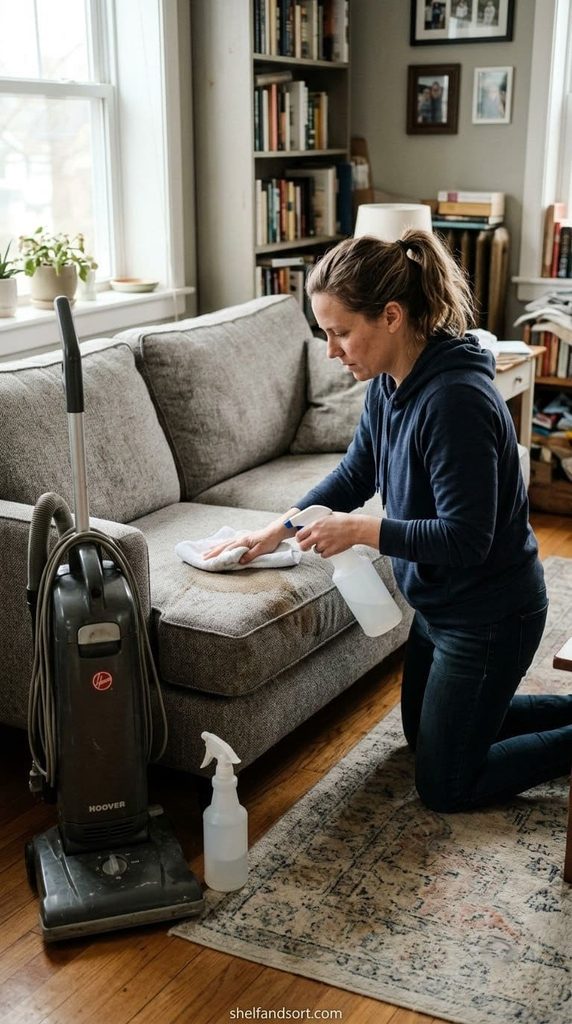
Where it actually goes: try an enzyme cleaner and a deep vacuum first, since a genuinely salvageable couch is worth saving. If it can’t be brought back, most cities take furniture through bulky-waste pickup, and some junk-removal companies sort still-usable pieces to smaller charities that do their own reupholstering.
Common mistake: renting a truck, hauling a heavy sleeper sofa across town, and having it refused at the dock. Text the store a photo first. Most will tell you yes or no before you lift anything.
Variant for homes with pets: if odor is the issue, the piece almost never clears a thrift store’s bar, so route it straight to bulky waste and skip the salvage attempt.
6. Recalled or damaged small appliances
The CPSC’s own thrift-store studies found that some of the most common hazards on secondhand shelves are hair dryers without immersion protection and space heaters that don’t meet current tip-over standards. Stores have gotten stricter as a result.
Anything with a frayed cord, a cracked housing, a missing safety guard, or a known recall gets pulled. A store can’t repair it and can’t take on the liability if it starts a fire.
The exception: a clean, working, current-model appliance with an intact cord is welcome. Test it at home and wipe it down first.
Where it actually goes: check the model against SaferProducts.gov for a recall, which often means a free repair kit or a refund from the manufacturer. A truly dead appliance goes in e-waste or scrap metal recycling, not the trash.
Common mistake: donating a space heater or a slow cooker that “works fine, just runs a little hot.” Running hot is the recall. That’s the exact failure mode that hurts the next person.
If you’re short on time: the two-minute version is a cord check and a plug test. Frayed cord or no power means it skips the donate box entirely.
7. Bike and sports helmets, and other one-crash safety gear
A helmet is built to survive one real impact. After that, the foam is compressed and the protection is gone, even if the shell looks perfect. Helmets also have a manufacture date and a roughly five-year lifespan for the foam and straps.
A thrift store can’t know a helmet’s crash history, so most won’t resell them. The same logic applies to climbing harnesses, life jackets past their rating, and hockey or football pads with cracked shells.
The exception: some stores take a helmet still in the original packaging with tags. Loose, used helmets are almost always refused.
Where it actually goes: a few manufacturers run helmet recycling or trade-in programs. Otherwise, cut the straps, separate the foam from the plastic shell where you can, and put it in the appropriate recycling stream. Undamaged life jackets in date can often go to a boating-safety loaner program.
Common mistake: donating your kid’s outgrown bike helmet without checking the date. A helmet that’s been in the garage for eight years is expired regardless of how gently it was used.
Variant for sports families: protective pads and cleats can go to a youth sports gear charity, but helmets specifically should not. Separate the helmet out of that donation bag.
8. Opened cosmetics, toiletries, and personal care items
Used makeup, opened lotion, half-empty shampoo, a hairbrush, a loofah. None of it can be resold. Cosmetics carry bacteria once opened, and there’s no way for a store to confirm what’s in a jar or how old it is.
Even sealed, name-brand toiletries are a gray area for many stores because of tampering concerns and short shelf space.
The exception: brand-new, sealed, unexpired products in the original packaging are sometimes accepted, and are always welcome at a domestic violence shelter or a food pantry with a hygiene section.
Where it actually goes: sealed and unused items go to a local shelter, pantry, or a “period pantry” or hygiene closet. Opened items go in the trash, and the empty containers get rinsed and recycled. TerraCycle runs free mail-in programs for beauty-product packaging specifically.
Common mistake: dropping a bag of half-used bathroom products in the donation bin because throwing them away feels wasteful. It creates work and gets tossed anyway. Donate the sealed items to a shelter and trash the rest.
If you’re short on time: two piles only. Sealed and unexpired goes in a shelter bag. Everything opened goes straight to the bathroom trash.
9. Hazardous materials: paint, chemicals, propane, and gas-powered tools
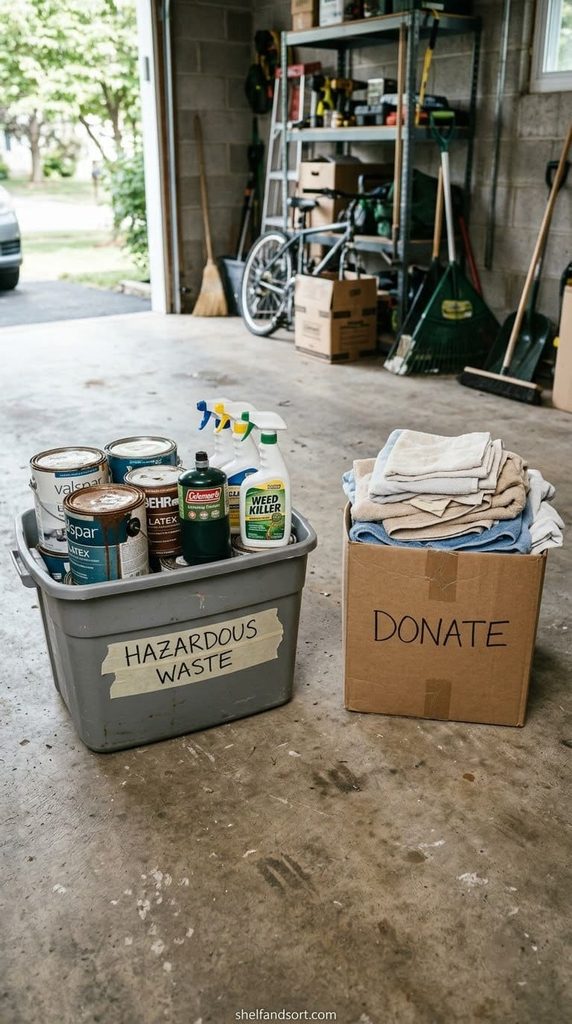
No thrift store takes paint, pesticides, pool chemicals, motor oil, propane tanks, fireworks, or anything with gasoline in the tank. These are worker-safety and fire hazards, and hauling them is regulated.
A half-full propane cylinder or a can of old stain isn’t a donation under any circumstance. Staff can’t legally store or transport it.
The exception: none. This category is a hard no everywhere.
Where it actually goes: almost every county runs a household hazardous waste drop-off, either a permanent site or a few collection days a year. Many hardware stores take back propane cylinders and rechargeable batteries. Latex paint can often be dried out with kitty litter and trashed, but oil-based paint always goes to hazardous waste.
Common mistake: hiding a can of paint thinner in the middle of a box of donated kitchenware. If it leaks, it can contaminate the entire donation load, and someone has to handle it without knowing it’s there.
Variant for a garage cleanout: group all the hazardous items into one clearly labeled bin the day you find them, keep it away from the donate pile entirely, and make one trip to the hazardous waste site.
Where each rejected item actually goes
Run the three questions first, then use this.
| Item | Main reason it’s rejected | Where to take it |
|---|---|---|
| Mattress, box spring, pillows | Hygiene, bedbugs, state law | Mattress recycler, city bulky-waste pickup |
| Crib, bassinet, play yard | Recall liability, changing standards | Manufacturer take-back, wood and metal recycling |
| Car seat, booster | Expiration date, crash history | Target trade-in, recycleyourcarseat.org |
| Tube (CRT) TV, old electronics | No resale value, costly to recycle | County e-waste day, Best Buy drop-off |
| Stained or smelly upholstery | Can’t clean on a retail timeline | Enzyme clean and retry, or bulky-waste pickup |
| Recalled or broken appliance | Fire and shock liability | SaferProducts.gov recall check, then e-waste or scrap |
| Used helmet, safety gear | One-crash rule, unknown history | Manufacturer recycling, cut straps and recycle |
| Opened cosmetics, toiletries | Bacteria, can’t verify contents | Shelter (sealed only), trash (opened) |
| Paint, chemicals, propane | Worker safety, fire, regulated hauling | County household hazardous waste day |
The system: call ahead and check the list
The single habit that saves a wasted trip is checking before you load the car.
Every Goodwill, Salvation Army, and Habitat ReStore region posts an accepted-items list online. Read it once for your local store and screenshot it. The lists vary by location, since a store with a loading dock takes furniture and one in a strip mall doesn’t.
For anything borderline, text or call the store with a photo. A 30-second question beats hauling a sleeper sofa across town for nothing.
Sort into three staging zones at home: donate, recycle or e-waste, and hazardous or special program. Keep the third zone physically separate so a propane tank or a can of paint never rides in the same box as the dishes.
The maintenance rule: check it before you buy it secondhand
The flip side of this list is what you bring home. Before you buy a used crib, car seat, helmet, or older appliance, check the model number against SaferProducts.gov on your phone, right there in the aisle.
It takes under a minute and it’s the same check the store couldn’t do at the donation door. For anything with a safety rating or an expiration date, buying new is often the right call even when secondhand is cheaper.
Keep a running note on your phone of what your local thrift store won’t take. After one or two trips you’ll know the list by heart, and your donate box will stop collecting stuff that was never going to make it onto a shelf.
Frequently asked questions
Why won’t Goodwill take my mattress or couch?
Mattresses and upholstered furniture can carry bedbugs, mold, and odors that can’t be removed on a retail timeline, and some states ban reselling used bedding. A stained or smelly couch also occupies floor space the entire time it sits unsold, then costs the store a disposal fee. A clean, structurally sound sofa is usually accepted. A mattress almost never is, unless it’s still sealed in factory plastic.
Is it illegal to donate a recalled product?
Reselling a recalled product is a violation of federal law, per the Consumer Product Safety Commission. Donating one isn’t charged the same way, but you’re handing a known hazard to whoever buys it next. Thrift stores refuse entire categories like cribs, car seats, and space heaters because they can’t verify recall status fast enough at the donation door. Check any product against SaferProducts.gov before you pass it on.
Where do I take a car seat if no one will accept it?
Target runs a car seat trade-in event, usually in September, that accepts any seat in any condition, including expired and crash-damaged ones, and gives you a coupon toward new baby gear. Year-round, recycleyourcarseat.org lists recyclers by state. Some municipal recycling programs take them if you cut the harness straps off first to show the seat is retired.
What can I do with items thrift stores reject instead of trashing them?
Most rejected items have a real route. Mattresses go to mattress recyclers or city bulky-waste pickup. Electronics go to county e-waste days or retailer drop-offs. Paint, chemicals, and propane go to household hazardous waste collection. Sealed toiletries go to shelters. Manufacturer take-back and trade-in programs cover cribs, car seats, and some helmets and appliances.
How do I know what my local thrift store accepts?
Every Goodwill, Salvation Army, and Habitat ReStore region posts an accepted-items list on its website, and the lists differ by location based on storage and dock space. Read your local store’s list once and save a screenshot. For anything borderline, call or text the store a photo before you load the car.
Products We Recommend
This post contains affiliate links. We may earn a commission on qualifying purchases at no extra cost to you.
Nordic Elk Queen Size Mattress Bag for Moving and Storage
This covers the "wrap it in a disposal bag" step in item 1. Most cities require a mattress to be sealed before bulky-waste pickup, and a recycler wants it dry and intact.
Shop Now
Amazon Basics 42-Gallon Contractor Bags, 3 Mil, 50 Count
These are for the garage and hazardous-materials sorting in items 4 and 9. Regular kitchen bags split under the weight of old electronics, paint cans, and tool debris, and then you're picking broken glass off the driveway.
Shop now
Forearm Forklift Furniture Moving Straps
When a couch or a tube TV gets rejected, you're the one hauling it to bulky-waste or a recycler. These two-person lifting straps take the load off your back and hands for exactly that trip.
Shop now