10 Things You Should Never Store in the Attic, and Where to Put Them Instead
Most attics were framed to hold a little insulation, not a family’s overflow. This guide covers 10 things that an attic’s heat, cold swings, and limited floor load quietly ruin, the number or reason behind each one, and where each item actually belongs instead.
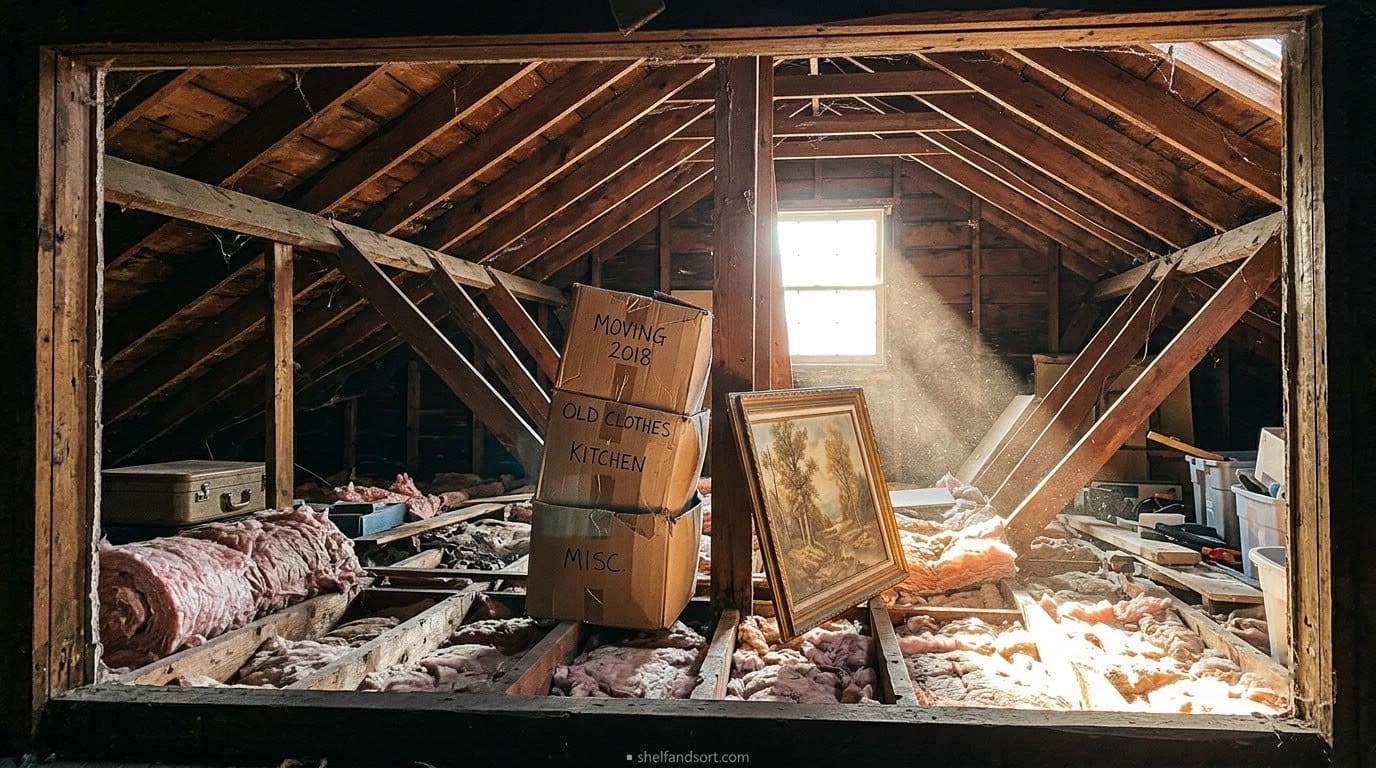
Do not store photos and paper documents, paintings and artwork, vinyl records and tapes, wine and food, candles and wax, wood furniture and musical instruments, out-of-season clothing, electronics you plan to reuse, propane and other flammable liquids, or anything heavier than your attic floor is built for.
An unheated attic can swing from near freezing in January to 150 degrees on a summer afternoon, and most attic floors were only ever framed to carry about 10 pounds per square foot, roughly enough for insulation, not boxes of books. The fix is the same for most of it.
Move it to a spot that stays under about 80 degrees with steady humidity, usually a closet, a basement, or a spare room, and check your joists before you stack anything heavy up there at all.
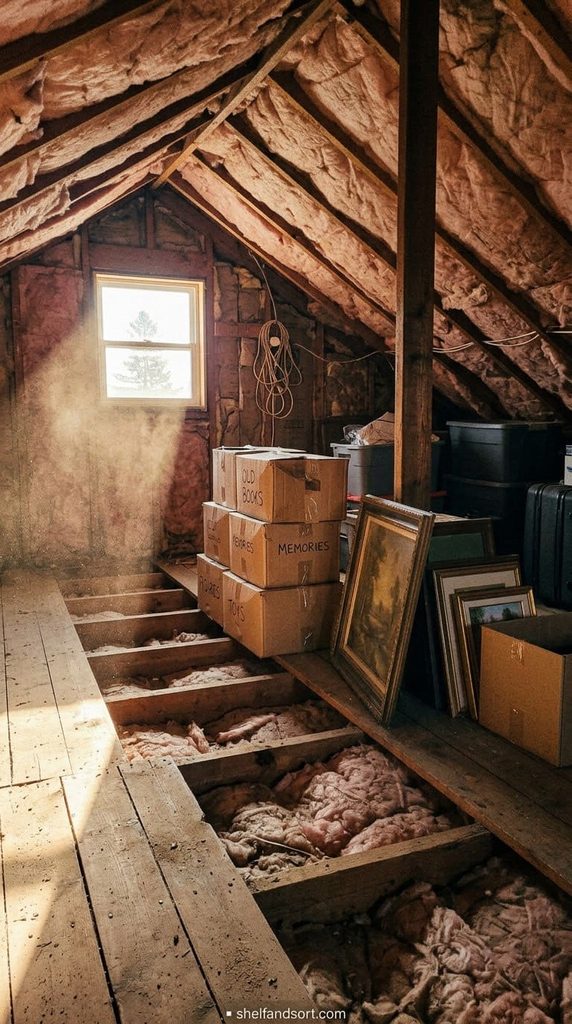
Two questions to ask before anything goes in the attic
You do not need to memorize a list to make good calls here. Two questions cover almost everything.
First, does the item’s shape, color, or chemistry depend on staying in a normal temperature range? Photos, records, candles, wine, and wood furniture all do, and an attic runs hotter and colder than any other room in the house.
Second, is the item, or the pile it sits in, heavier than a few pounds per square foot? Most attic floors are framed for insulation and foot traffic, not storage, so a stack of book boxes can be more than the structure was built to hold.
If either answer is a genuine yes, the attic is the wrong spot. Everything else can usually stay.
How hot and cold does an attic actually get?
Hotter and colder than people expect, because it sits right under an uninsulated or lightly insulated roof.
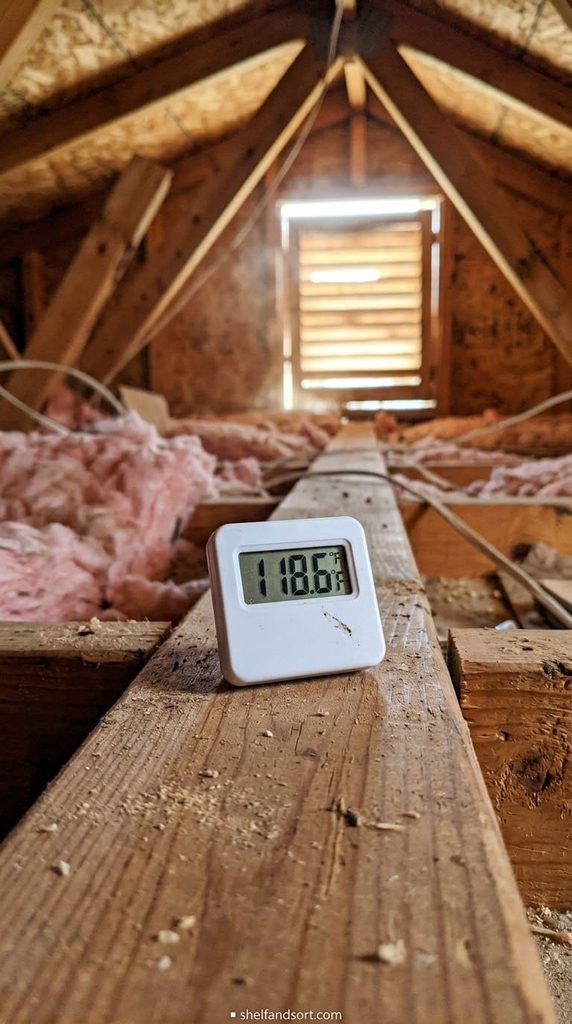
On a 90-degree summer day, an unventilated attic commonly climbs past 130 degrees and can push toward 150 in direct sun, according to reporting from HGTV on attic storage risks. In winter the same space can sit close to the outdoor low overnight.
I checked mine with a cheap indoor-outdoor thermometer one July afternoon and it read 118 degrees at 4 p.m., an hour after the sun had moved off that side of the roof. So a “quick trip to the attic” in summer is also a quick trip into an oven, worth knowing before you decide what lives up there year-round.
What should you never store in the attic?
Here is the full list, the reason or number behind each one, and where it goes instead. The detail on each follows below.
| Item | Why the attic ruins it | Where to put it instead |
|---|---|---|
| Photos and paper documents | Heat and humidity curl, fade, and mold paper and prints | A dry interior closet in a sealed bin |
| Paintings and artwork | Swings in heat and humidity warp, crack, and fade the surface | An interior wall away from direct sun |
| Vinyl records and cassette tapes | Vinyl softens and warps starting around 130 to 140°F | A closet shelf, upright, away from heat |
| Wine and canned or dried food | Wine wants near 55°F, cans and dry goods spoil in swings | A pantry or interior closet |
| Candles, crayons, and wax items | Wax melts well below attic summer highs | A drawer or cabinet at room temperature |
| Wood furniture and musical instruments | Wood swells, cracks, and joints loosen with the swings | An interior room, out of direct sun |
| Out-of-season clothing | Heat breaks down fibers, dampness invites mold and pests | A cedar chest or closet, sealed bins |
| Electronics you plan to reuse | Heat degrades circuitry, condensation hits parts when moved | A closet or spare room inside |
| Propane and flammable liquids | Heat buildup near the roof raises fire and pressure risk | Outside, ventilated, away from the house |
| More weight than the joists are rated for | Most attics are framed for about 10 psf, not storage loads | Spread light loads on plywood over joists, keep heavy items out |
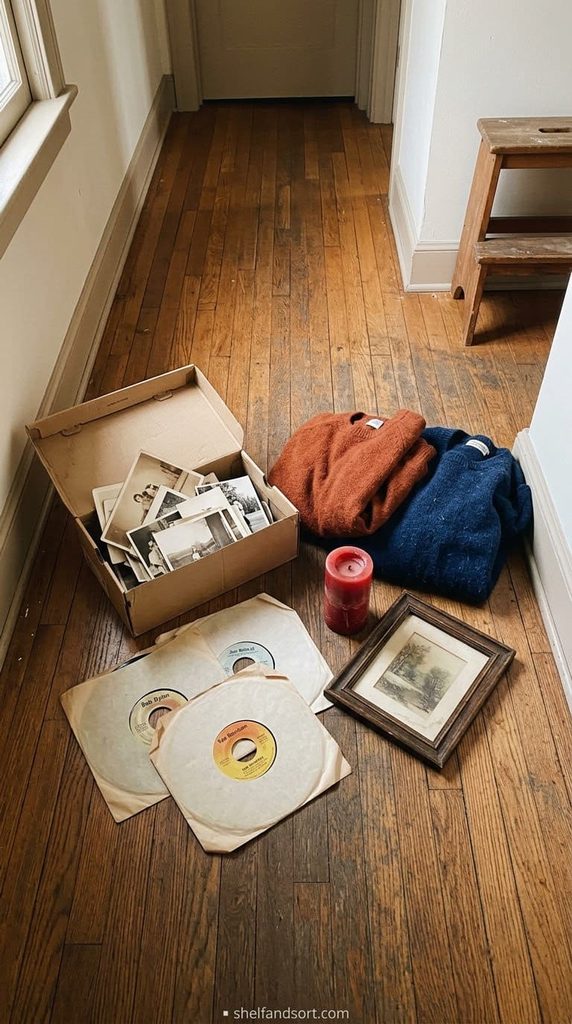
1. Photos and paper documents
The attic feels like a natural spot for the box of old photos and file folders nobody looks at often. It is one of the worst rooms for them.
Paper is absorbent, and an attic’s heat and humidity swings curl the pages, fade ink and photo dye, and invite mold in a way a steady room never does. Professional organizer Cathy Orr, co-founder of The Uncluttered Life, is quoted in reporting on attic storage mistakes naming paper documents and photographs among the items most at risk in an unfinished attic.
Do this: move photos, tax records, and important paper into a dry interior closet, in a sealed plastic bin rather than a cardboard box.

Clip the wireless sensor in the attic and read the display from inside the house, including the high and low over the past 12 to 48 hours. That real number tells you how hot and cold your specific attic gets, instead of guessing.
Shop NowThis post contains affiliate links. We may earn a commission on qualifying purchases at no extra cost to you.
Common mistake: stacking cardboard boxes of photos directly on the attic floor. Cardboard wicks moisture from the insulation and subfloor below it, so the box fails before you would guess.
Short on time: grab the irreplaceable stuff first, family photos, birth certificates, anything with no backup copy. The old utility bills from 2019 can wait.
Bookmark tip: scan or photograph anything truly irreplaceable and back it up to the cloud, so a damaged box is an inconvenience, not a loss.
2. Paintings and artwork
A painting looks sturdy hanging on a wall, but it is really a thin, flexible surface stretched over wood, and attics are hard on both parts.
Temperature and humidity swings expand and contract the canvas and the frame at different rates, which cracks paint, peels varnish, and warps the wood stretcher bars over time. Direct sun through a gable vent fades pigment on top of that.
Do this: hang or lean artwork on an interior wall away from direct sunlight and heating vents. A climate-controlled closet works if you are between spots for it.
Common mistake: wrapping a painting in plastic before attic storage to “protect” it. Plastic traps humidity against the surface and speeds up mold, the opposite of the intent. Use breathable paper or a cotton sheet instead.
Variant note: for a large collection, consider professional art storage, which holds a steady temperature and humidity year round for a modest monthly fee.
Bookmark tip: photograph each piece before storing it, front and back, so you have a record of its condition if you ever need to file an insurance claim.
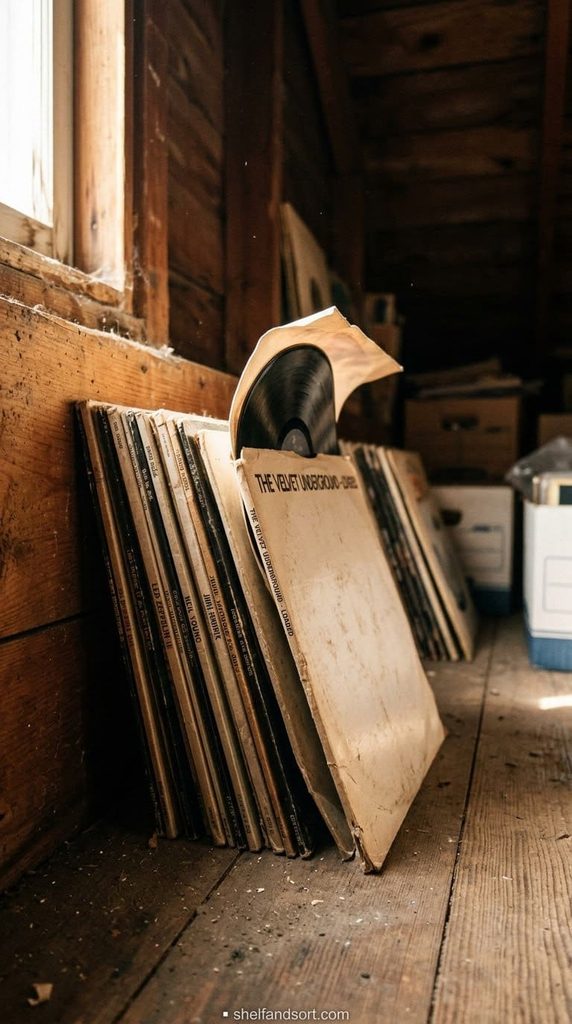
3. Vinyl records and cassette tapes
Records look like sturdy plastic discs, but vinyl is a soft material that starts to give under its own weight well before it looks obviously damaged.
Vinyl begins to soften and warp around 130 to 140 degrees Fahrenheit, a range plenty of attics hit on a summer afternoon, and the ideal storage window is closer to 65 to 70 degrees. Cassette tape can stretch and the magnetic coating can degrade in the same heat.
Do this: store records upright, never stacked flat, on a closet shelf inside the house at a steady room temperature.
Common mistake: leaning a stack of records against a slanted attic wall. The lean plus the heat is what actually warps a record, more than heat alone, since the weight bends the softened vinyl.
Short on time: pull anything valuable or hard to replace first, an original pressing or a signed copy. A dollar-bin record surviving one hot summer is a smaller loss.
Bookmark tip: a simple milk-crate or record-box shelf in a closet keeps a collection upright and easy to flip through, and it costs almost nothing.
4. Wine and canned or dried food
A case of wine or a stockpile of canned goods in the attic feels like smart overflow storage. The temperature swings undo the point of storing it at all.
Wine wants a steady temperature near 55 degrees Fahrenheit with stable humidity, and an attic summer high pushes the cork and cooks the flavor in weeks, not years. Canned and dried goods fare no better, since heat accelerates spoilage and can affect the seal on cans the same way deep cold does.
Do this: keep wine in a cool interior closet or a small wine fridge, and route canned and dried food to the kitchen pantry.
Common mistake: treating the attic like a root cellar because it is “out of the way.” A root cellar is cool and stable by design. An attic is the opposite of both.
Short on time: move the food first, since spoiled cans are a health risk. Wine is a quality loss, unpleasant but not dangerous.
Bookmark tip: if pantry space is tight, an interior closet away from the furnace or water heater holds a steadier temperature than most people assume, and works for both wine and canned goods in a pinch.
5. Candles, crayons, and wax items
Wax melts at a temperature well below what an attic hits on an average summer day, so this one is not a maybe.
Most candle and crayon wax starts softening in the 100s and fully liquefies by 120 to 150 degrees, a range an attic can reach by early afternoon in warm weather. The result is a puddle that soaks into cardboard, insulation, and whatever sits underneath.
Do this: store candles, crayons, and any wax-based craft supplies in a drawer or cabinet inside the house at normal room temperature.
Common mistake: boxing up holiday candles with other decor and forgetting the box is now sitting under the hottest part of the roof. Check any decor box for wax items before it goes up.
Variant note for kids’ stuff: crayons and wax-based art supplies follow the same rule. A melted crayon box is a sticky mess in a kid’s closet and worse spread through attic insulation.
Bookmark tip: if you must store scented candles somewhere out of daily sight, an interior hall closet keeps the scent intact far longer than a hot attic ever would.
6. Wood furniture and musical instruments
A dresser or a guitar seems solid enough to survive up there. Wood is more sensitive to heat and humidity swings than it looks.
Wood expands and contracts with every swing, and an attic’s daily and seasonal range is more extreme than any other room. That stress cracks veneer, loosens glued joints, and pops joinery on furniture, and it cracks tops, warps necks, and detunes strings on instruments the same way a cold garage does.
Do this: keep wood furniture and instruments in an interior room, ideally with the case closed for instruments, away from direct sun and heating vents.
Common mistake: storing an instrument in its case in the attic, assuming the case is protection enough. A case slows the swing, it does not stop it, and months of attic heat still damage the wood inside.
Short on time: move instruments first, since they are usually both more valuable and more fragile than furniture. A dresser tolerates more abuse before it is ruined.
Bookmark tip: a hygrometer in the room where you keep wood furniture and instruments is a cheap way to confirm the space is actually stable, not just cooler than the attic.
7. Out-of-season clothing
Seasonal clothes feel like an obvious attic candidate since you are not wearing them anyway. Fabric fares badly up there.
Heat breaks down natural fibers over time, and the humidity swings that come with an attic invite mold and give moths and other pests an easy place to work undisturbed for months.
Do this: store out-of-season clothing in a cedar chest, a closet, or sealed bins in a spare room, somewhere you would also be comfortable sleeping.
Common mistake: packing clothes into plain cardboard boxes for the season. Cardboard offers no pest barrier and absorbs the same humidity swings as everything else up there. Use sealed plastic totes instead.
Variant note: wool and other natural fibers are the most pest-prone. If cedar storage is not an option, a few cedar blocks or a sachet in the bin help.
Bookmark tip: wash clothes before long-term storage. Body oil and residue, not just the fabric itself, are what attract moths in the first place.
8. Electronics you plan to use again
The spare laptop, an old game console, a printer, a box of chargers and cables. If you intend to plug it back in someday, the attic works against you twice.
Sustained heat degrades circuitry and can warp plastic housings and screens, and batteries left inside devices swell or leak faster in heat. Then, when you finally carry the device back down into a cooler house, condensation forms on the boards, and powering it on before it dries can short something out.
Do this: store electronics you care about in a closet or spare room at a normal indoor temperature, batteries removed where possible.
Common mistake: leaving a device’s battery installed for “long-term storage.” A swollen or leaking battery in an enclosed attic space is also a fire risk, not just a ruined device.
Short on time: anything with a battery or a screen comes down first. A box of loose cables can wait.
Bookmark tip: if a device has been in a hot attic, let it sit unplugged at room temperature for a few hours before you power it on, the same rule as pulling one in from the cold.
9. Propane, kerosene, and other flammable liquids
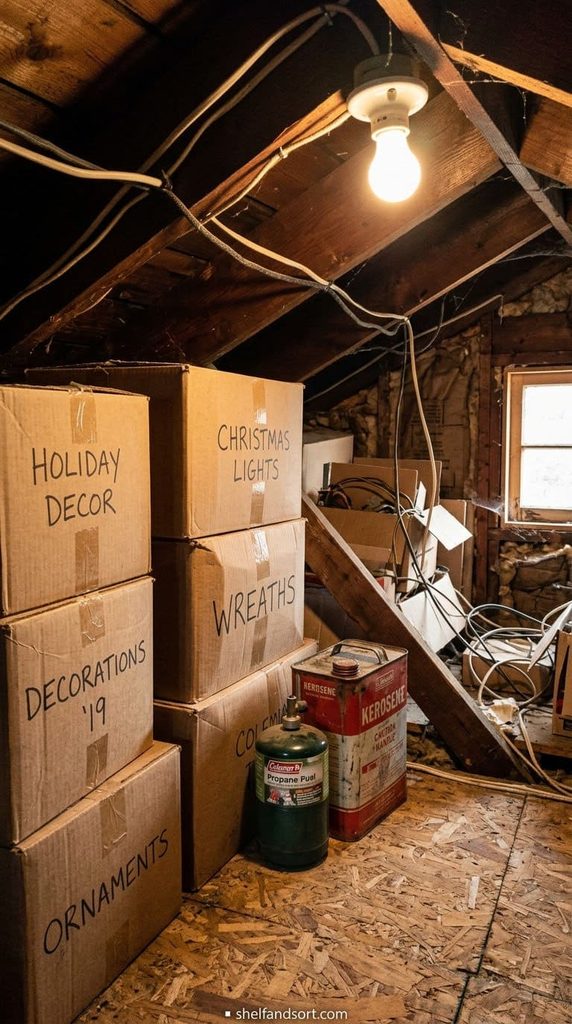
A camping propane canister, a can of kerosene for an old heater, a leftover jug of gasoline for the mower. None of these belong in an attic, or in any part of the house.
Heat buildup right under the roof raises the pressure inside a sealed fuel container faster than it would in a cooler part of the house, and a spark from old wiring or a light fixture in an attic is a real ignition source sitting right next to it.
Do this: store propane, kerosene, gasoline, and similar fuels outside in a ventilated, shaded spot away from the house, upright and capped.
Common mistake: tucking a half-used can of camping fuel behind the holiday decor “just for the season.” It is easy to forget it is there, which is exactly the problem.
Variant note: this includes aerosol cans used only occasionally, spray paint or wasp spray kept “in case.” The propellant is under pressure and heat raises the risk of a rupture.
Bookmark tip: if you keep an emergency fuel supply for a generator or heater, store it in a detached shed or an exterior locker built for it, never inside the attic or house.
10. More weight than your attic floor is rated for
This one is not about temperature at all, and it is the item most lists skip entirely.
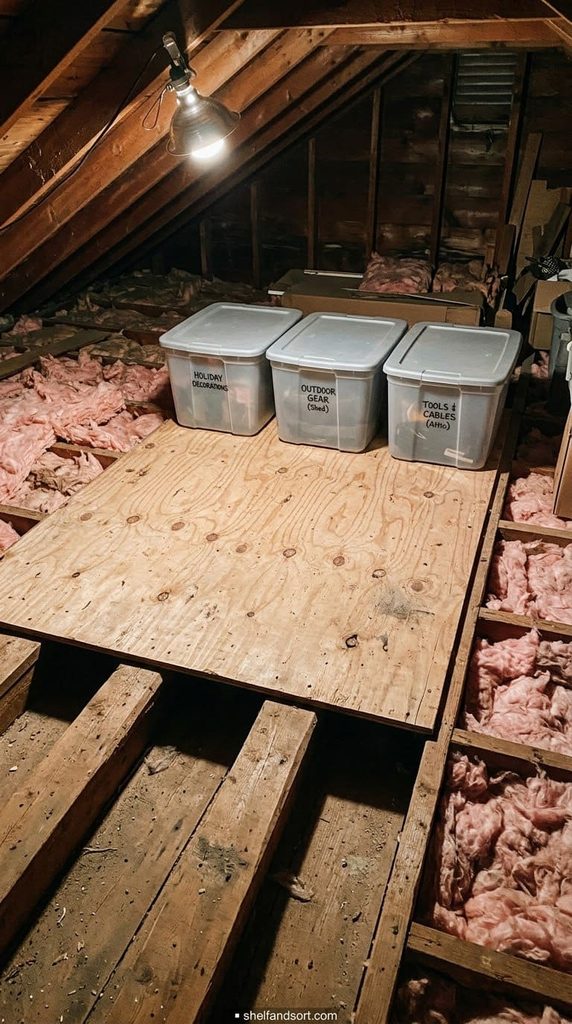
Most attics are framed as a “non-storage” space, built to carry the insulation and the occasional foot traffic to check on it. The International Residential Code sets that baseline attic live load at 10 pounds per square foot, and only requires 20 psf when the attic was specifically designed and framed for storage with adequate headroom. A stack of book boxes can quietly exceed that.
Do this: find out which kind of attic you have. If you are not sure, treat it as 10 psf and keep loads light, spread out, and resting on a plywood platform laid across multiple joists, never stacked on the drywall between them.
Common mistake: stacking heavy boxes in one corner near the access hatch because it is the easiest spot to reach. Concentrated weight in one spot is exactly what stresses a joist or, worse, a section of ceiling drywall below it.
Short on time: at minimum, walk the attic and confirm nothing heavy sits directly on drywall between joists rather than on the joists or a laid platform. That five-minute check catches the most dangerous mistake.
Bookmark tip: sagging ceiling drywall, new cracks near a wall-ceiling joint, or a spongy feel underfoot in the attic are all signs to stop adding weight and have a structural engineer or contractor take a look before anything worse happens.
What is actually fine to keep in the attic
The point is not to empty the attic. Plenty of things handle the swings fine.
Empty, clean storage bins, holiday decor that is not electronic or wax-based, artificial trees, luggage, camping gear built for the outdoors, and off-season sporting goods generally ride out an attic’s heat and cold without real harm.
Insulation, ductwork, and the structural and mechanical items that are supposed to live up there obviously stay. The test is the same two questions from the top: does its chemistry or shape depend on a stable temperature, and is the load light and spread out. If both answers are fine, the attic can hold it.
The seasonal attic check, your once-a-year maintenance rule
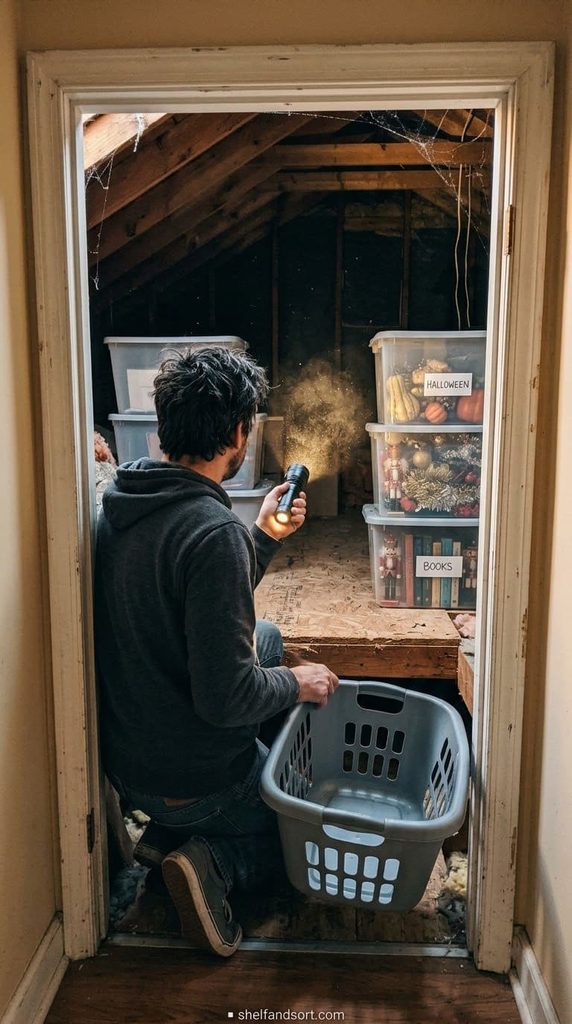
Set one reminder, spring or fall, to walk the attic with a flashlight and a laundry basket.
Pull anything from the list above that snuck up there since last time, check for any new sag in the drywall or a soft spot underfoot, and confirm nothing heavy has drifted into a single corner. It takes about 15 minutes.
Do this once a year and you catch both kinds of damage before they happen, the ruined photo box and the cracked ceiling, instead of finding either one by accident.

Frequently asked questions
What should you never store in the attic?
Photos and paper documents, paintings and artwork, vinyl records and cassette tapes, wine and canned or dried food, candles and wax items, wood furniture and musical instruments, out-of-season clothing, electronics you plan to reuse, propane and other flammable liquids, and more weight than your attic floor is rated for. Most of these fail because an attic swings from near freezing to well over 100 degrees, and the rest fail because most attic floors are only framed to hold about 10 pounds per square foot. Move temperature-sensitive items to an interior closet or spare room, and keep heavy loads light and spread across the joists.
How hot does an attic actually get in summer?
An unventilated attic can climb past 130 degrees on a 90-degree day and push toward 150 in direct sun. That is well above the point where wax melts, vinyl records start to warp, and wine and electronics begin to degrade. A cheap indoor-outdoor thermometer left in the attic for a week gives you the real number for your specific space instead of a guess.
How much weight can an attic floor actually hold?
It depends on how the attic was framed. The International Residential Code sets a baseline attic live load of 10 pounds per square foot for a space not designed for storage, and only allows 20 psf when the attic was specifically framed and has enough headroom for storage. If you are not sure which one you have, treat it as the lower number, spread weight across a plywood platform laid over the joists, and never stack heavy boxes directly on the drywall between them.
Can you store vinyl records in the attic?
Not safely for long. Vinyl starts to soften and warp around 130 to 140 degrees Fahrenheit, a range plenty of attics reach in summer, and the ideal storage temperature is closer to 65 to 70 degrees. Leaning records against a slanted attic wall makes it worse, since the added pressure warps softened vinyl faster than heat alone. Store records upright on a closet shelf inside the house instead.
Is it safe to store propane or gasoline in the attic?
No. Heat buildup right under the roof raises the pressure inside a sealed fuel container, and old wiring or a light fixture in the attic is a real ignition source nearby. Propane, kerosene, gasoline, and similar fuels belong outside in a ventilated, shaded spot away from the house, never in the attic or anywhere else inside.

Products We Recommend
This post contains affiliate links. We may earn a commission on qualifying purchases at no extra cost to you.
AcuRite 02049 Indoor/Outdoor Wireless Thermometer
Clip the wireless sensor in the attic and read the display from inside the house, including the high and low over the past 12 to 48 hours. That real number tells you how hot and cold your specific attic gets, instead of guessing.
Shop Now
IRIS USA WeatherPro 19-Quart Gasket-Lid Storage Bins, 6-Pack
For the short list of things that can stay in the attic, holiday decor and off-season gear, the gasketed lid keeps dust and moisture out far better than an open cardboard box.
Shop now
Attic Dek Flooring Storage System, 4-Panel Kit
Interlocking panels that snap over exposed joists in about 15 minutes and are rated to hold up to 250 pounds each, spreading weight across the joists instead of concentrating it on the drywall between them. This is the fix for item 10 on this list, not a workaround.
Shop now