
12 Things You Should Never Store in the Garage Over Winter, and Where to Put Them Instead
An unheated garage swings below freezing all winter, and that cold does slow, permanent damage to a long list of things people leave out there by habit. This guide covers 12 items to move before the first hard freeze, the exact temperature that ruins each one, and where each belongs instead, plus a short list of what is genuinely fine to leave in the cold.
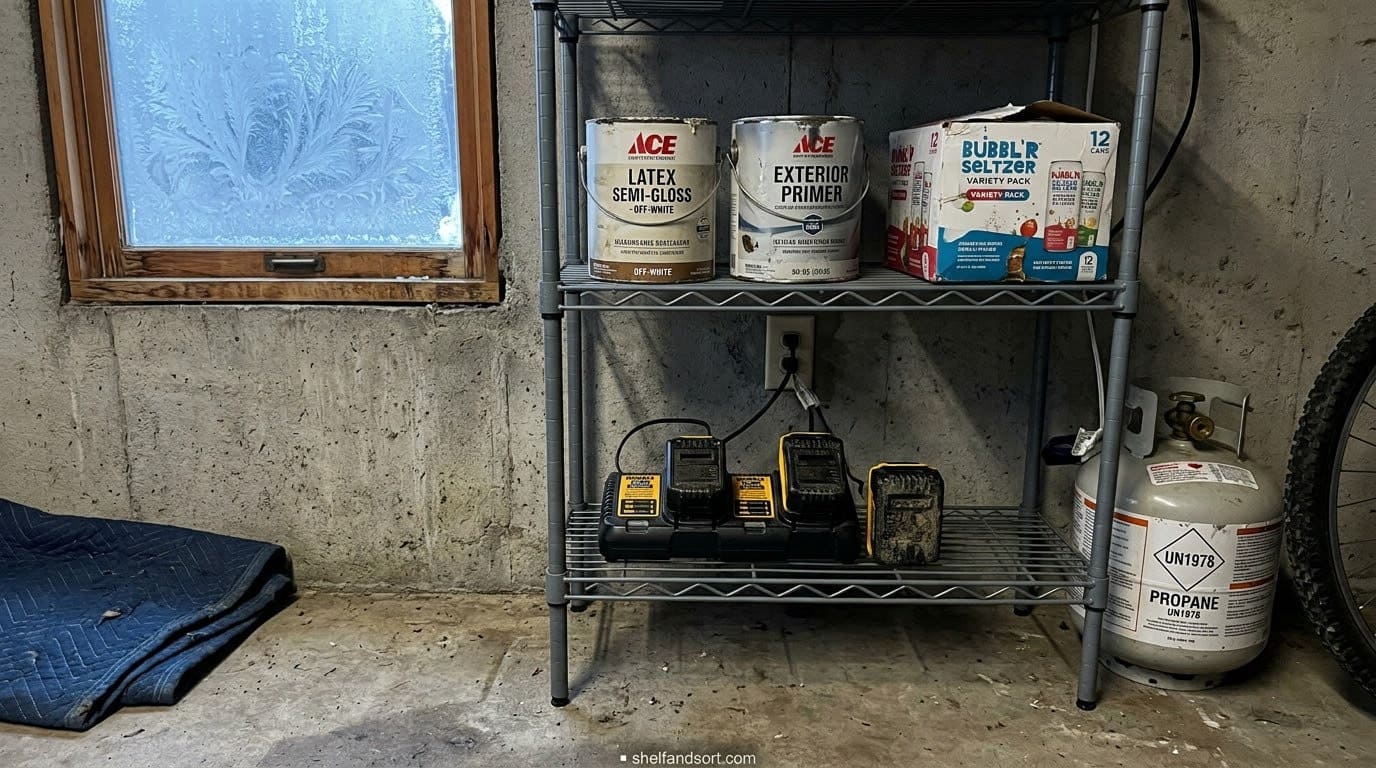
Do not leave water-based paint, canned or bottled food and drinks, wine and beer, propane tanks, lithium-ion tool batteries, aerosol cans, electronics you plan to reuse, a second fridge or freezer without a garage kit, musical instruments, liquid cleaning supplies, medications, or leather and paper goods in an unheated garage over winter.
Anything with water in it can freeze and burst near 32 degrees Fahrenheit. Anything with a battery or a sensitive chemistry loses capacity or separates in the cold, sometimes for good. Propane is a fire risk indoors in any season. The fix is the same for all of them. Move each item to a spot that stays above about 50 degrees, usually a basement, a heated utility room, or an interior closet, and do it before the first hard freeze, not after you find the damage.
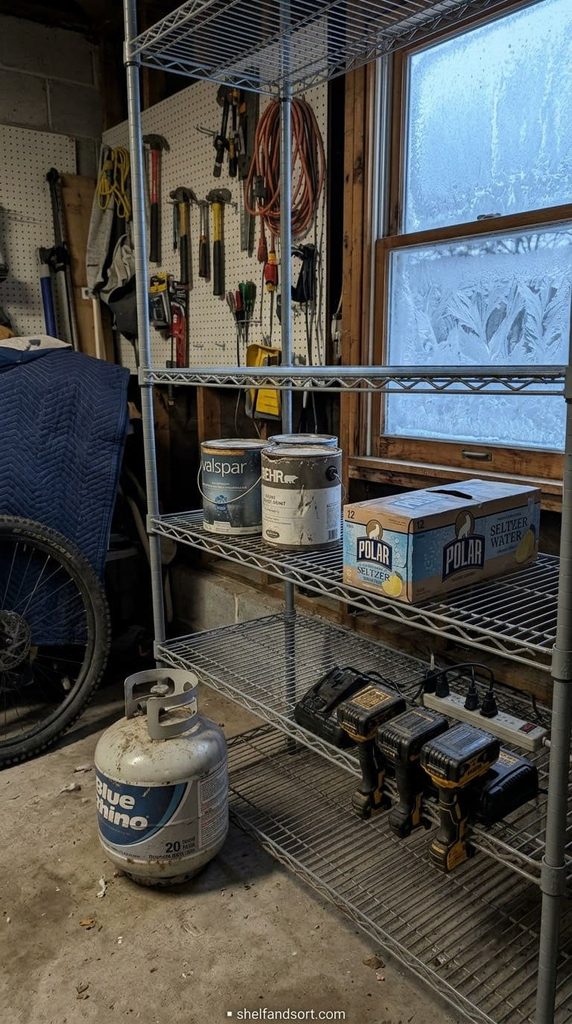
Two questions to ask before you leave anything in the garage this winter
You do not need to memorize a list. Two questions sort almost everything.
First, does it contain water or a water-based mix? Paint, canned soup, soda, wine, washer fluid, and liquid detergent all do. Water expands roughly 9 percent when it freezes, so a sealed container full of it can split, pop a seam, or push out a cork.
Second, does the thing depend on a battery or a stable chemistry to work? Tool batteries, phones, aerosol propellant, medication, and glue all say yes. Cold does not always break these on contact, but it shortens their life and can cause permanent loss.
If either answer is yes, the item needs to come inside. Everything else can probably ride out the winter on a shelf.
How cold does a garage actually get?
Colder than most people guess. An attached garage with an insulated door might hold in the 30s on a mild week. A detached garage tracks the outdoor low almost exactly.
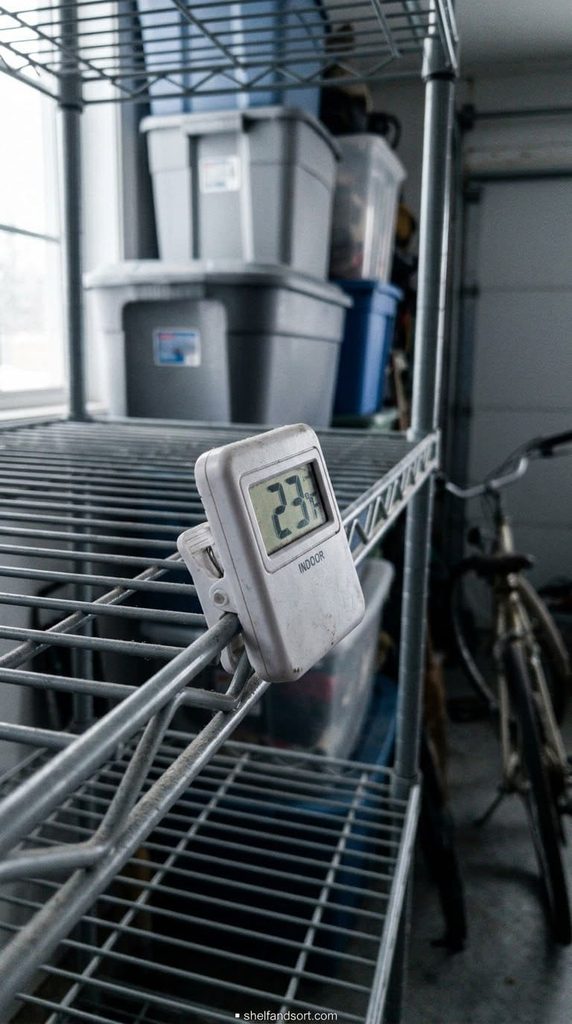
I keep a cheap thermometer clipped to a shelf out there, and last February it read 19 degrees one morning while the house was a cozy 68. That 49-degree gap is the whole problem.
So before you trust the garage with anything borderline, put a min-max thermometer on the shelf for a week in early winter and read the overnight low. That number tells you what your garage really is, not what it feels like at noon when you are loading the car.
What should you never store in the garage in winter?
Here is the full list, the temperature or reason each item fails, and where it goes instead. The detail on each follows below.
| Item | Why the cold garage ruins it | Where to put it instead |
|---|---|---|
| Water-based paint, primer, stain | Freezes near 32°F, turns to cottage cheese, will not remix | Basement or interior closet, 60 to 80°F |
| Canned and bottled food and drinks | Liquid expands, breaks the seam or seal, can burst | Pantry or interior closet above freezing |
| Wine and beer | Freezes at 15 to 20°F, pushes the cork, can crack the bottle | A closet or interior room, steady 50 to 65°F |
| Propane tanks | Fire and leak risk indoors in any season, worse when people bring them in | Outside, upright, 5 feet from any door or ignition source |
| Lithium-ion tool and e-bike batteries | Permanent capacity loss below freezing, never safe to charge below 32°F | Indoors, 40 to 70°F, off the concrete |
| Aerosol cans | Propellant pressure drops, seals contract, can leak or stop spraying | Interior utility closet at room temperature |
| Electronics you plan to reuse | Condensation on the boards when carried back into warm air, cracked screens | A closet or spare room inside |
| Second fridge or chest freezer (no garage kit) | Compressor stops cycling below about 37°F ambient, freezer thaws | A basement, or add a garage kit heater |
| Musical instruments | Wood cracks and joints loosen, strings and tuning go | An interior room away from vents, stable humidity |
| Liquid cleaning supplies and detergent | Water-based ones freeze and separate, some lose their punch | An interior cabinet above freezing |
| Medication, vitamins, pet meds | Freeze-thaw cuts potency before the expiration date | Inside, a steady 59 to 77°F |
| Leather, photos, paper, artwork | Cold plus damp concrete grows mildew and warps fiber | A dry interior closet, up off the floor |
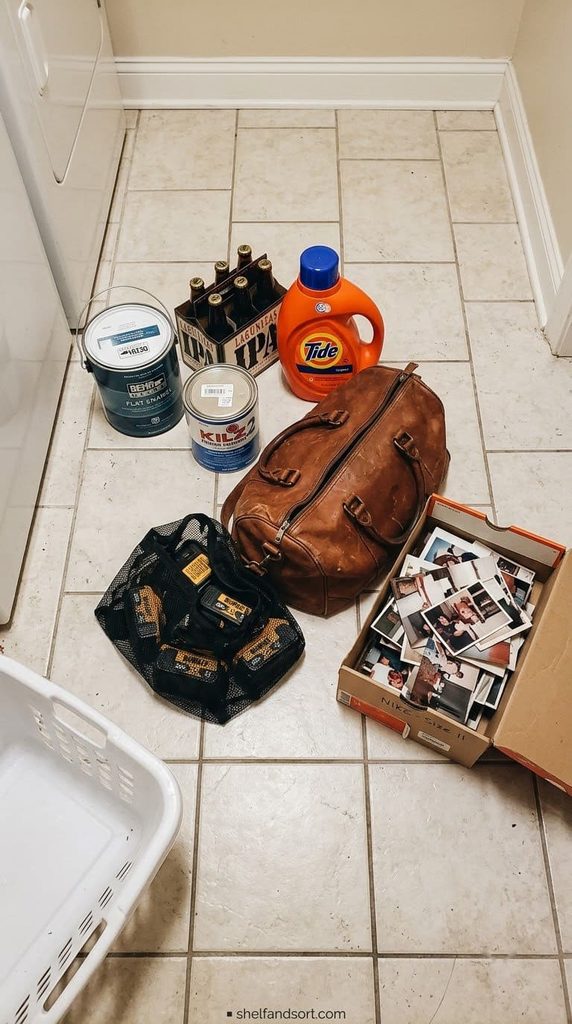
1. Water-based paint, primer, and wood stain
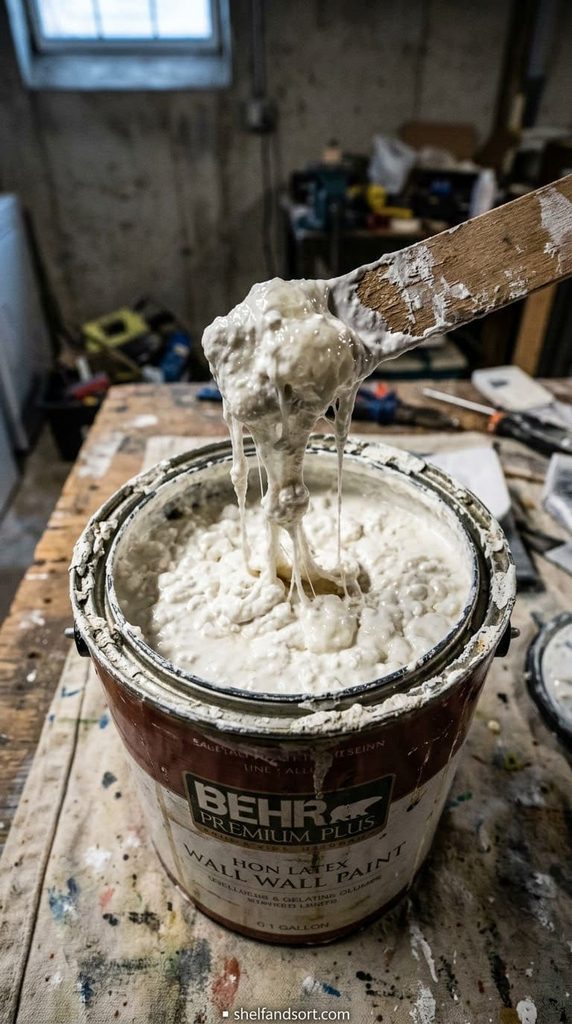
Latex and other water-based paints are the classic garage casualty. Water freezes at 32 degrees, and the water in the can freezes right along with it.
When it thaws you get a stringy, curdled mess that looks like cottage cheese. The freeze forces the solids out of suspension and clumps them, and no amount of stirring brings it back. Oil-based paint handles cold better but still thickens and should come in too.
Benjamin Moore tells customers to store paint between 60 and 80 degrees, and Family Handyman notes that a can may survive a single freeze if it remixes smooth with no lumps. Do not count on it.
Do this: carry all paint to a basement shelf or an interior closet before the first freeze. Store cans upside down for a better seal, and label the lid with the room and the date.

Put the wireless sensor on a garage shelf and the display inside, and it records the high and low for the past 12, 24, 36, and 48 hours plus an all-time low. That overnight-low number is exactly what tells you whether the garage is safe for borderline items.
Shop NowThis post contains affiliate links. We may earn a commission on qualifying purchases at no extra cost to you.
Common mistake: leaving cans on the garage floor, right against the cold concrete slab, which is the first surface to drop below freezing. Even in a garage you heat sometimes, the slab stays cold. Get paint up onto a shelf at minimum, inside ideally.
Short on time: move the paint you actually plan to use this year first. The half-inch of dried touch-up paint in a rusty can you have kept for a decade is not worth the trip.
Bookmark tip: transfer the small amount of wall paint you keep for touch-ups into a labeled glass jar. It takes up almost no interior shelf space and you can toss the gallon.
2. Canned and bottled food and drinks
A case of seltzer or a flat of canned soup in the garage seems bombproof. It is not.
Canned food is mostly liquid, and that liquid expands as it freezes. The pressure pushes on the seams until the seal breaks, and once the seal is compromised the food is not safe even after it thaws. Glass bottles and cans of soda can split outright.
The USDA’s guidance on freezing and food safety is that accidentally frozen food is still safe if it stayed at 40 degrees or below and still holds ice crystals, but a can that has bulged, leaked, or rusted at the seam gets thrown out. Do not taste it to check.
Do this: keep all canned and bottled goods in an interior pantry or closet that never drops below 40 degrees. If your only pantry space is a cold mudroom, put a thermometer in it.
Common mistake: using the garage as overflow pantry for holiday bulk buys, then forgetting it is out there until January. One January my neighbor found a whole shelf of split seltzer cans and a burst can of crushed tomatoes fused to the shelf.
Short on time: pull anything carbonated and anything in glass first. Those fail fastest and make the biggest mess.
Bookmark tip: if you truly stockpile and run out of interior room, canned goods in a cooler inside the garage buy you a few degrees of buffer and a slower temperature swing. It is a stopgap, not a fix.
3. Wine and beer
Wine does not need a full house freeze to get hurt. It freezes somewhere between 15 and 20 degrees, which plenty of garages hit on a cold night.
As the wine freezes it expands and pushes the cork up and out. Wine Spectator points out that even a garage that only dips cold at night creates a pumping effect, expanding and contracting the wine until the cork works loose and air gets in. Beer bottles and cans can burst the same way.
Do this: move the bottles to an interior closet, a basement, or under a bed, anywhere that holds a steady 50 to 65 degrees. Lay corked wine on its side so the cork stays wet.
Common mistake: treating an unheated garage as a wine cellar because it is “cool.” Cellars are cool and stable. A garage is cold and swings 30 degrees a day, which is the opposite of what wine wants.
Short on time: get the good bottles and anything sparkling inside first. A cheap Tuesday red recovers from a mild chill better than a Champagne under pressure.
Bookmark tip: a wine fridge set to 55 degrees, kept inside, does the job in a closet or a corner and costs less to run in winter than you would think.
4. Propane tanks
This one is not really about the cold. A propane tank should never be stored inside a garage, attached or detached, in any season.
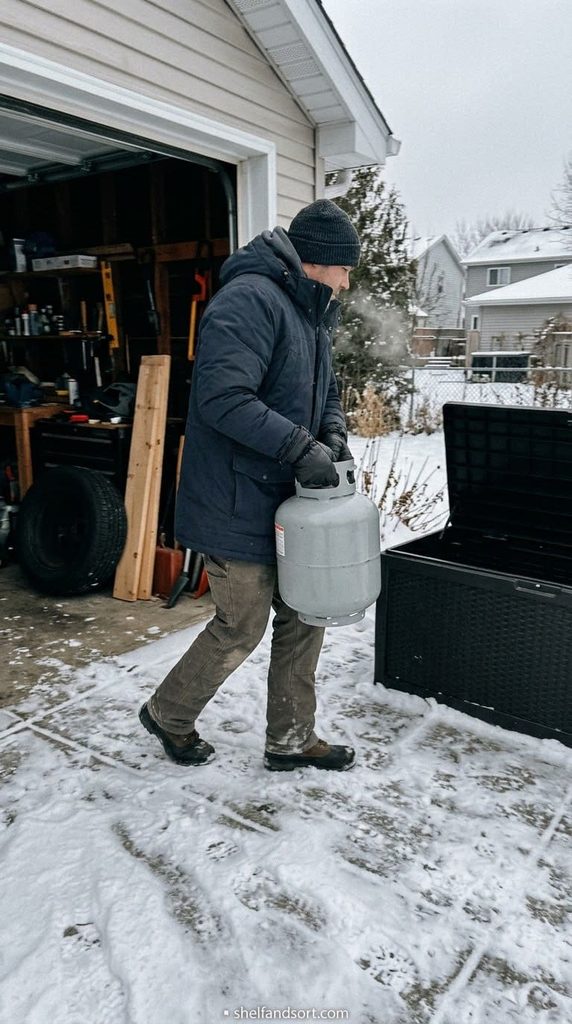
A tank can develop a slow leak, and propane pooling in an enclosed space near a water heater pilot, a furnace, or an electrical outlet is a serious fire and explosion risk. Winter makes it worse in a specific way. People drag the grill tank into the garage “to protect it from the weather,” which is exactly the wrong move.
The North Carolina Department of Agriculture’s LP-gas guidance, following NFPA 58, is to store cylinders outdoors, upright, in a ventilated spot away from doors, windows, and anything that could ignite a leak.
Do this: keep the tank outside on a patio or against an exterior wall, standing upright, at least 5 feet from any door, dryer vent, or ignition source. A vented outdoor deck box is fine. Cold itself does not hurt the tank.
Common mistake: bringing the tank inside for the winter and setting it next to the water heater. That is the single most dangerous spot in the garage.
Variant note: this applies to the small green camping canisters too. They live outside or in a detached shed, never in the house.
Bookmark tip: mark your tank’s recertification date with a paint pen. Exchange tanks are good for 12 years from manufacture, and a cracked or rusted valve is a reason to swap it, not store it.
5. Lithium-ion tool and e-bike batteries
Cordless drill packs, the e-bike battery, a portable power station left on the shelf. Winter is hard on all of them.
Cold temporarily cuts a lithium-ion battery’s capacity by 20 to 40 percent, which comes back once it warms up. The permanent damage happens if you charge one while it is below freezing. Battery University explains that charging below 32 degrees causes lithium plating on the anode, which lowers capacity for good and can create a safety hazard.
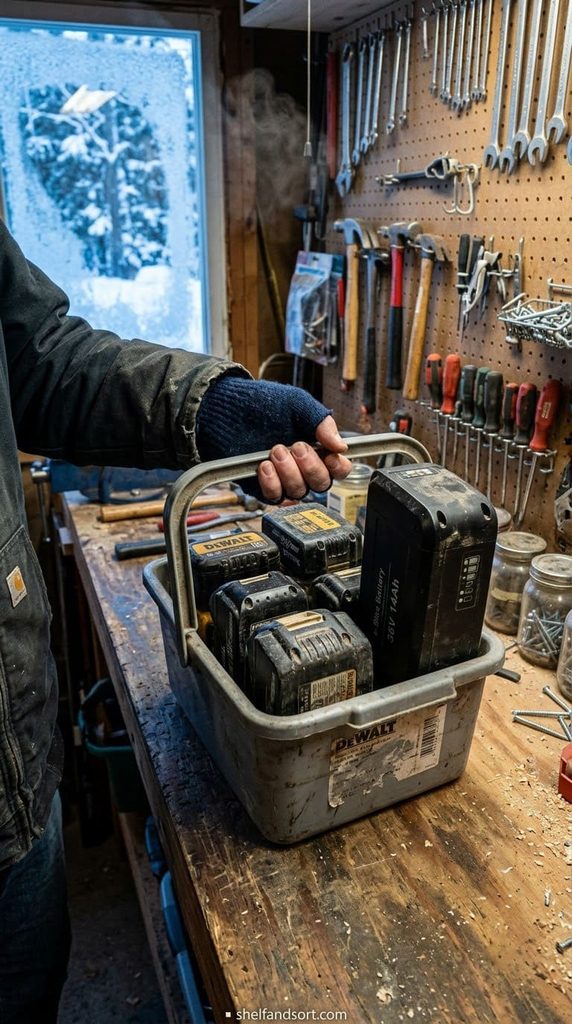
Do this: bring every lithium battery inside for the winter and store it around 40 to 70 degrees, ideally at a partial charge, not full and not empty. Let a cold battery warm to room temperature before you charge it.
Common mistake: leaving batteries clipped into the tools in a garage cabinet, then grabbing a drill in January and dropping it on the charger while it is still ice cold. That charge cycle is the one that does lasting harm.
Short on time: pull the batteries off the chargers and out of the tools and drop them all in one bin you carry inside. The bare tools can stay in the garage.
Bookmark tip: store the bin somewhere you will see it, not a far basement corner, or you will buy a new battery in spring rather than go dig for the old one.
6. Aerosol cans
Spray paint, WD-40, spray adhesive, expanding foam, even a can of hairspray in a gym bag. Aerosols do not love the cold.
The propellant inside is under pressure, and cold drops that pressure so the can sprays weakly or sputters. The bigger issue is the seals and gaskets, which contract in the cold and can let propellant leak out slowly, leaving you with a dead can by spring. A frozen can of water-based spray product can also separate like paint does.
Do this: move aerosols to an interior utility closet at room temperature. Keep them away from any heat source once inside, since the same pressure that drops in cold rises dangerously near a furnace or heater.
Common mistake: storing spray paint on an exterior garage wall shelf, the coldest spot in the room. Move it to an interior wall at least, inside the house ideally.
Variant note: wasp spray and other pest aerosols you want handy should still come in for winter. They will not work in an emergency if the propellant has bled off.
Bookmark tip: shake a suspect can and listen. If the mixing ball rattles freely and the can feels light, the propellant is gone and it is time to recycle it, not store it another year.
7. Electronics you plan to use again
The spare TV, an old laptop, a printer, the gaming console in a box, a label maker. If you want to use it again, it should not overwinter in the garage.
Two things go wrong. Screens and hard drives can crack or fail in deep cold. And when you carry a cold device into a warm house, moisture condenses on the circuit boards, and powering it on before it dries can short it out.
Do this: store electronics you care about in a closet or spare room inside. If a device has been in the cold, let it sit unplugged at room temperature for a few hours before you turn it on.
Common mistake: keeping the “backup” laptop or hard drive with your only copy of the family photos on a garage shelf. Cold plus humidity plus time is how those drives die quietly.
Short on time: anything with a screen or a spinning drive comes in first. A plastic cable organizer or a box of HDMI cords can wait.
Bookmark tip: if something genuinely has to stay out there, seal it in a plastic bin with a couple of silica gel packs. That limits the condensation when the temperature swings.
8. A second refrigerator or chest freezer, unless it is rated for it
The garage fridge is a great idea until the first cold snap, when it quietly stops doing its job.
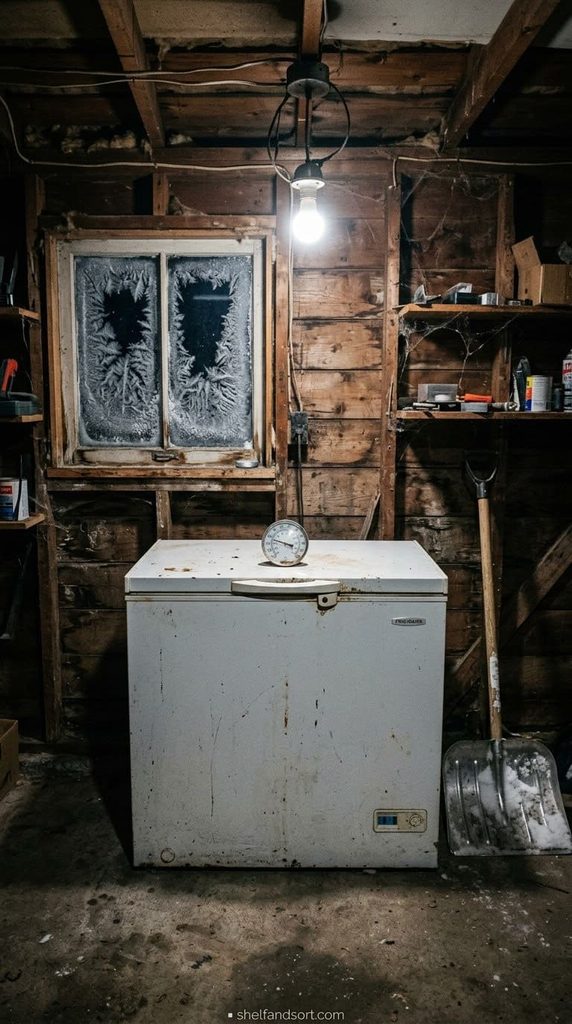
Most fridges read the temperature in the fridge compartment, not the freezer, and use that to decide when to run the compressor. When the garage air drops below your fridge setting, around 37 degrees, the fridge thinks it is cold enough and never kicks on. The freezer above or beside it slowly thaws because the compressor is not cycling. Standalone freezers generally want an ambient temperature no lower than 0 degrees and struggle well before that.
Do this: check the manual or the model plate for a garage or “garage ready” rating. If it does not have one, either move the unit to a basement or install a garage kit, a small heater that warms the thermostat area so the fridge cycles normally. Kits run about 20 to 40 dollars and take a few minutes to fit.
Common mistake: assuming a full freezer of meat is fine because “the garage is freezing anyway.” If the compressor never runs, the freezer drifts up toward the garage’s daytime high, which can be above freezing, and refreezes at night. That cycle ruins texture and safety.
Variant note: a chest freezer holds its cold far longer than an upright if the power or compressor stops, so if you only have one spot for a marginal unit, make it the chest style.
Bookmark tip: put a cheap freezer thermometer inside and check it weekly in winter. A reading that climbs on cold days is your sign the compressor has stopped cycling.
9. Musical instruments
An acoustic guitar on a garage wall hook, a keyboard in a case, a violin, a brass horn. Cold and the swings that come with it are hard on all of them.
Wood expands and contracts with temperature and humidity, and a garage gives it both in large doses. That stress cracks tops and backs, loosens glued joints, and pops bridges. Strings lose tension and go wildly out of tune, and metal parts can corrode in the damp.
Do this: keep instruments inside, in a room that stays a steady temperature and is not right over a heat vent. Store them in their cases, not on open hooks, for another layer of buffering.
Common mistake: playing an instrument that just came in from the cold. Let a cold guitar sit in its closed case indoors for an hour or two so it warms up gradually. A fast temperature change is what cracks the finish.
Variant note: if you rehearse in the garage, run a small heater for a while before you play and keep instruments cased until the space is warm, then case them again before it cools.
Bookmark tip: a cheap hygrometer in the room where you store instruments is worth it. Wood instruments want roughly 40 to 50 percent humidity, and winter indoor air often runs drier than that.
10. Liquid cleaning supplies and laundry detergent
The overflow of liquid laundry detergent, fabric softener, dish soap, all-purpose spray, and the jug of windshield washer fluid rated only for above freezing.
The water-based ones freeze and expand like everything else with water in them, splitting the jug or the spray bottle. When they thaw, many separate into a watery layer and a gel layer that will not recombine, so the product is weaker or useless. Some cleaners also lose effectiveness after a freeze even if the container survives.
Do this: move liquid cleaners and detergents to an interior cabinet or closet that stays above freezing. Powder detergent and dry products are fine in the cold, so if you must keep something out there, keep the powders.
Common mistake: storing the big refill jug of detergent on the garage floor by the door, the coldest spot, and only noticing when it has cracked and leaked a blue puddle across the slab.
Variant note: windshield washer fluid comes in a winter blend rated to around minus 20 degrees. The cheap summer blend or a jug you diluted with water will freeze and can crack the reservoir in your car, not just the jug.
Bookmark tip: buy cleaning liquids in the smaller size in winter and keep just one backup inside. The bulk value is not worth a frozen, separated jug you have to pour out.
11. Medication, vitamins, and pet meds
The spare bottle of ibuprofen in the car console, vitamins in a garage cabinet, the dog’s flea and tick chews, insulin or an EpiPen left in a bag. Cold degrades all of it.
Freezing and thawing changes the chemistry of many medications and can lower their potency before the printed expiration date, and some, like insulin and certain liquid antibiotics, are ruined by a single freeze. Most medicine is formulated for a steady room temperature, roughly 59 to 77 degrees, per MedlinePlus guidance on storing medicine in a cool, dry place.
Do this: keep all medication and supplements inside at room temperature. Clear out the car glovebox and any garage or mudroom cabinet where meds have crept in.
Common mistake: leaving an emergency medication, an inhaler or an EpiPen, in a car or garage bag over winter so it is “always there.” If it froze, it may not work when you need it. Bring it in and put it where you will grab it.
Variant note for pets: liquid pet meds, ear drops, and some chews lose effectiveness after freezing. Store them with your own medicine, not in the garage or the car.
Bookmark tip: do a quick glovebox and garage-cabinet sweep for medication every fall when you move everything else. It is the spot people forget until they reach for it sick.
12. Leather, photos, paper, artwork, and important documents
Boxes of family photos, kids’ artwork, the leather couch you are storing, tax records, a rolled canvas. The garage is rough on all of it, and winter adds damp to the cold.
Cold concrete sweats as the temperature swings, and cardboard boxes sitting on the slab wick that moisture up. Photos stick together and mold, paper warps and grows foxing spots, and leather gets stiff and can grow surface mildew. Freezing itself makes old photo emulsion and brittle paper more fragile.
Do this: store anything paper, photo, or leather in a dry interior closet, up off any floor, in sealed plastic bins rather than cardboard. A basement is only okay if it is dry and the bins are off the floor on a rack.
Common mistake: keeping the one box of irreplaceable photos and documents in the garage because “it is just temporary.” Temporary turns into three winters, and water damage is not reversible.
Short on time: the irreplaceable box, photos, documents, a child’s baby book, comes inside today. The box of old tax paperwork you legally have to keep can wait a weekend.
Bookmark tip: scan or photograph the truly irreplaceable documents and photos and back them up to the cloud. Then a lost box is a sad afternoon, not a permanent loss.
What is actually fine to leave in a cold garage
The goal is not to empty the garage into your living room. Plenty of things shrug off winter.
Hand tools, most power tools with the batteries removed, extension cords, and hardware are all fine in the cold. So are ceramic and plastic pots, most holiday decor that is not electronic, patio furniture, sporting goods, tires, and lumber.
Powder laundry detergent, dry pet food in a sealed metal can, and unopened canned goods rated by you as expendable can ride it out, though the food is a gamble. Car fluids sold in winter blends are made for it.
The test is simple. No water to freeze, no battery to plate, no delicate chemistry, no paper or leather to mildew. If it passes all four, leave it on the shelf.
The October garage sweep, your once-a-year maintenance rule
The whole problem is timing. People move things in spring, after they have already found a burst can or a curdled paint bucket.
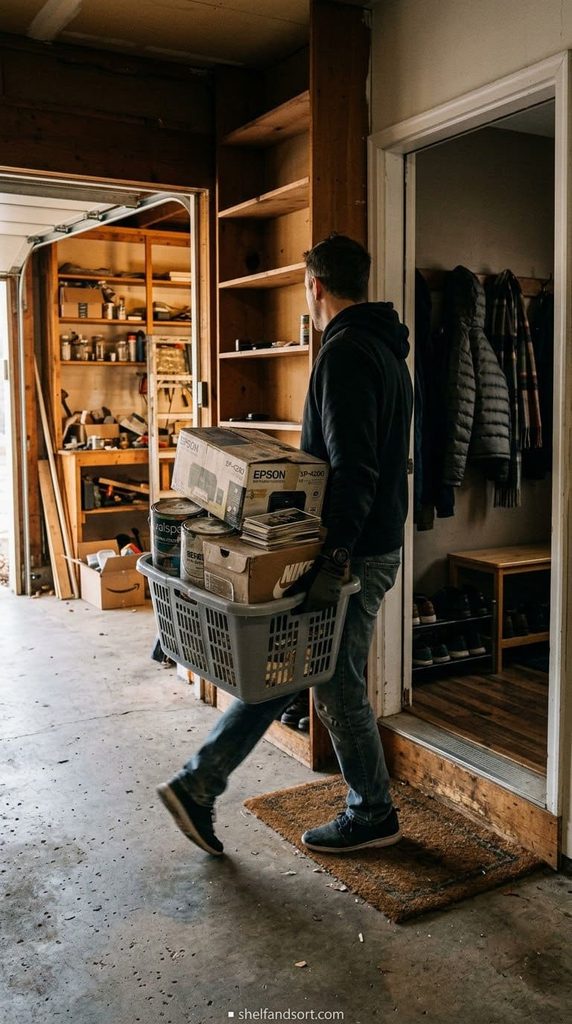
Set one recurring reminder for early October, or whenever your area gets its first frost warning. Walk the garage with a laundry basket and pull everything from the list above: paint, cans and bottles, propane to the patio, batteries, aerosols, electronics, meds, and the photo box.
It takes about 20 minutes and one or two trips inside. Do it before the first hard freeze and you never deal with the cleanup. Reverse it in April if you want the space back, though most of this stuff is happier inside year round anyway.
Frequently asked questions
What should you never store in the garage in winter?
Water-based paint, canned and bottled food and drinks, wine and beer, propane tanks, lithium-ion tool and e-bike batteries, aerosol cans, electronics you plan to reuse, a second fridge or freezer that is not rated for a garage, musical instruments, liquid cleaning supplies and detergent, medication and vitamins, and leather, photos, and paper. Anything with water in it can freeze and burst near 32 degrees. Anything with a battery or a delicate chemistry loses capacity or separates in the cold. Move all of it to a spot that stays above about 50 degrees before the first hard freeze.
At what temperature does paint go bad in the garage?
Water-based paint starts to freeze at 32 degrees Fahrenheit, the same as water. One hard freeze can curdle it into a lumpy, stringy texture that will not stir smooth again, and no amount of mixing fixes it. Benjamin Moore recommends storing paint between 60 and 80 degrees. Oil-based paint tolerates cold better but still thickens and should come inside. Keep paint off the garage floor and ideally in a basement or interior closet all winter.
Can canned food freeze in the garage and still be safe to eat?
Sometimes, but do not count on it. USDA guidance says accidentally frozen food is still safe if it stayed at 40 degrees or below and still holds ice crystals. But if the can bulged, leaked, rusted at the seam, or the seal broke from the expanding liquid, throw it out without tasting it. The safest move is to keep canned and bottled goods in an interior pantry that never drops below 40 degrees.
Is it bad to leave tool batteries in a cold garage over winter?
Yes. Cold temporarily cuts a lithium-ion battery’s capacity by 20 to 40 percent, which recovers when it warms. The lasting damage happens if you charge a battery while it is below freezing, which causes lithium plating that permanently lowers capacity and can be a safety hazard. Bring tool and e-bike batteries inside, store them around 40 to 70 degrees at a partial charge, and let a cold battery reach room temperature before charging.
Where should I store propane tanks in winter?
Outside, always. A propane tank should never be stored in a garage, attached or detached, in any season, because a slow leak in an enclosed space near an ignition source is a fire and explosion risk. Keep the tank upright on a patio or against an exterior wall, at least 5 feet from any door, vent, or ignition source, following NFPA 58 and state LP-gas guidance. Cold does not harm the tank itself.
Products We Recommend
This post contains affiliate links. We may earn a commission on qualifying purchases at no extra cost to you.
AcuRite 02049 Indoor/Outdoor Wireless Thermometer
Put the wireless sensor on a garage shelf and the display inside, and it records the high and low for the past 12, 24, 36, and 48 hours plus an all-time low. That overnight-low number is exactly what tells you whether the garage is safe for borderline items.
Shop Now
Zeee Fireproof Explosion-Proof LiPo Battery Storage Bag
A fire-resistant pouch to carry your drill and e-bike batteries inside in one trip and store them together through winter. It contains a battery fault rather than letting it spread, which matters when a stack of packs sits in a closet.
Shop now
IRIS USA WeatherPro 19-Quart Gasket-Lid Storage Bins, 6-Pack
The gasketed lids seal out the moisture that ruins photos and paper on a cold, sweating slab. Use them for the document and photo boxes you move indoors, and for anything electronic that has to stay in the garage.
Shop now