11 Things You Should Never Store in the Bathroom
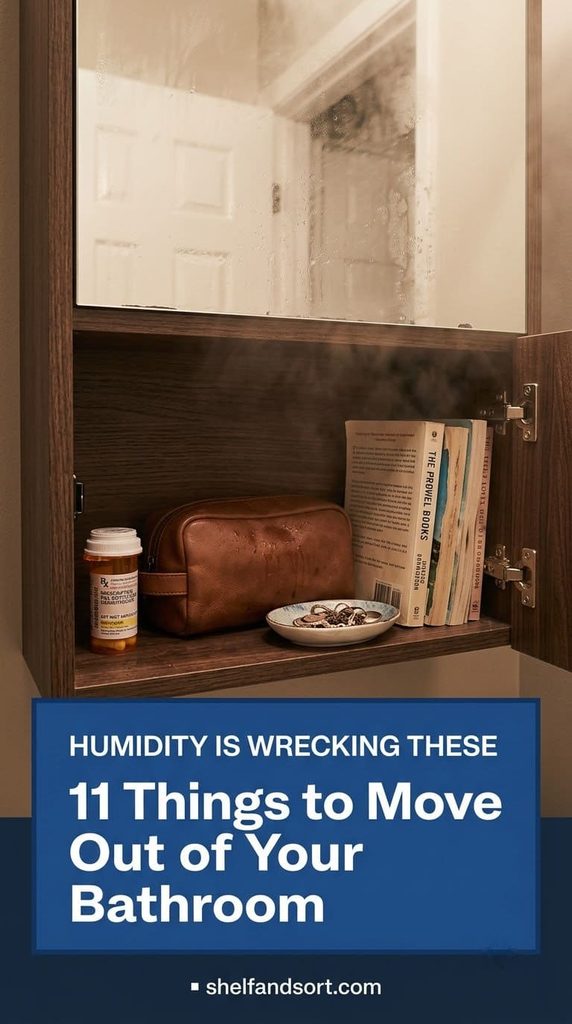
The bathroom is the most humid room in your house, and that damp air slowly degrades a surprising list of things people keep in there by habit. This guide covers 11 items to move out, the specific way heat and moisture ruin each one, and the exact spot each belongs instead, plus a short list of what is actually fine to keep in the bathroom.
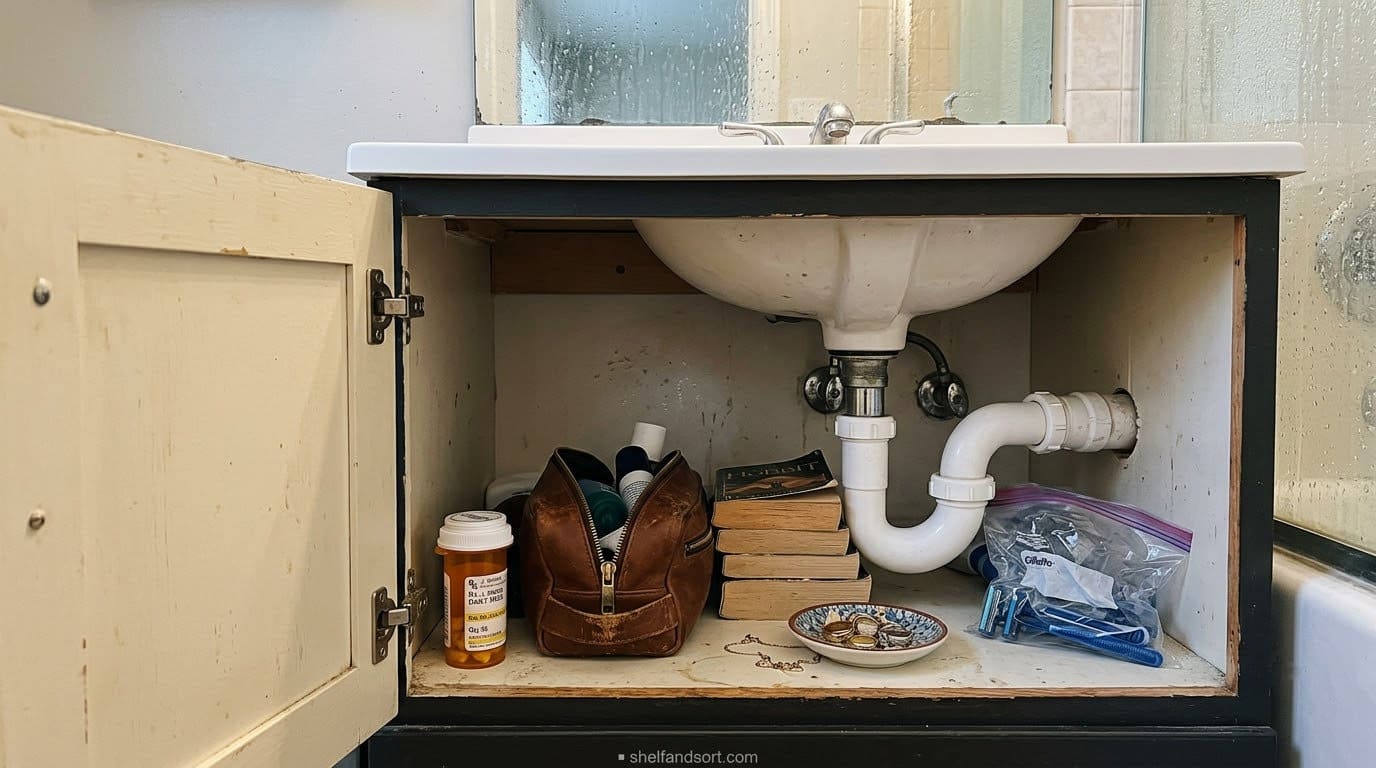
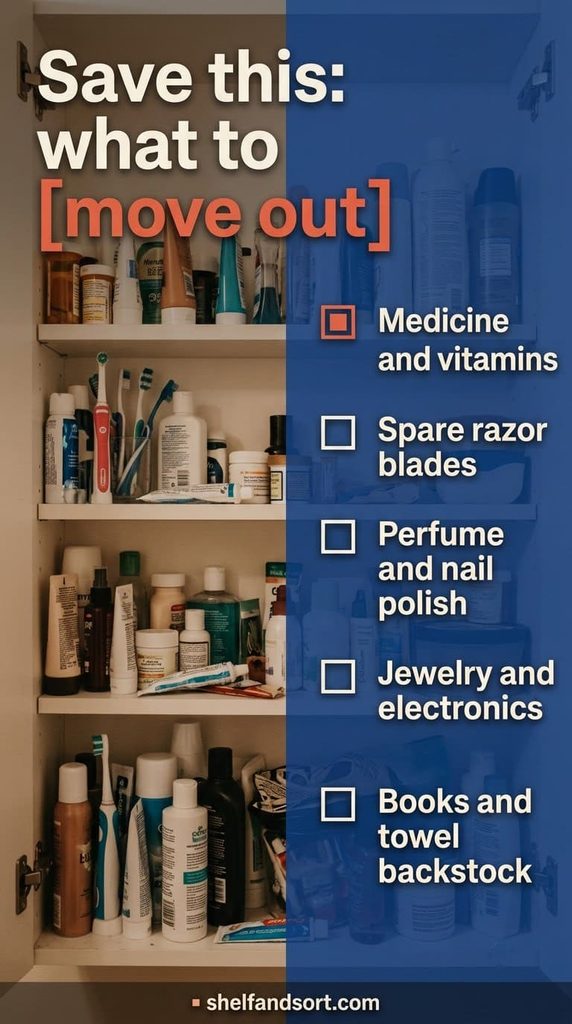
Never store medication, vitamins, or birth control in the bathroom, along with spare razors, perfume, nail polish, jewelry, electronics and chargers, your backup towel stash, bulk toilet paper, books and paper, unused makeup and skincare, and untreated wood, bamboo, cork, or leather items. The problem is the same for all of them.
A bathroom swings from about 60 percent humidity up to steam-room wet twice a day, plus heat and light, and that cycle breaks down chemistry, rusts metal, warps fiber, and grows mildew.
Medicine loses potency, razor edges dull, perfume turns, silver tarnishes, paper foxes. The fix is to move each item to a cool, dry, dark spot, usually a bedroom drawer or a hallway linen closet, and keep only in-use daily items and a few rolls of toilet paper in the bathroom itself.
Why the bathroom wrecks some things and not others
Every problem on this list comes back to one thing: the bathroom is a humidity chamber. Run a hot shower and the air goes from normal to fully saturated in two minutes, then slowly dries out, then does it again tonight.
That wet-dry cycle is harder on materials than steady damp would be. Metal gets a thin film of moisture that evaporates and leaves oxidation. Paper and fabric absorb water into their fibers and swell. Chemical formulas separate or react.
Heat and light pile on. A bathroom near a window bakes in the afternoon, and the mirror and vanity lights add warmth right where products sit.
So the test for whether something belongs in the bathroom is simple. Does it get used wet, daily, and does humidity leave it alone? If not, it belongs somewhere else, even if it has always lived in that cabinet.
What should you never store in a bathroom?
Here is the full list, what the room does to each item, and where it goes instead. The detail on each one follows below.
| Item | What the bathroom does to it | Where to put it instead |
|---|---|---|
| Medication, vitamins, birth control | Heat and moisture cut potency before the expiration date | Bedroom drawer or linen closet, 59 to 77°F |
| Spare razors and blades | Ambient humidity oxidizes and dulls the edge with no water contact | A drawer outside the bathroom, or a closed container |
| Perfume and cologne | Heat and light break the top notes, the scent turns | Bedroom dresser, away from the window |
| Nail polish and remover | Temperature swings thicken and separate the formula | Cool, dark closet shelf or a bedroom drawer |
| Jewelry, especially silver and pearls | Moisture speeds tarnish, pearls can be damaged for good | A lined jewelry box in the bedroom |
| Electronics and chargers | Corrosion on contacts, plus a shock risk near water | Charge and store in the bedroom |
| Backup towels and linens | Absorb ambient moisture, smell musty before first use | Hallway linen closet |
| Bulk toilet paper and paper goods | Paper wicks humidity, goes limp and can mildew | A dry closet, keep 2 to 3 rolls in the bathroom |
| Books, magazines, mail | Pages warp, foxing spots appear, silverfish move in | Anywhere but the bathroom |
| Unused makeup and skincare | Humidity shortens shelf life and oxidizes active ingredients | A cool bedroom drawer or vanity |
| Wood, bamboo, cork, leather | Warp, swell, split, and grow mold | Dry storage, dry fully between uses if used in the bathroom |
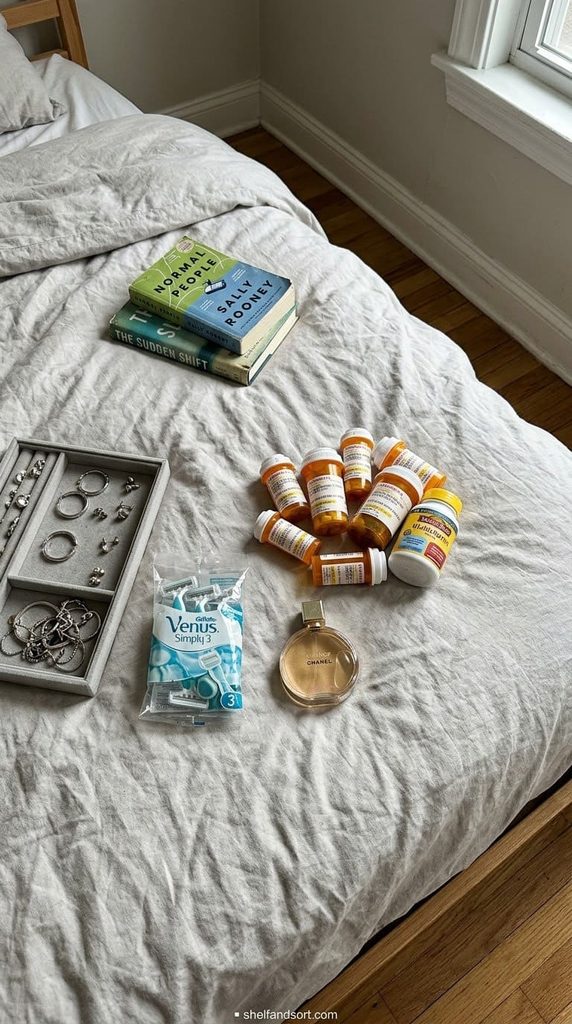
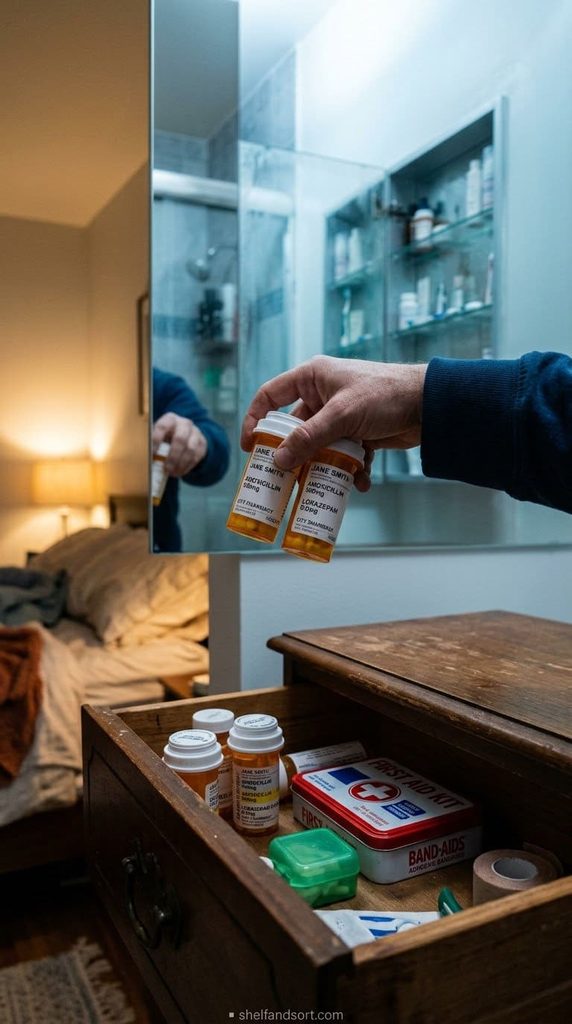
1. Medication, vitamins, and birth control
This is the big one, and it is the most common. The cabinet is literally called a medicine cabinet, and it is the worst spot in the house for medicine.
Heat and moisture from every shower degrade many drugs faster than time alone would. The NIH’s MedlinePlus guidance says to keep medicines in a cool, dry place and warns that the bathroom is a poor choice because temperature and humidity swing so much. Most medication wants a steady room between 59 and 77 degrees Fahrenheit.
Birth control is worth calling out. Humidity can break down the components in oral contraceptives and make them less effective, so those especially should live in a bedroom drawer, not the bathroom.
Where instead: a bedroom dresser drawer, a hall closet shelf, or a high kitchen cabinet away from the stove. Keep pills in the original bottle with the little desiccant packet.
The exception: adhesive bandages and basic first aid can stay at the sink, ideally in a closed pouch or tin so the humidity does not kill the sticky backing.
Common mistake: decanting a week of pills into an open daily organizer and leaving it on the counter. Now they get light and damp too. Fill the organizer from the stored bottle and keep the organizer in the bedroom.

A small renewable unit that sits in a vanity cabinet or a closet and pulls moisture from the air with no cord and no tank to empty. When the beads saturate, you plug it in to dry out and reuse it. Good for a cabinet where you have no choice but to keep something vulnerable.
Shop NowThis post contains affiliate links. We may earn a commission on qualifying purchases at no extra cost to you.
Kids-in-the-house note: moving medicine out of the bathroom is also a safety win, since the bathroom cabinet is an obvious first place a curious kid looks. Store it high with a latch.
2. Spare razors and razor blades
Your razor gets wet on purpose, so this feels backward. But the extra cartridges and the backup razor in the cabinet are a different story.
Metal blades oxidize from humidity in the air alone, no direct water needed. That thin layer of rust rounds off the fine edge, so a blade you never used is already duller by the time you open it.
Where instead: keep sealed spare cartridges in a bedroom or linen closet drawer. Your in-use razor can stay in the bathroom, just somewhere it drains and dries, not in a closed wet caddy.
The exception: a full unopened multipack in its retail plastic is fairly well sealed and can sit in the cabinet for a while. It is the opened, loose blades that suffer.
Common mistake: storing the razor head-down in a cup or a suction holder that traps water around the blades. That is the fastest way to rust an edge. Store it so the head points sideways or down with nothing cupping it.
Bookmark tip: if your blades still rust fast even stored dry, dunk the razor in rubbing alcohol after each shave. The alcohol displaces water and evaporates clean, and a blade can last weeks longer.
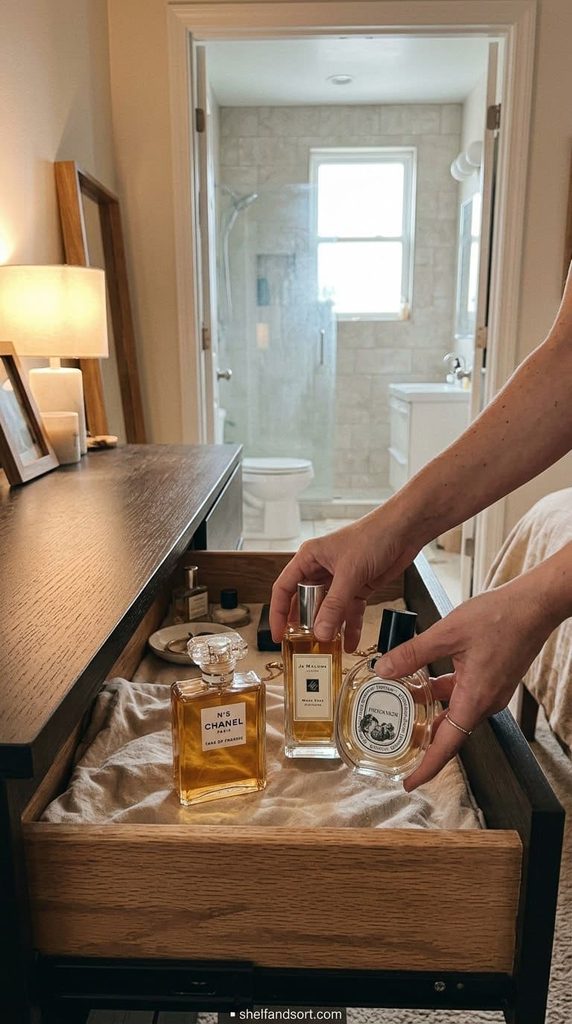
3. Perfume and cologne
Fragrance is fragile chemistry in a bottle, and the bathroom hits it with all three things it hates: heat, light, and temperature swings.
Tabatha Farnel, a fragrance expert quoted by Homes & Gardens, says to keep fragrances in a cool, dry place away from direct sun and temperature changes. In a warm, bright bathroom the top notes break down first, so the scent smells thin or sour within months instead of lasting a couple of years.
Where instead: a bedroom drawer or a closet shelf, in the original box if you kept it. Dark and steady is the goal.
The exception: the bottle you are actively working through and will finish in a month or two is fine on a bedroom dresser. It is long-term storage in the bathroom that ruins a collection.
Common mistake: displaying perfume bottles on an open bathroom shelf because they look nice. They are decor for a few weeks and spoiled product after that. Keep the pretty bottles in the bedroom.
Common organizer note: the same logic covers scented body oils and essential oils, which also degrade with heat and light. Those move out too.
4. Nail polish and nail polish remover
Nail polish is a suspension, tiny color particles held in solvent, and it only stays usable if that mix holds together.
Humidity and the bathroom’s temperature swings thicken the polish and let the pigment settle and separate. You end up with a gloppy bottle that streaks, months before it should have gone off.
Where instead: a cool, dark drawer or closet shelf, ideally a bedroom or hallway one that stays a steady temperature. Some people keep polish in the fridge, which works but is not required.
The exception: none really. Even the bottle you use often does better outside the bathroom, brought in just when you are painting your nails.
Common mistake: storing polish upright in a warm cabinet next to the vanity lights. The heat is worse than the damp here. A drawer away from any heat source is the fix.
Bookmark tip: stand bottles upside down in storage for a day before use. It helps the settled pigment redistribute so you can tell whether a bottle is actually still good.
5. Jewelry, especially silver and pearls
That little dish of rings and earrings by the sink is costing you. Moisture in the air reacts with silver and speeds up tarnish, so sterling and silver-plated pieces go dull and dark much faster in a bathroom.
Pearls and other soft, porous stones are worse off. Humidity, and the hairspray and perfume in bathroom air, can damage the surface in a way that does not polish out.
Where instead: a lined or felt jewelry box in the bedroom, ideally with an anti-tarnish strip tucked in. Dry and closed is what these metals need.
The exception: the ring you take off to wash your hands and put right back on. A small dish for that one piece is fine. It is the collection sitting out that suffers.
Common mistake: keeping jewelry in the bathroom “so I remember to put it on.” Move the box to the top of your dresser instead, where you also get dressed. Same reminder, none of the damage.
Bookmark tip: drop a piece of chalk or a silica packet into the jewelry box. Both pull moisture out of the closed box and slow tarnish noticeably.
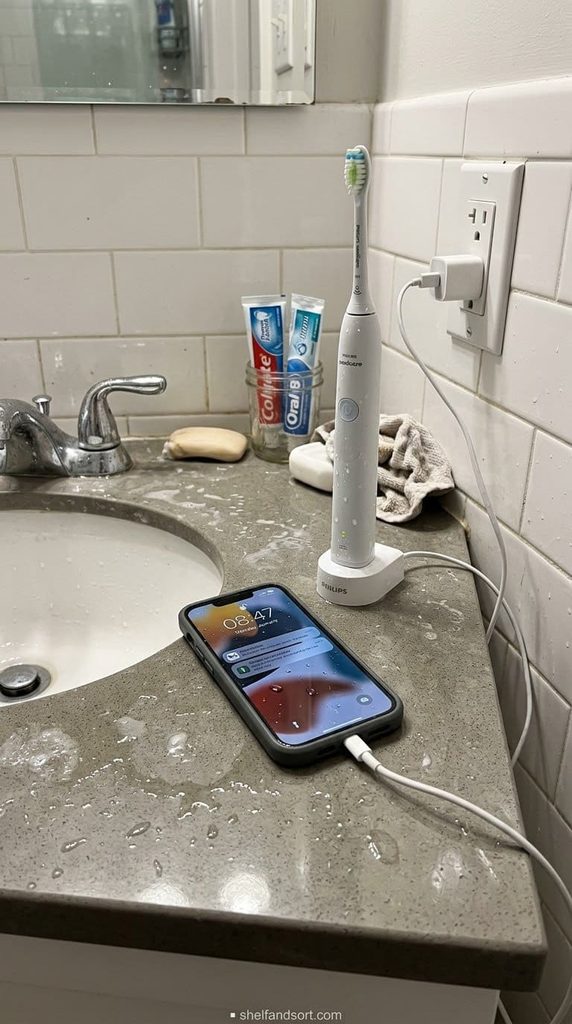
6. Electronics and anything that charges
Phones, tablets, e-readers, electric shavers on a charging base, a water flosser plugged in full time. None of it should live in the bathroom.
Humidity corrodes the tiny metal contacts and ports over time, so the device gets flaky before it should. And a charger plus an outlet plus a wet room is a genuine shock hazard, especially near the sink or tub.
Where instead: charge phones and tablets in the bedroom overnight. Store hair tools in a dry drawer once they have cooled, not plugged in on the counter.
The exception: a device rated for bathroom use, like a shaver marked for wet use, is built for it. Check the rating before you assume.
Common mistake: using the bathroom as a charging station because there is an outlet by the mirror. Move the nightly charge to a nightstand. Your sleep is better for it anyway.
Renter note: if the bathroom outlet is the only one near where you get ready, at least unplug and put the device away between uses instead of leaving it out in the damp.
7. Your backup towel and linen stash
Keeping every towel and spare sheet set in the bathroom cabinet feels efficient. It is not.
Folded fabric absorbs moisture straight out of humid air. A stack of towels in an open bathroom cabinet picks up damp from every shower and can smell musty before you have used it once. Then it goes back through the wash instead of onto a rack.
Where instead: a hallway or bedroom linen closet for the backstock. Keep only what is in active use in the bathroom, roughly two bath and two hand towels per person plus one guest set.
The exception: a closed, well-sealed vanity drawer that never sees shower steam can hold one spare set. Most bathroom cabinets are not that sealed.
Common mistake: restocking the bathroom cabinet straight from the dryer with more towels than the room uses. If they are not being used within a week, they are just absorbing moisture. Store them elsewhere.
Bookmark tip: if your linen closet itself runs humid, a hanging moisture absorber keeps the whole closet dry and the towels fresh for months.
8. Bulk toilet paper and paper goods
A giant pack of toilet paper under the sink seems harmless. Paper is more absorbent than people think, though.
In a damp cabinet, rolls slowly wick humidity, lose their loft, and in a really wet bathroom can even spot with mildew. Facial tissue and paper towels do the same.
Where instead: keep the bulk pack in a hall closet, a bedroom closet, or a garage shelf that stays dry. Bring in two or three rolls at a time to a spot in the bathroom.
The exception: a few rolls in active rotation are fine, they get used before humidity does much. It is the 24-pack sitting for two months that degrades.
Common mistake: storing the open bulk pack directly on the floor of the vanity cabinet, which is the dampest, coldest spot. If some has to stay, get it up onto a shelf or into a lidded bin.
Small-bathroom note: if there is truly no storage elsewhere, put the backstock in a sealed plastic bin with a lid. That blocks most of the ambient moisture.
9. Books, magazines, and important paper
The bathroom reading pile is a tradition, and it is rough on the books. Paper is basically a sponge.
Pages absorb humidity and warp, the paper develops brown foxing spots, and glue bindings loosen. Damp paper also attracts silverfish, which then stick around for your other stored paper. Never keep documents, photos, or anything you care about in there.
Where instead: a bookshelf in any other room. Store important paper, warranties, and photos in a dry closet or a file box well away from the bathroom.
The exception: a magazine you will read this week and recycle. Short stay, minimal harm. Nothing you want to keep.
Common mistake: a wall-mounted magazine rack right next to the shower. That is the wettest air in the house. If you must have reading in there, bring it in and take it out each time.
Bookmark tip: swap paper books for a cheap tablet or e-reader that lives in the bedroom and only visits the bathroom in your hand. No pile, no warping, no silverfish.
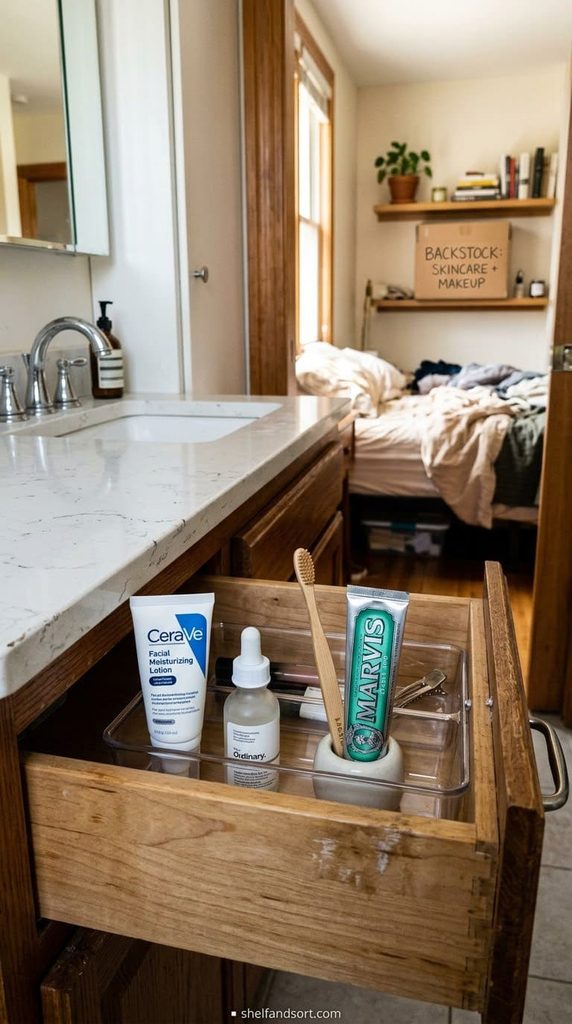
10. Makeup and skincare you are not currently using
The product you use every morning is fine on the counter. The backup foundation, the palette you rotate in sometimes, the three serums you are “saving,” those should not be in the bathroom.
Heat and humidity shorten the shelf life of makeup and skincare and can help bacteria grow. The FDA notes that cosmetics break down faster when stored improperly, and specifically flags a bathroom’s heat and dampness. Active ingredients like retinol and vitamin C oxidize and can start to irritate skin.
Where instead: a cool bedroom drawer or a dedicated vanity away from the shower. Keep only your current daily lineup in the bathroom.
The exception: products designed for shower use, like an in-shower body lotion, are formulated for that environment. Most of your skincare is not.
Common mistake: buying backups of skincare on sale and stacking them under the bathroom sink. They are aging on that shelf before you open them. Store backups somewhere cool and buy fewer at a time.
Bookmark tip: anything with a pump lasts longer than a jar, because you are not dipping fingers and bathroom air into it every day. When you have the choice, pick the pump.
11. Wood, bamboo, cork, and leather items
Natural materials and a humidity chamber do not mix. Untreated or lightly finished wood absorbs moisture, swells, then dries and cracks along the grain.
Bamboo drawer organizers go furry with mildew on the underside where you never look. Cork crumbles. Leather, a dopp kit or a valet tray left in there long term, can grow actual mold on the surface.
Where instead: store leather bags, wood jewelry boxes, and cork boards in a dry bedroom or closet. If you want the look of a wood or bamboo tray in the bathroom, use one sealed with polyurethane and keep dripping items off it.
The exception: a well-sealed teak bath mat or shower bench is built for wet use and designed to dry fast. That is different from a raw bamboo organizer holding damp toothbrushes.
Common mistake: using a bamboo cutlery tray as a drawer divider for wet razors and tweezers. The trapped moisture rots it from below within a year. Use plastic or coated metal dividers in the bathroom.
Bookmark tip: if a wood item has to be in the bathroom, wipe it with a little mineral oil every month or two. It slows water absorption and keeps the grain from drying out and splitting.
What is actually fine to keep in the bathroom
The point is not to empty the room. Plenty of things belong there.
Your current daily products, one of each, are fine on the counter or in a drawer. So are in-use towels on a bar, a plunger and toilet brush, hand soap, and a few rolls of toilet paper.
Cleaning supplies for the bathroom can stay, ideally in a caddy under the sink and up off the cabinet floor. Basic first aid is fine too, kept in a closed tin or pouch so the humidity does not wreck the adhesive.
The rule is current, in-use, and either humidity-proof or used up fast. Everything else has a better home.
How to protect the things that have to stay
Sometimes there is nowhere else. A studio apartment with one closet, for example. Here is how to limit the damage.
Run the exhaust fan during every shower and for at least 20 minutes after. That single habit pulls the humidity spike down faster than anything else and protects everything in the room.
Put anything vulnerable in an airtight container, a lidded bin or a zip bag, rather than an open basket. Sealed beats exposed by a wide margin.
Keep a moisture absorber or a small rechargeable dehumidifier in the cabinet or the room. And never store anything directly on the floor of the vanity, since that is the coldest, dampest surface. Get it onto a shelf or a riser.
Frequently asked questions
What should you never store in a bathroom?
Medication, vitamins, and birth control, spare razors and blades, perfume and cologne, nail polish, jewelry, electronics and chargers, your backup towel and linen stash, bulk toilet paper, books and important paper, unused makeup and skincare backups, and untreated wood, bamboo, cork, or leather. They all fail for the same reason: the bathroom cycles between about 60 percent humidity and full steam twice a day, plus heat and light, and that degrades chemistry, rusts metal, warps fiber, and grows mildew. Move each to a cool, dry, dark spot, usually a bedroom drawer or a hallway linen closet.
Why can’t you keep medicine in the bathroom?
Heat and moisture from showers break many medications down faster than time alone, so they can lose potency before the printed expiration date. NIH guidance says to store medicine in a cool, dry place and calls the bathroom a poor choice because its temperature and humidity swing so widely. Most drugs want a steady 59 to 77 degrees Fahrenheit. Birth control is especially sensitive, since humidity can reduce its effectiveness. Keep medicine in a bedroom drawer or a hall closet in its original bottle with the desiccant packet.
Does bathroom humidity really ruin perfume and nail polish?
Yes. Perfume is delicate chemistry, and heat, light, and temperature swings break the top notes so the scent turns thin or sour within months instead of lasting years. Nail polish is a suspension of pigment in solvent, and humidity plus temperature changes thicken it and let the color separate, leaving a gloppy bottle that streaks. Both last much longer in a cool, dark bedroom drawer, brought into the bathroom only when you are using them.
What is safe to store in a bathroom?
Your current daily products, one of each, in-use towels, hand soap, a plunger and toilet brush, two or three rolls of toilet paper, bathroom cleaning supplies in a caddy up off the cabinet floor, and basic first aid in a closed tin or pouch. The test is whether the item is current, in active use, and either humidity-proof or used up quickly. Anything that is backstock, delicate, metal, paper, wood, or electronic belongs in a drier room.
Products We Recommend
This post contains affiliate links. We may earn a commission on qualifying purchases at no extra cost to you.
Eva-Dry E-333 Wireless Mini Dehumidifier
A small renewable unit that sits in a vanity cabinet or a closet and pulls moisture from the air with no cord and no tank to empty. When the beads saturate, you plug it in to dry out and reuse it. Good for a cabinet where you have no choice but to keep something vulnerable.
Shop Now
DampRid Fragrance Free Hanging Moisture Absorber, 3-Pack
Hang one in the hallway linen closet you move your towel backstock into, or in a closet that runs humid. It traps excess moisture and the musty smell that comes with it, and each one lasts a couple of months.
Shop now
Voova Stackable Jewelry Organizer Tray with Lid, Set of 4
The bedroom home for the jewelry that should not be tarnishing by your sink. The lidded, felt-lined trays stack in a dresser drawer and keep silver and pearls dry and dark. Drop in an anti-tarnish strip and silver stays bright far longer.
Shop now