10 Things to Donate Before Back-to-School Season, From Clothes to Dorm Gear
Back-to-school season is the one window each year when your outgrown clothes, spare backpacks, and old dorm gear are exactly what another family is out shopping for. This guide gives you a three-question test to decide what goes, a fast way to sort the donate pile, and the real drop-off rules so nothing you give away ends up in a landfill.
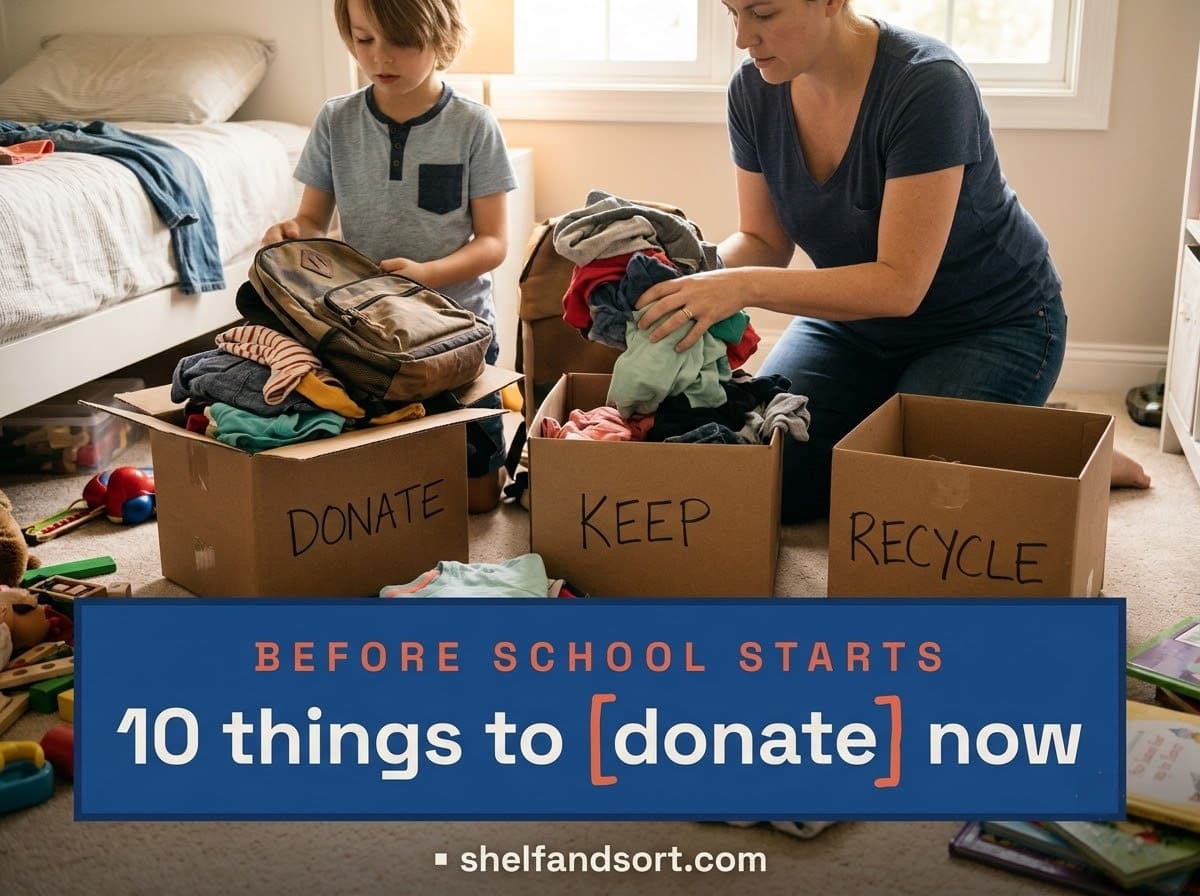
The best time to donate kids’ clothes, backpacks, school supplies, and dorm gear is the two weeks before school starts, because that’s when thrift shoppers are actively looking for those exact items. Use one test on every item: would you replace it at full price if it vanished today, has anyone touched it in the last school year, and is it clean and complete enough to hand to a friend? If the answers are no, no, and yes, it goes in the donate box. Clothes and shoes go to Goodwill or a local family shelter. Coats go to a coat drive. Sports gear goes to a group like Leveling the Playing Field. Working small appliances go to Goodwill or Habitat ReStore. Broken or stained items get recycled or trashed, not donated, since a torn backpack just becomes the charity’s disposal cost.
Why back-to-school is the best donation window of the year
Timing matters more than people think. A backpack you drop off in January sits in a back room for months. But the same backpack dropped off in mid-August gets bought within days, often by a parent standing in the store with a school supply list in hand.
Goodwill locations openly say bags, sneakers, and kids’ clothes move fastest in the weeks right before school starts, per the donation guidelines from Goodwill of Greater Washington. So the stuff clogging your closet right now is the stuff another family needs this week. Honestly, this is the single easiest win in the whole decluttering year, since the timing does half the work for you.
There’s a money angle too. Non-cash donations to a registered nonprofit are deductible at fair market value, which the IRS defines in Publication 561 as the thrift-store resale price, not what you paid at retail. Keep the dated receipt. Once your donated goods pass 500 dollars in a year, you file Form 8283 with your return.
The 3 questions to ask before you donate anything
This is the Sort-or-Store test we use on every category of stuff. Run all three questions on each item, in order. It takes about five seconds per item once you get going.
Question 1: Would I buy this again at full price if it disappeared today? If no, you’ve already stopped valuing it. That’s a donate signal, even if the item is technically fine.
Question 2: Has anyone used this in the last twelve months, meaning one full school year? A raincoat worn once still counts as used. A binder that has sat empty since last September doesn’t.
Question 3: Is it clean, complete, and safe enough that I would hand it directly to a friend? If yes, donate it. If no, it’s a recycling or trash item, not a donation. Charities pay real money to dispose of unusable donations, so a stained shirt is a cost you’re handing them, not a gift.
Three noes on the first two questions plus a yes on the third means it goes. Anything that fails Question 3 skips the donate box entirely.
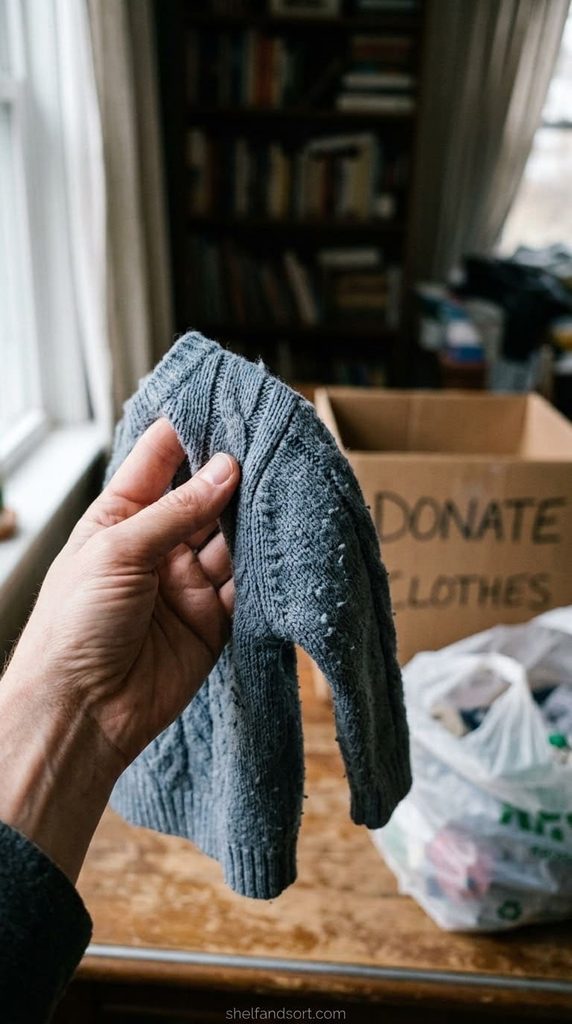
1. Outgrown kids’ and teens’ clothes
Kids grow out of a full size roughly once a year, sometimes twice for younger ones. That means every August you’re sitting on a stack of shirts, jeans, hoodies, and jackets that fit last spring and will never fit again.
Start with the dresser, not the closet. Pull every item, check the tag size against what your child wears now, and make three piles: fits, doesn’t fit, and worn out. The does-not-fit pile that passes the three questions goes straight to donation.
School uniforms, plain jeans, hoodies, and gym clothes are the highest-demand items because families buy them every single year. Formal wear and costumes move slowly, so those are better sold or passed to a specific person.
Common mistake: saving the whole outgrown wardrobe “for the next kid” when the next kid is four years and two seasons away. Stored cotton yellows at the folds, elastic dries out, and you end up donating it anyway in worse condition. Keep only 10 to 15 favorite pieces per size, in a sealed bin, and donate the rest now.
If you only have 10 minutes: do just the current-season items your child physically can’t close or pull on. Those are pure clutter with zero chance of fitting again.
Variant for hand-me-downs between siblings: label the keep bin with the size and the year it will next be needed, not just “boys clothes,” so you’re not reopening five unlabeled bins next spring.

This is the bin for the keep pile in section 1. You want to hold onto 10 to 15 favorite pieces per size, and a clear front lets you check what is in the bin next spring without pulling the lid. The stackable shape means the outgrown-clothes archive takes one closet-shelf footprint instead of five loose bags. Same reason it works for the "keep the clear ones" tip in section 7.
Shop NowThis post contains affiliate links. We may earn a commission on qualifying purchases at no extra cost to you.
The professional organizers at NAPO-GPC suggest a daily one-minute habit during growth spurts: the moment something doesn’t fit at breakfast, it goes in the give-away basket by the door, not back in the drawer. That stops the August pileup before it forms.
2. Shoes and sneakers with real life left
Shoes are always in demand before school, especially sneakers and cleats in kid and teen sizes. A pair your child wore for one soccer season can easily carry another kid through a full year.
Check three things on each pair: tread wear, heel collapse, and smell. Even tread and a firm heel means donate. Worn-through tread or a heel that folds flat means recycle, since a resale shoe with no grip is a fall risk for the next kid.
Wipe the soles, pull out old insoles, and rubber-band each pair together so they don’t get separated in the donation bin. A single shoe is worthless to the store.
Common mistake: donating cleats and ballet shoes mid-season when a teammate or classmate could use them right now. Sport-specific footwear is worth a quick text to your team group chat before it goes in a general donation box.
If you only have 10 minutes: grab every pair two or more sizes too small. Those are never coming back into rotation.
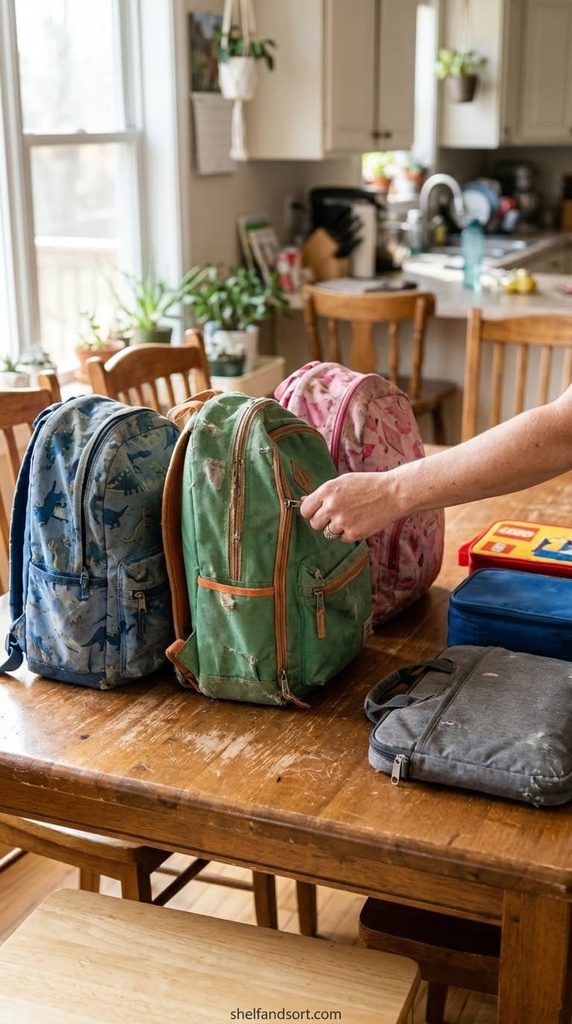
3. Backpacks, lunchboxes, and bags
Backpacks are one of the first things parents replace each year, so a solid bag with working zippers sells almost immediately in August. Messenger bags and laptop bags are in demand too as older kids move into middle and high school.
Empty the bag completely, including that one side pocket with a granola bar from last October. Run every zipper end to end. Check the strap seams where they meet the body, since that’s the first point of failure.
Working zippers and intact straps mean donate. A broken main zipper means trash, because nobody buys a backpack that won’t close, and the charity just pays to haul it away.
Wash fabric lunchboxes on a gentle cycle or wipe insulated ones with a vinegar and water mix, then air them out fully. A lunchbox that smells goes in the trash, not the donate box.
Common mistake: donating a backpack with a broken clip or a stuck zipper and telling yourself someone handy will fix it. They won’t. Store staff sort these straight to disposal, so you’ve just added to their costs.
4. Unused and barely-used school supplies
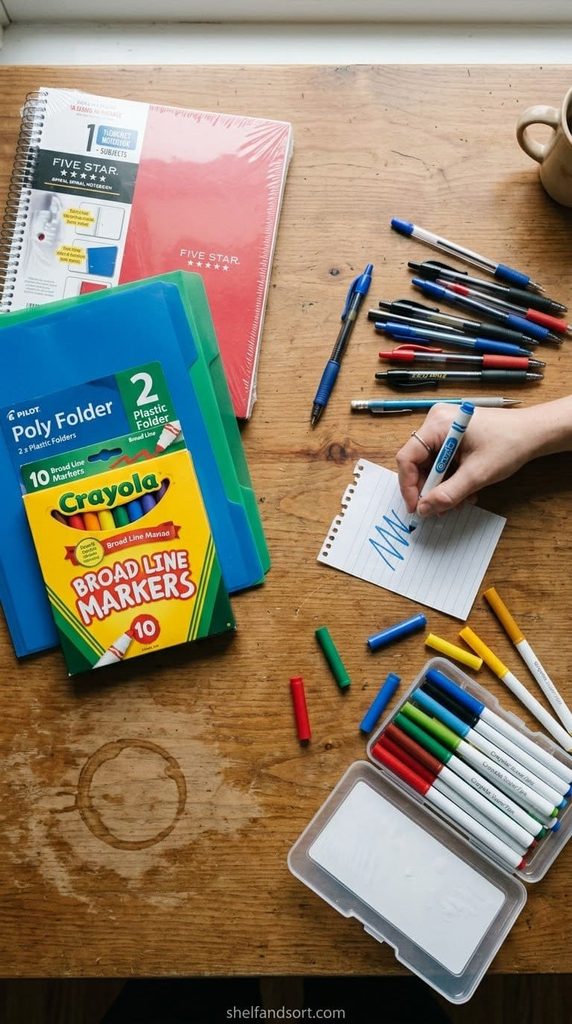
Every house has the supply drawer: half a pack of markers, three unopened notebooks, a pencil case that never got used, glue sticks from two years ago. Schools and thrift stores both take these, and many Goodwill locations run supply drives in August specifically.
Sort by opened versus sealed. Sealed markers, crayons, pencils, notebooks, folders, and binders go to donation as-is. Opened but barely used items, like a marker set with two colors gone, still donate fine if they work.
Test every marker and pen before it goes in the box. A dried-out marker in a donated set makes the whole set feel like junk to the next family.
Common mistake: dumping the entire junk-drawer contents into one bag, dead pens included. Someone has to sort that, and a bag of mostly-trash supplies often gets tossed whole rather than picked through.
If you only have 5 minutes: pull only the sealed, still-in-packaging items. Zero sorting needed, and those are the highest value to a supply drive.
Variant for classroom donations: many teachers post specific wish lists in August. Tissues, hand sanitizer, and dry-erase markers are almost always on them, and giving directly to a classroom skips the resale step entirely.
5. Kids’ books and learning materials they’ve aged out of
Board books, early readers, workbooks, flash cards, and educational toys all have a narrow age window. Once your kid is past them, they’re just shelf weight.
Pull books by reading level, not by how much you liked them. If your ten-year-old is reading chapter books, the picture books can go, minus a small sentimental keep pile of five to ten titles.
Check each book for water damage, heavy crayon, missing pages, and mold smell. Clean and complete means donate. Damaged means recycle the paper, since libraries and thrift stores reject damaged books on sight.
From what I’ve seen, hardcover picture books hold up best and move fastest at a used-book sale, so those are worth the trip even when the paperback readers are barely worth boxing.
Educational toys and Montessori-style materials donate well if all the pieces are there. A puzzle missing two pieces or a game missing the dice is a trash item, not a donation.
Common mistake: boxing up 200 books “for the school library” without asking. Most school libraries have no space and no process for random donations. Call first, or the box comes right back home.
Variant for multi-kid homes: keep one bin of the true classics that every kid should get, and donate the duplicates and the ones only one child liked.
6. Dorm appliances and small kitchen gear
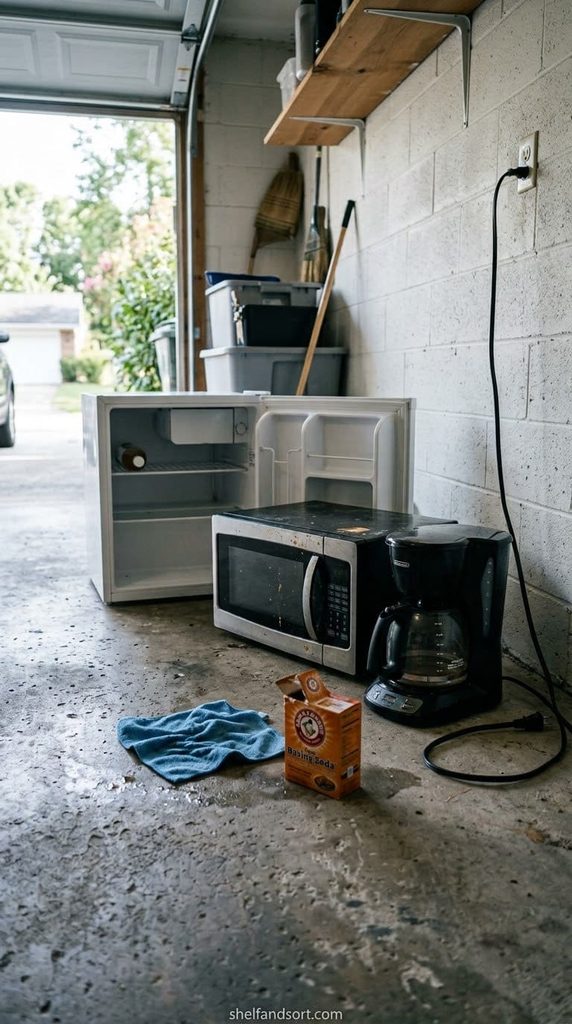
If you have a college kid moving out, or you’re a family that hosted one, the garage is probably holding a mini fridge, a microwave, a coffee maker, and a fan. Incoming freshmen and their parents are actively shopping for these right now, and a working used one saves them a few hundred dollars.
Plug in and test every appliance before you donate it. A mini fridge should get cold within an hour. A microwave should heat a cup of water in about ninety seconds. If it doesn’t work, it’s an e-waste recycling item, not a donation.
Wipe out the fridge with baking soda and water, run a vinegar cycle through the coffee maker, and clean the microwave interior. A dirty appliance reads as broken to the next buyer even when it runs fine.
Goodwill and Habitat ReStore both take working small appliances. ReStore in particular is set up for this and often does pickup for larger loads.
Common mistake: donating a mini fridge without checking the door seal. A fridge that won’t hold temperature because the gasket is cracked is a return waiting to happen, and the store eats the loss.
If you only have 15 minutes: test and wipe the two highest-value items, usually the fridge and the microwave. Deal with the fan and the desk lamp another day.
7. Dorm bedding, storage bins, and desk gear
This is the category people forget. Twin XL sheets, mattress toppers, shower caddies, storage cubes, desk lamps, and drying racks all pile up after a dorm move-out, and none of it fits a normal house.
Wash all bedding and check for stains, thinning fabric, and elastic that has given out. Clean and intact means donate. Stained or pilled means textile recycling, which many Goodwill bins now accept even for worn fabric.
Wipe down plastic bins and caddies and make sure lids match bases. A bin with no lid still has value for open storage, so donate it anyway and note it.
Desk lamps need a bulb test. LED lamps that light up are easy donations. Older lamps with a frayed cord go to e-waste recycling, because a cord fault is a fire risk you should not pass on.
Common mistake: donating a mattress topper that has been compressed and stained for a year. Toppers are one of the most-rejected donation items. If it isn’t genuinely clean and lofty, it goes in textile recycling.
Variant for storage bins: if you’re keeping some bins for home use, keep the clear ones and donate the opaque ones, since you can see what is in a clear bin without opening it.
8. Coats, snow gear, and cold-weather accessories
Kids outgrow a winter coat about as fast as they outgrow shoes, and a coat from last winter is often barely worn. Coat drives ramp up in late summer and early fall, so this is the right time to move them.
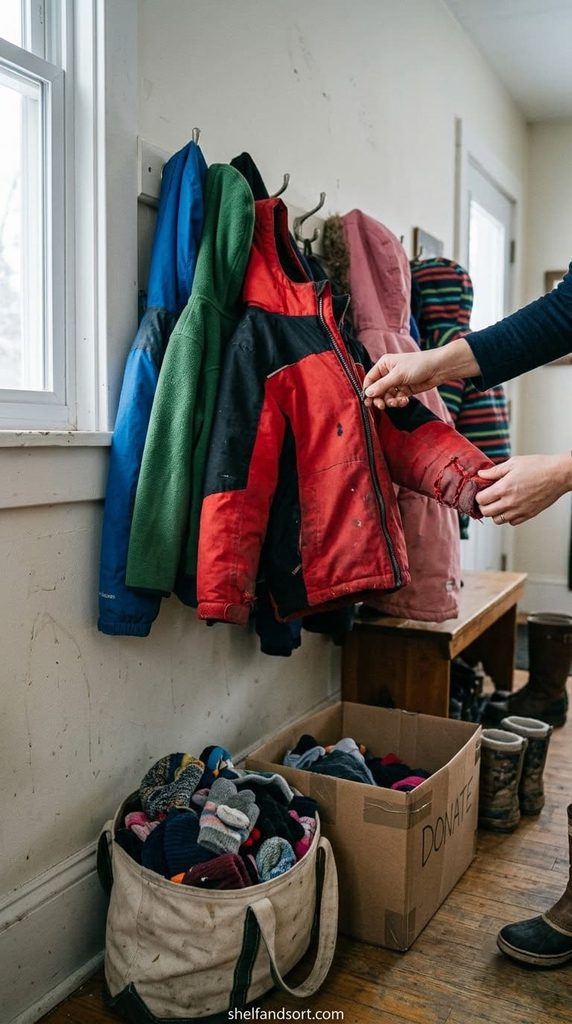
Pull every coat, snow pant, and pair of boots. Zip and snap each one, check the cuffs and knees for wear, and sniff for mildew from a damp closet. Working zippers and no smell means donate.
Hats, gloves, scarves, and mittens go in a separate bag, and only if they’re clean and have a match. A single glove is trash. Programs like New York Cares and local coat drives take these alongside the coats.
Common mistake: holding a coat back because “it might fit next year.” A growing kid rarely fits the same coat two winters running, and a coat that sits unworn one more year just gets donated later with a stuck zipper.
If you only have 10 minutes: grab the coats one full size too small. Those are the surest donates and the highest demand before cold weather.
Variant for hand-me-downs: keep the next size up if a sibling will realistically wear it this coming winter, and label the bin with the year. Skip the sizes that are two or more winters out.
9. Outgrown sports equipment and band instruments
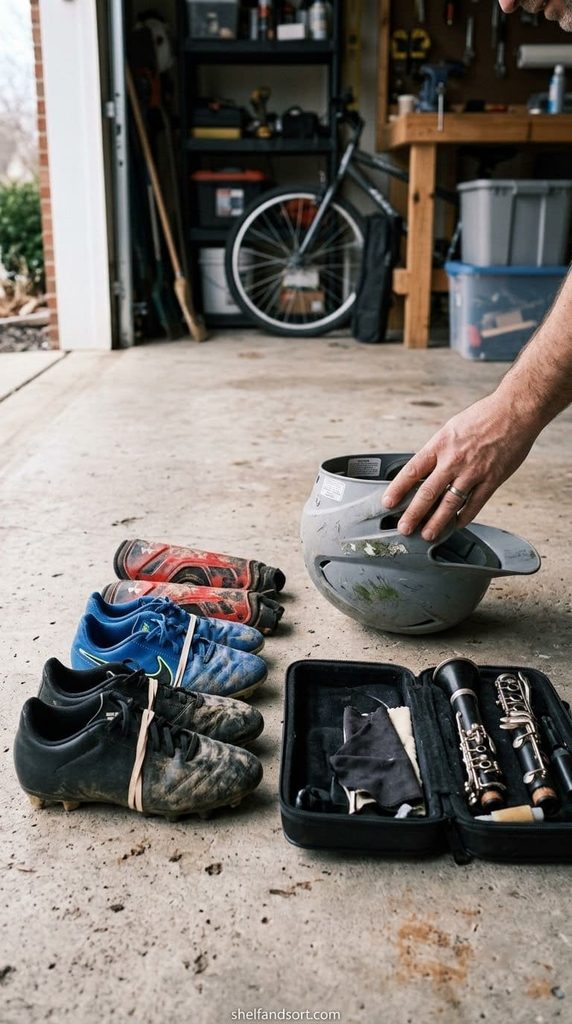
Cleats, shin guards, helmets, gloves, rackets, and rented-then-bought band instruments all sit in closets long after the kid quits or grows out of them. A used cleat can carry another kid through a full season.
Check protective gear carefully. Helmets and pads with cracked shells, torn straps, or an expired safety sticker go in the trash, not a donation, since worn-out protection is a safety risk for the next kid.
Wipe everything down, air out anything that held sweat, and bag cleats in pairs. Test instrument keys, valves, and cases before they go.
The nonprofit Leveling the Playing Field takes used sports gear and ships to families nationwide. They point to a real gap: a University of Florida study found 33 percent of kids in higher-income families play organized sports, versus 15 percent in lower-income families, and equipment cost is a named reason.
Common mistake: donating a helmet that looks fine but is past its certification date. Team leagues won’t accept it, so it just becomes the charity’s disposal problem. Check the sticker inside.
If you only have 15 minutes: deal with the cleats and the cleanest gear first. Instruments need a real function check, so save those for when you have time to test them.
Variant for band families: if the instrument was a school rental you later bought, call the band director first. A current student may need exactly that instrument right now.
10. Extra water bottles, lunch containers, and thermoses
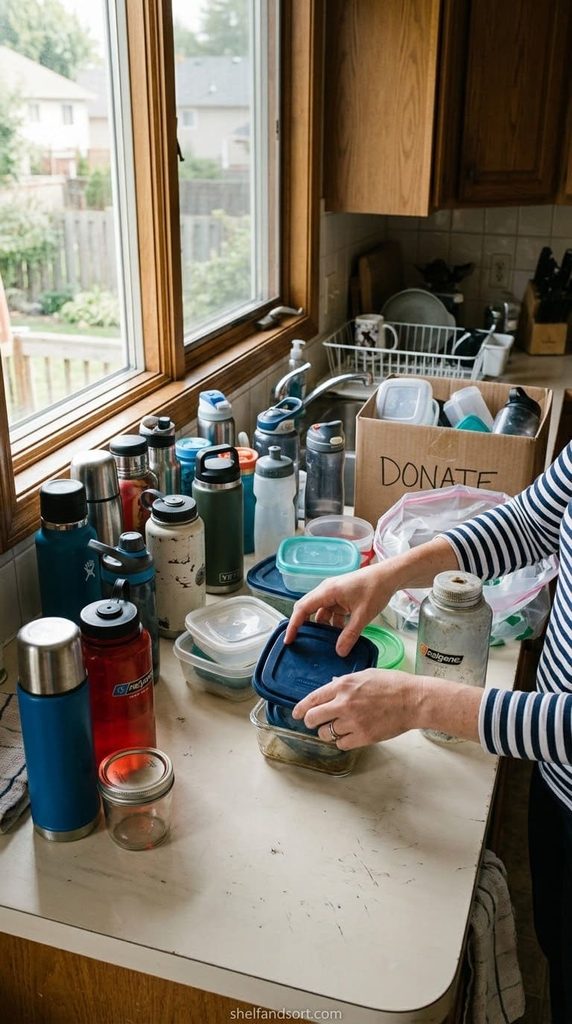
Every kitchen has the cabinet that avalanches: a dozen water bottles, mismatched lids, three thermoses, a pile of lunch containers. Back-to-school is when you actually need two or three good ones per kid, not twelve.
Pull all of it out. Match every lid to a base, and toss anything with no match. Check bottles for cloudy plastic, cracks, mold in the straw or seal, and a smell that won’t wash out.
Clean and complete bottles and containers donate fine. Cloudy, cracked, or permanently smelly ones go in the recycling, since nobody wants a used bottle they can’t get clean.
Common mistake: donating insulated bottles that have lost their seal and no longer keep anything cold. They look fine, but they don’t work, and the next family finds out the hard way.
If you only have 5 minutes: keep three per kid, the ones with intact lids and clean seals, and box the rest for donation without overthinking it.
Variant for households with older kids: let each kid pick which two bottles they will actually carry. A bottle a teen thinks is uncool never leaves the house, so it’s just cabinet clutter.
Where each thing goes, at a glance
Use this as a quick reference once you’ve run the three questions.
| Item | If it passes the test | If it fails the test |
|---|---|---|
| Kids’ and teens’ clothes | Goodwill, family shelter, or a friend | Textile recycling bin |
| Shoes and sneakers | Goodwill or a sports-specific hand-off | Textile or shoe recycling |
| Backpacks and bags | Goodwill, supply drive | Trash (broken zipper) |
| Sealed school supplies | School supply drive or classroom | Keep or use them up at home |
| Opened supplies that work | Supply drive if barely used | Trash (dried out) |
| Kids’ books and learning toys | Library sale, Goodwill, Little Free Library | Paper recycling |
| Dorm appliances that power on | Goodwill or Habitat ReStore | E-waste recycling |
| Dorm bedding and bins | Goodwill, shelter, college drive | Textile recycling (bedding) |
| Winter coats and snow gear | Coat drive, New York Cares, shelter | Textile recycling |
| Sports gear and instruments | Leveling the Playing Field, team | Trash (expired safety gear) |
| Water bottles and containers | Goodwill if clean and complete | Plastic recycling |
The sorting system: how to move the donate pile out fast
A donate pile that sits in the hallway for three weeks becomes clutter again. Here is the physical system.
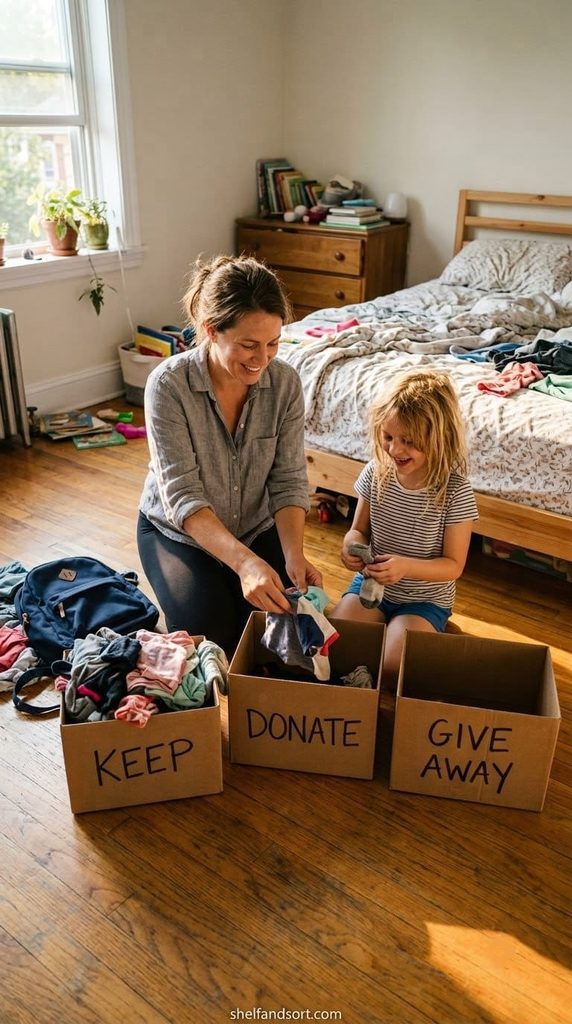
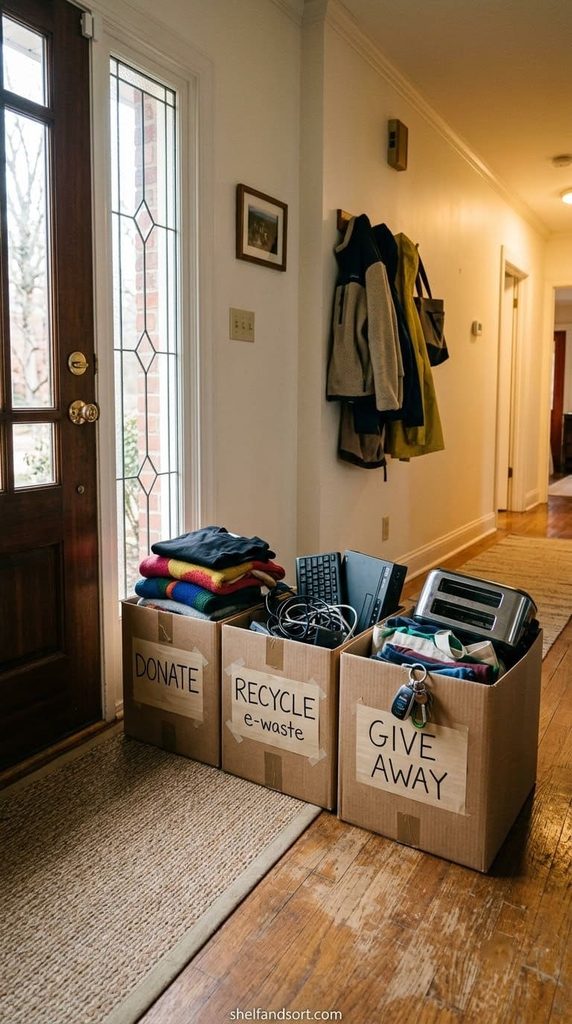
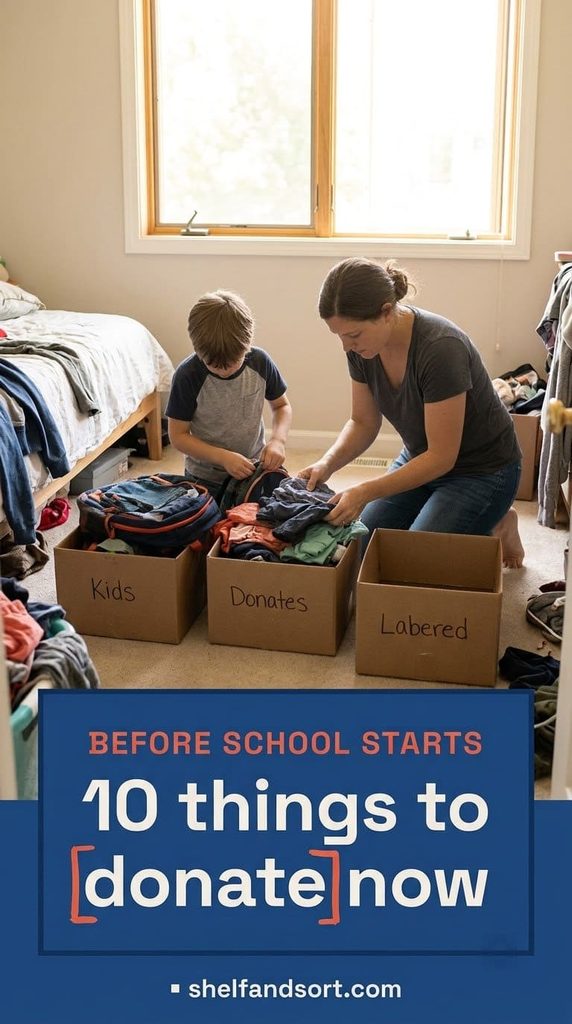
Use three containers, not one. Label them donate, recycle or e-waste, and give to a specific person. The third one prevents the classic mistake of donating the cleats your neighbor’s kid was going to borrow.
Bag donations by type: one bag clothes, one bag shoes, one box supplies, one box appliances. Stores sort faster when items arrive grouped, and grouped donations are less likely to get partially rejected.
Put the donate bags in your car the same day you pack them. Not the garage. The car. The trip to the drop-off happens when the bags are already in the trunk and you’re driving past anyway.
Get a dated receipt at every drop-off, even for small loads. Write a two-line list of what was in the load on the back. That’s all the IRS asks for under 250 dollars per donation.
The maintenance rule: one in, one out, checked every report card
The rule that keeps this from rebuilding: for clothes and gear, one new item in means one old item out, and you do a full pass at each report card or grading period.
That gives you three or four small sorts a year instead of one giant August scramble. Each one takes 20 minutes because the pile never gets big.
Keep a permanent donate basket in or near each kid’s closet. The moment something doesn’t fit or breaks, it goes in the basket, not back on the shelf. When the basket is full, it goes to the car.
Frequently asked questions
What should you not donate to Goodwill before back-to-school?
Do not donate broken backpacks, shoes with worn-through tread, dried-out markers, stained or torn clothing, appliances that don’t power on, mattress toppers that are compressed or stained, helmets or pads past their safety-certification date, water bottles with mold in the seal, or books with water damage or missing pages. These items cost the charity money to dispose of. Route them to textile recycling, e-waste recycling, or trash instead. The test is simple: if you wouldn’t hand it directly to a friend, don’t donate it.
When is the best time to donate school supplies?
The first two weeks of August, before most school districts start. That’s when thrift stores run supply drives and when parents are actively shopping donation racks with a supply list in hand. Sealed, in-package items have the highest value to a supply drive. If you miss the window, donate directly to a classroom instead, since teachers restock supplies all year.
Can you get a tax deduction for donating used clothes and dorm items?
Yes, if you donate to a registered 501(c)(3) nonprofit and the items are in good used condition or better. You deduct the fair market value, which the IRS defines in Publication 561 as the thrift-store resale price, not the original retail price. Keep the dated drop-off receipt and your own itemized list. If your total non-cash donations for the year pass 500 dollars, you must file Form 8283 with your tax return.
Where can I donate dorm furniture and appliances that Goodwill won’t take?
Habitat for Humanity ReStore takes working small appliances, furniture, and home goods, and many locations offer free pickup for larger loads. Local family shelters, refugee resettlement agencies, and college move-in donation drives also take dorm-specific items like twin XL bedding and storage bins. Check with your child’s incoming college, since many run a spring collection and a fall redistribution program.
How do I decide what to keep versus donate when my kid might use it later?
Run the three questions. Would you rebuy it at full price, has it been used in the last school year, and is it clean and complete. For genuine hand-me-downs between siblings, keep only 10 to 15 favorite pieces per size in a labeled, sealed bin, and donate the rest now. Stored clothing degrades, so keeping a full outgrown wardrobe for a kid who is years away usually means donating it later in worse shape.
Products We Recommend
This post contains affiliate links. We may earn a commission on qualifying purchases at no extra cost to you.
Vtopmart 6 Pack Clear Stackable Storage Bins with Lids and Handles, Large
This is the bin for the keep pile in section 1. You want to hold onto 10 to 15 favorite pieces per size, and a clear front lets you check what is in the bin next spring without pulling the lid. The stackable shape means the outgrown-clothes archive takes one closet-shelf footprint instead of five loose bags. Same reason it works for the "keep the clear ones" tip in section 7.
Shop Now
ClearSpace Heavy Duty Moving Bags, Water Resistant, 6 Pack
These solve the "bag donations by type" step in the sorting system. Trash bags tear when you carry a full load of shoes or books to the car, and then the donation spills in the trunk. These zip shut, have real handles, and hold their shape, so one bag of clothes and one bag of shoes actually make it to the drop-off intact. The product is literally sold for college dorm moves, so it doubles for the dorm cleanout in sections 6 and 7.
Shop now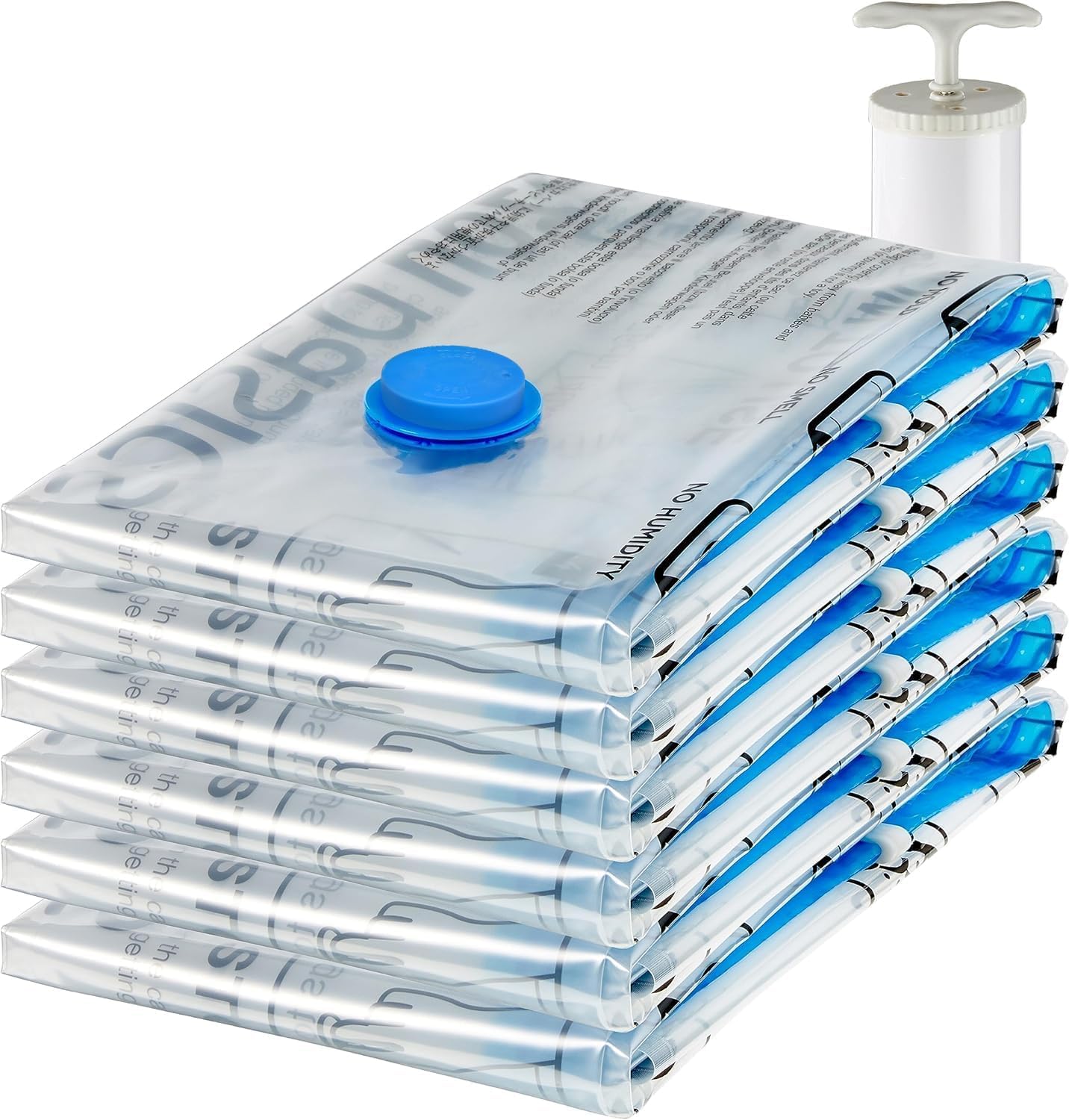
Amazon Basics Vacuum Storage Bags, Jumbo, 6 Pack with Hand Pump
Use these for the small sentimental keep pile of outgrown clothes. Compressing the air out means a full bin holds two or three times as much, so keeping a few favorite outfits per size doesn't eat a whole shelf. Don't seal the bags for years at a time though. Cotton creases hard at the fold lines under long compression, which is part of why the section 1 mistake warning says not to store a full wardrobe this way.
Shop now