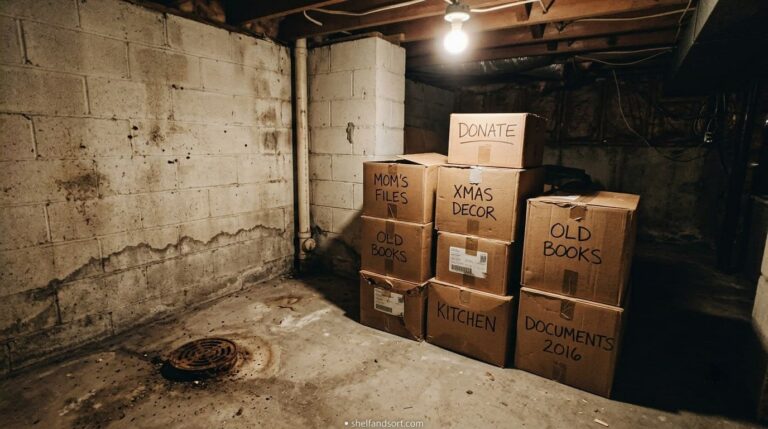
6 Areas That Make the Biggest Difference in a 30-Minute Clean (Shelf and Sort Guide)
You do not need a full afternoon to make a home look and feel clean. Six areas do most of the work in 30 minutes: clutter on floors and counters, every countertop, the bathroom, high-touch surfaces, the floors people see, and the furnace filter. Here is the minute budget for each, plus what to skip.
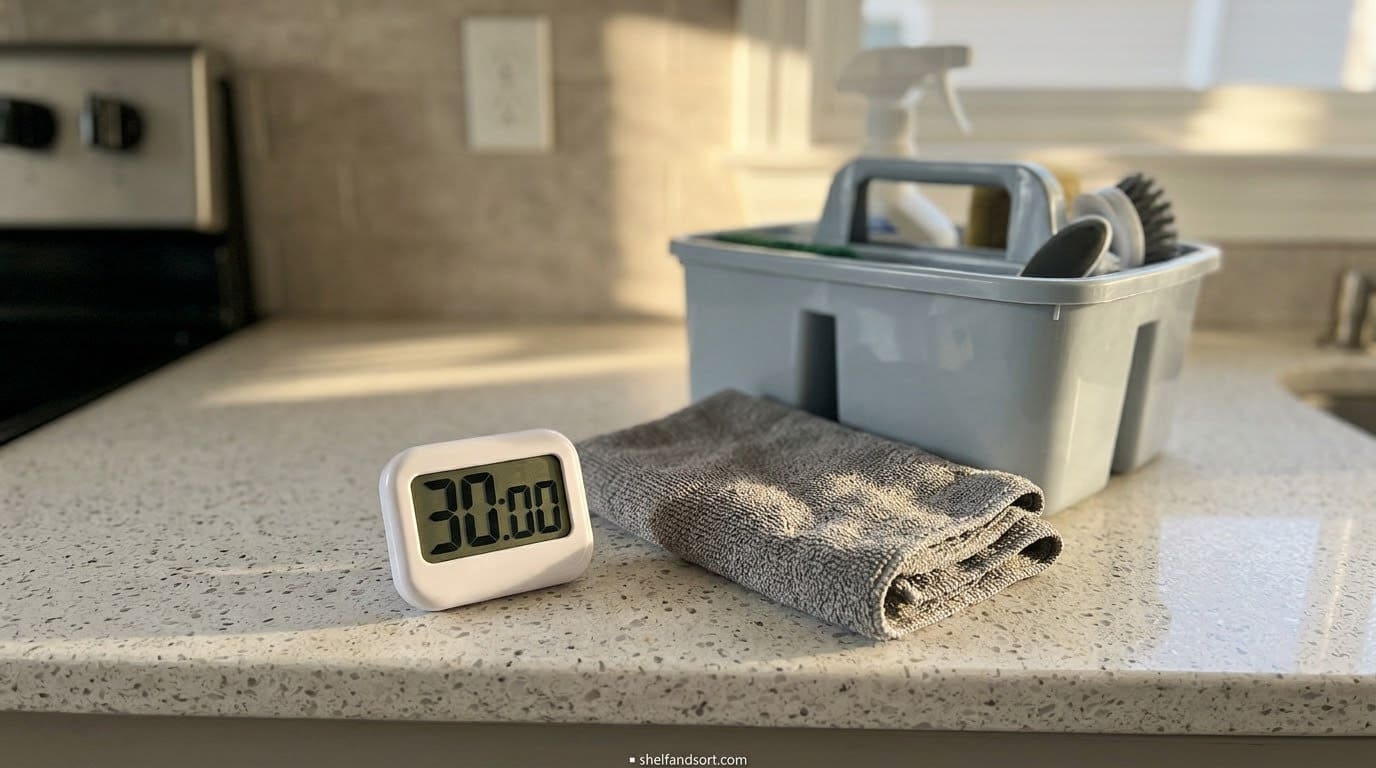
The biggest difference in a 30-minute clean comes from six areas, done lightly, not one room done perfectly. Professional cleaners Ashley Bender of AMK Cleaning Services and Anita Hodzic of BA House Cleaning both say the goal is a home that feels reset, even if nothing is deep cleaned. The six areas are clutter on floors and flat surfaces (5 minutes), every countertop in one pass (6 minutes), the bathroom’s short list (6 minutes), high-touch surfaces like light switches and door handles (3 minutes), the floors people actually see (7 minutes), and the furnace filter (1 minute). That adds up to 28 minutes and leaves 2 for surprises. Skip grout, vanity reorganizing, and baseboards. They eat the clock and change almost nothing you notice from the doorway.
What does “biggest difference” actually mean?
Picture 4:30 on a Friday. Your sister texts that she is stopping by at 5:00, and the house looks like it survived a week. You have 30 minutes, not 3 hours.
Most people in that spot pick one room and scrub it hard. Then the rest of the house still looks messy, and the whole effort feels wasted.
Pro cleaners do the opposite. Bender and Hodzic, in a list of the areas pros hit first when time is short, both say to lightly clean several areas instead of deep cleaning one. A house reads as clean or dirty in one glance, so you spread your effort wide.
I use two questions to rank any job on a short clock. Does it change how the room looks in a glance? Does it change what your hands touch every day?
If a job answers yes to either one, it makes the list. If it answers no to both, it waits for a real deep clean. Grout is a good example, because nobody sees it from the doorway and nobody touches it on purpose.
The furnace filter is the one exception. You can’t see it and you don’t touch it, but it takes about a minute and it affects the air in every room. We’ll get to that.
The 30-minute plan at a glance
Here is the whole plan on one screen. The order matters, and the reason is simple. Clutter comes off first so you can wipe surfaces and vacuum floors without moving things twice.
| Order | Area | Minutes | Passes the test because |
|---|---|---|---|
| 1 | Clutter on floors and flat surfaces | 5 | Changes the whole room at a glance |
| 2 | All countertops, kitchen and bathrooms | 6 | Large, visible, and food-adjacent |
| 3 | The bathroom’s short list | 6 | Shared, humid, and judged by guests |
| 4 | High-touch surfaces | 3 | Hands hit them dozens of times a day |
| 5 | Floors people actually see | 7 | Floors set the “clean” impression |
| 6 | Furnace filter | 1 | Affects the air in every room |
| Buffer | 2 | Something always runs long |
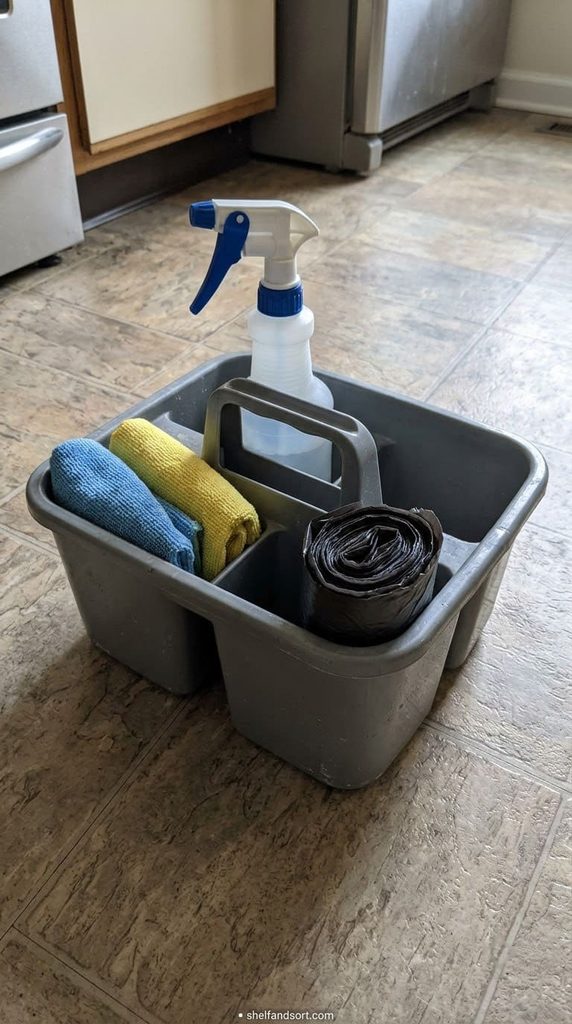
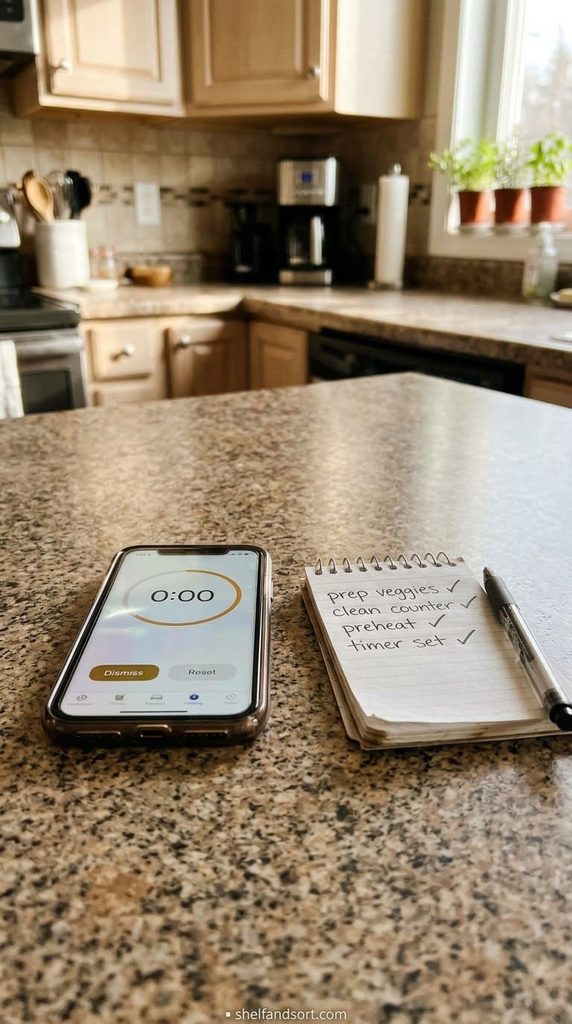
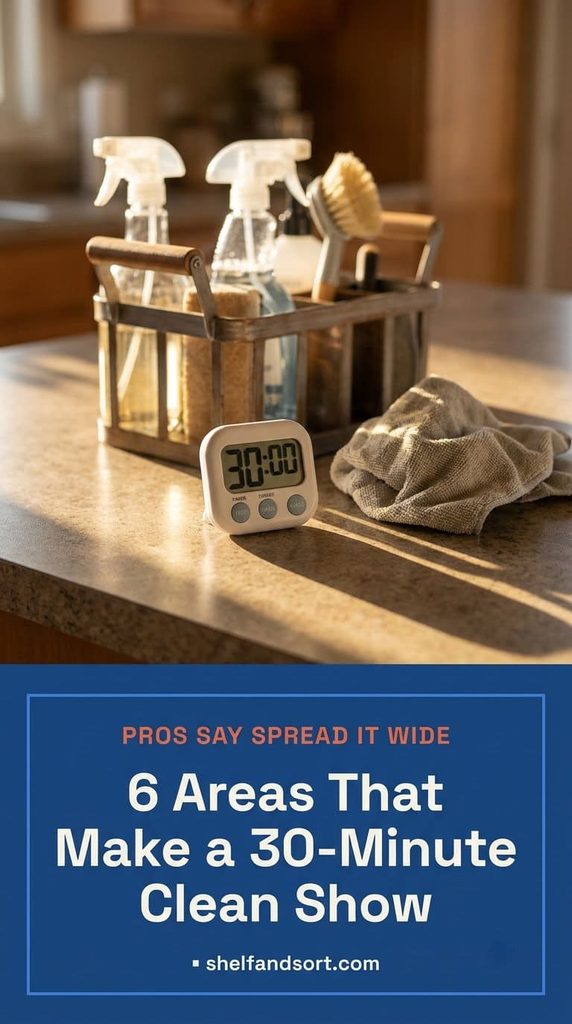
Before you start, do two things. Fill a caddy with one spray bottle, two microfiber cloths, and a small trash bag, so you never walk back for supplies. Then set a phone timer for 30 minutes and put it where you can see it.
A caddy sounds fussy, but the trips add up. Walking back to the kitchen for a cloth three times can cost you 2 or 3 minutes, which is more than the furnace filter takes.
1. Clear the floor and the flat surfaces (5 minutes)
This is the highest-impact job on the list, and it isn’t cleaning at all. It’s a pickup.
Sabrina Jones, owner of Maids of Movher, describes the pickup a cleaning crew wants before they start: clothes, toys, and shoes off the floor, cords out of walkways, counters cleared, and loose papers in one stack. She puts a full version at 10 to 15 minutes. On a 30-minute clock, you get 5.
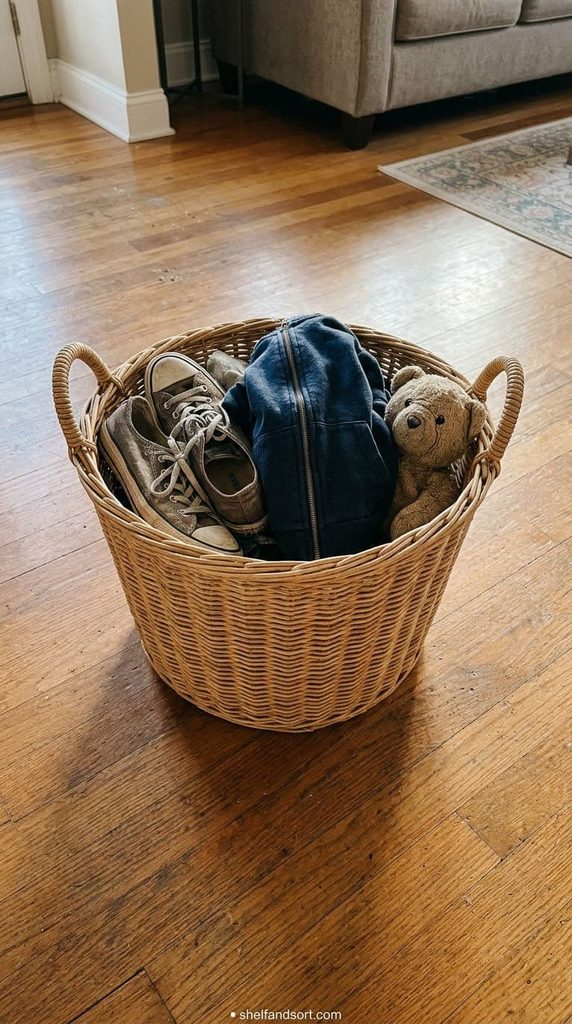
Carry one laundry basket and walk a single loop through the main rooms. Toss everything that lives somewhere else into the basket, then set the basket by the stairs or in a closet. Do not stop to put things away room by room.
Common mistake: putting each item away as you find it. You walk to the bedroom with one sock, back to the kitchen with one mug, and burn 5 minutes on trips instead of results.
Short on time: if you only have 2 minutes, clear the floor of the room people will see first. Shoes, bags, and toys are what make a room look chaotic.

This is the caddy from the setup step. One handle carries the spray bottle, cloths, and trash bag from room to room, so you never lose minutes walking back for supplies.
Shop NowThis post contains affiliate links. We may earn a commission on qualifying purchases at no extra cost to you.
Variant for a family with kids: hand each kid a small bin and a 2-minute race. They collect their own things, and you keep your 5 minutes for the counters.
Bookmark tip: keep the basket out of sight but not out of mind. Empty it after the timer stops, not during, or the pickup quietly turns into a 40-minute tidy.
2. Wipe every countertop in one pass (6 minutes)
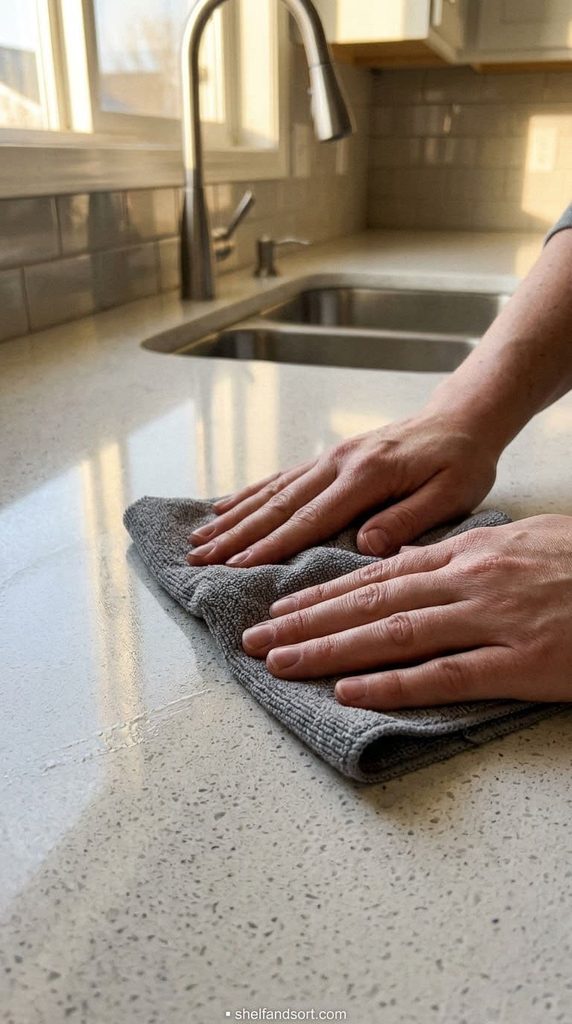
Anita Hodzic’s advice here is a time saver. Wipe all the countertops in one task instead of switching between jobs, starting in the kitchen and moving to every bathroom and powder room.
Switching tasks costs more than the wiping does. You pick up the cloth once, and you finish every flat surface before you put it down.
Spray the cloth, not the counter. Jessica Gonzalez, professional cleaner and COO of Sparkly Maid San Antonio, gives that exact rule in her list of overlooked weekly tasks: spray the cloth, wipe, and move on. It keeps cleaner off the wall and out of the sink gap, and it dries faster.
Common mistake: wiping counters with dishes still stacked on them. Hodzic’s plan assumes the dishes are already done, so load the dishwasher or stack the plates in the sink first. Otherwise you wipe around them and leave a ring.
Short on time: wipe the kitchen counter nearest the stove and the bathroom counter by the sink. Those two get the most use.
Variant for renters or small kitchens: if you have only 3 feet of counter, use the extra time on the sink faucet and handle. A shiny faucet makes a small kitchen look much cleaner.
Bookmark tip: work in a straight line, left to right. A random path means you miss a strip near the toaster, and you notice it right when your guest sits down.
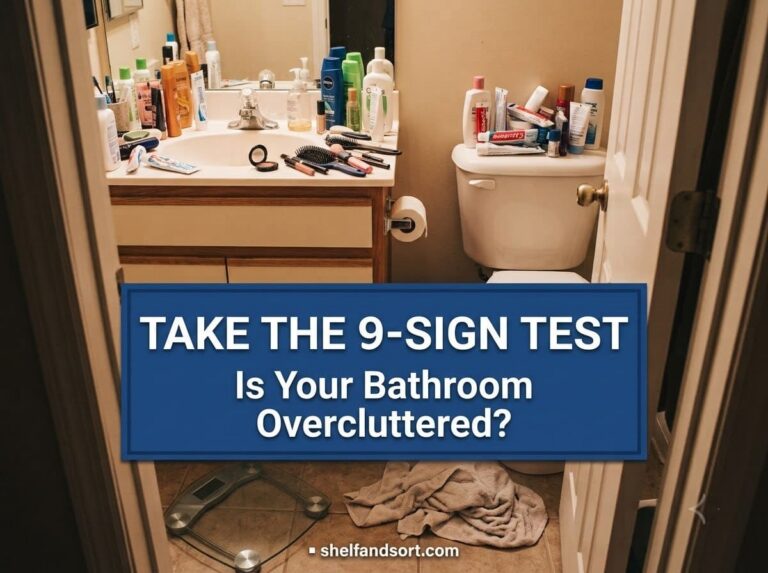
3. Give the bathroom its short list (6 minutes)
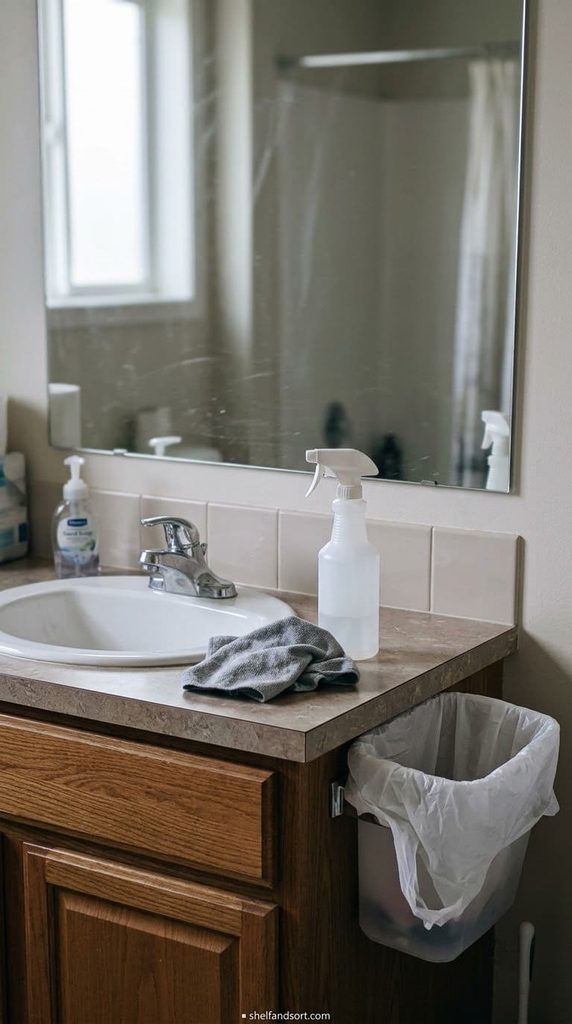
If you had to choose only one room for your 30 minutes, choose the bathroom. That’s Ashley Bender’s pick, and her short list is specific: empty the garbage, disinfect the countertop, and clean the toilet.
She also says what to leave alone. Skip grout scrubbing and skip reorganizing the vanity. Both feel productive and both can eat the whole half hour.
Here is a practical order for 6 minutes. Pull the trash bag first, then spray the toilet and let it sit while you wipe the counter, faucet, and mirror. Then wipe the toilet last, lid, seat, and rim.
Common mistake: wiping the toilet before the sink with the same cloth. You just carried toilet germs onto the surface you touch when you brush your teeth. Use a separate cloth for the toilet, and toss it in the wash afterward.
Short on time: empty the trash, wipe the sink, and shine the mirror. That’s 2 minutes, and it covers what guests see.
Variant for a shared bathroom: if four people use one bathroom, do the toilet and sink twice as often as the rest of the plan. A single bathroom picks up mess faster than a house with two.
Bookmark tip: keep a cheap color-coded cloth just for the toilet, like red or gray. You will never grab the wrong one, and you can skip the thinking part.
4. Wipe the high-touch surfaces (3 minutes)
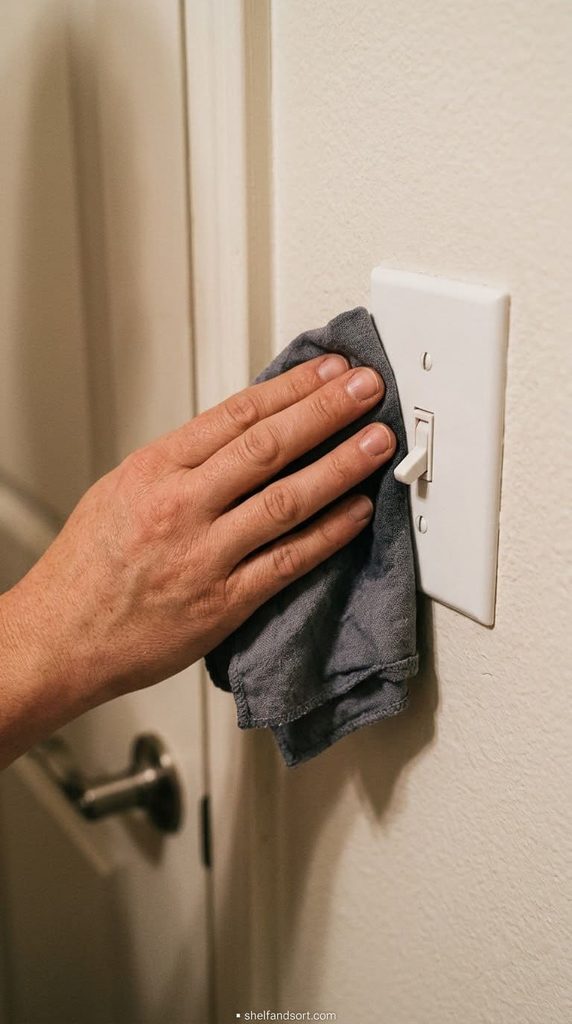
Light switches, door handles, cabinet pulls, appliance handles, and remotes get touched all day. They also get skipped on almost every routine, because wiping one takes seconds and never feels like a real chore.
Bender lists door handles and light switches in bathrooms and main entry points as a priority. The CDC’s guidance on when and how to clean your home names light switches, doorknobs, and countertops as the surfaces to clean regularly, and especially after visitors.
Walk a loop and wipe as you go: the front door handle, the fridge handle, the switches in the kitchen and bathroom, and the remote. Gonzalez puts the weekly total at about 5 minutes. You can do it in 3 if you skip the rooms nobody used.
Common mistake: spraying disinfectant and wiping it right away. The CDC says a disinfectant must stay wet on the surface for its contact time, and the label tells you how long. Cleaning first with soap and water removes the dirt that blocks it.
Short on time: hit the front door handle, the bathroom switch, and the fridge handle. That’s about 45 seconds.
Variant for a home with sick family members: wipe these more often than once a week. The CDC suggests more frequent cleaning in households with young children or anyone at higher risk.
Bookmark tip: wipe the remote and your phone case while the cloth is damp. They live in your hands, and they almost never get cleaned.
5. Vacuum the floors people actually see (7 minutes)
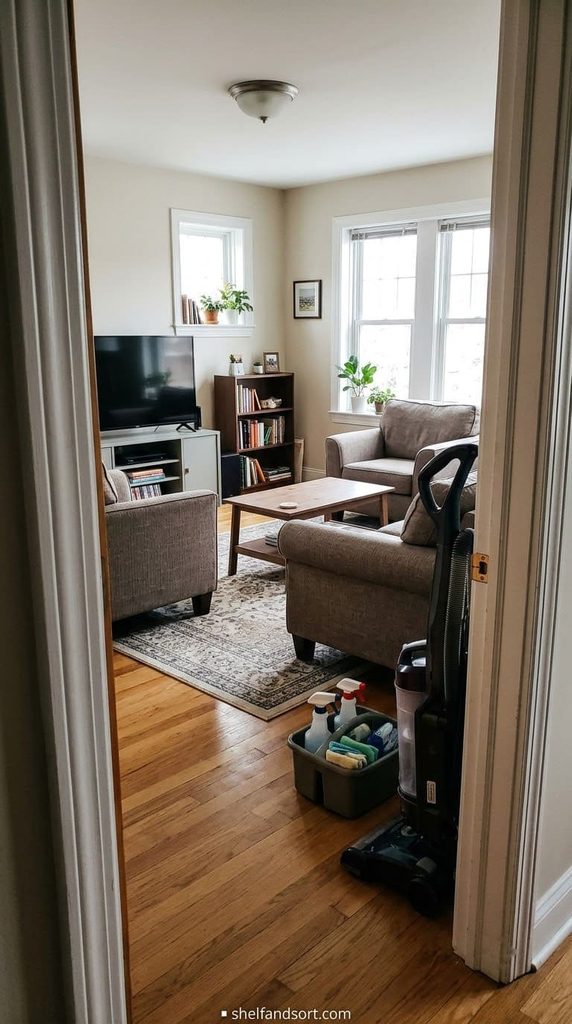
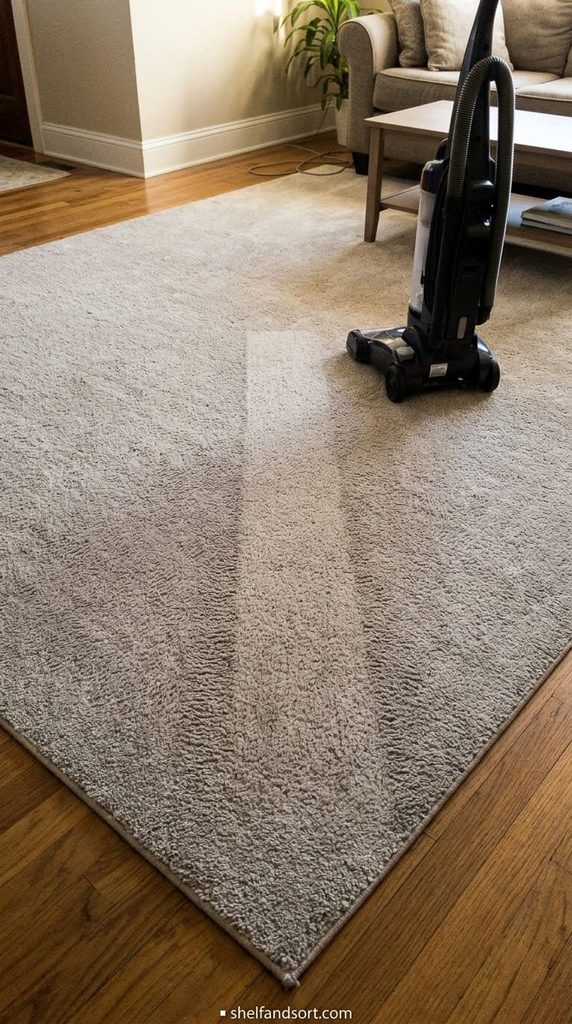
Hodzic says vacuuming will make the house look significantly better, and she gives the steps: pick up the floor items, straighten the area rugs, and vacuum the living room.
The floor is the biggest surface in any room. If it’s gritty and crumby, the room reads as dirty no matter how clean the counters are.
Use your 7 minutes on the main path only. Start at the far end of the living room, work toward the door, and run the vacuum over the rug fringe too. Then do the kitchen floor near the sink and stove, where crumbs land.
Common mistake: vacuuming before the pickup is done. You steer around shoes and toys, miss the strips beside them, and end up vacuuming twice.
Short on time: vacuum only the entry path and the space in front of the couch. That’s about 2 minutes in most homes.
Variant for pet owners: vacuum last in the whole plan, and empty the canister afterward. Pet hair blows around while you wipe, so you want the floor to be the final step.
Bookmark tip: straighten the rug before you vacuum. A rug with a curled corner looks messy even when it’s clean, and it’s a 5-second fix.
6. Change the furnace filter (1 minute)
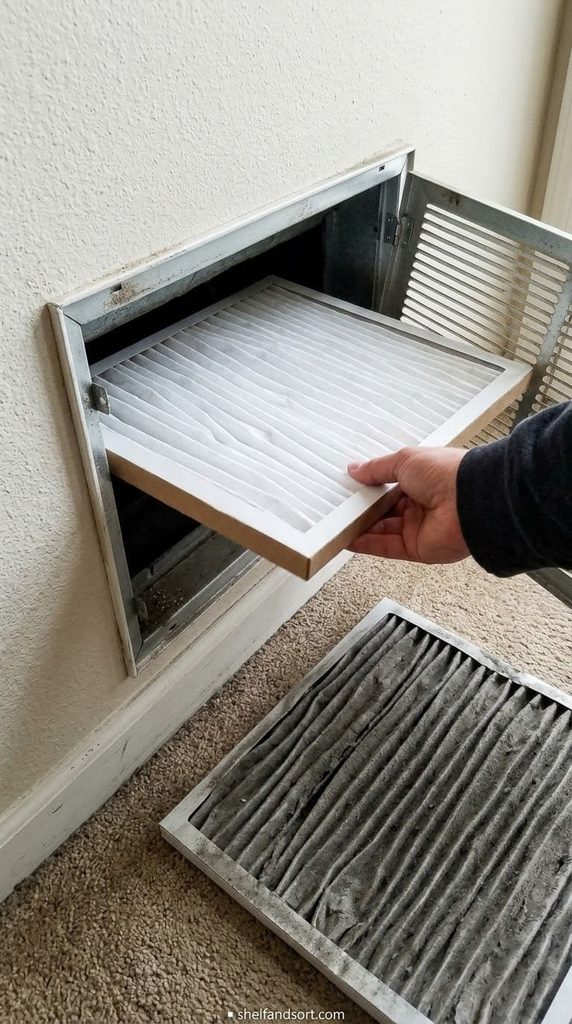
This one surprises people. Bender includes it in her short list because it takes about 60 seconds or less.
A clogged filter blocks airflow, and dust builds up in every room instead of in the filter. The U.S. Department of Energy says cleaning or replacing a dirty air conditioner filter can lower energy use by 5 to 15 percent.
I’d rather not guess at your schedule. Filter labels often say to change them about every 3 months, but a house with pets or allergies can need it sooner.
When in doubt, hold the filter up to a window. If you can’t see light through it, swap it.
Common mistake: buying the wrong size. The size is printed on the frame of the old filter, so photograph it before you shop.
Short on time: just check the filter and note the size. That’s 20 seconds.
Variant for renters: ask the landlord who is responsible for replacing it, and write the size on the furnace door in marker. Many leases leave it to the tenant.
Bookmark tip: order two filters at once, as Bender suggests. When you swap one, the spare is ready for next time, and you never skip the job because you ran out.
What to skip in a 30-minute clean
The list of things not to do matters as much as the list of things to do. These jobs feel productive, but they’re the ones that eat your clock.
Skip these:
- Grout scrubbing
- Reorganizing the vanity or a closet
- Baseboards and window tracks
- Inside the fridge and oven
- Laundry folding beyond one load
Each of those is a real job. It just belongs in a deep clean, not a 30-minute reset.
If a skipped job bugs you, write it on a sticky note and stick it to the fridge. That way it waits for its own day instead of stealing this one.
The maintenance rule: same order, stop at the timer
Run the six areas in the same order every time. Repetition removes the decisions, and decisions are what slow people down.
Stop when the timer hits 30, even if you’re mid-wipe. A hard stop keeps the routine small enough to repeat, and a routine you repeat beats a perfect one you dread.
If a week gets away from you, do only areas 1 and 5, the pickup and the floors. Those two change how the house looks the most, and you can finish the rest next time.
This is the same idea behind the Sort-or-Store Method’s Maintenance Rule. A system has to survive a bad week, not only a good one.
Frequently asked questions
What should you clean first in a 30-minute clean?
Start with a pickup of clutter on the floors and flat surfaces, about 5 minutes. It changes how the whole room looks and lets you wipe and vacuum without moving things twice. Then work through countertops, the bathroom, high-touch surfaces, floors, and the furnace filter.
Which room makes the biggest difference if you can only clean one?
The bathroom. Ashley Bender of AMK Cleaning Services says to empty the garbage, disinfect the countertop, and clean the toilet, and to skip grout and vanity reorganizing. It’s a shared, humid room that guests notice.
How long should each area take in a 30-minute clean?
The plan uses 5 minutes for clutter, 6 for countertops, 6 for the bathroom, 3 for high-touch surfaces, 7 for floors, and 1 for the furnace filter. That totals 28 minutes and leaves 2 minutes as a buffer for anything that runs long.
Is a 30-minute clean the same as a deep clean?
No. A 30-minute clean resets the surfaces you see and touch every day. A deep clean covers grout, baseboards, the inside of appliances, and other jobs that need more time.
Products We Recommend
This post contains affiliate links. We may earn a commission on qualifying purchases at no extra cost to you.
Casabella Cleaning Storage Caddy with Handle
This is the caddy from the setup step. One handle carries the spray bottle, cloths, and trash bag from room to room, so you never lose minutes walking back for supplies.
Shop Now
Amazon Basics Microfiber Cleaning Cloths, Pack of 24
With 24 cloths you can keep a separate one for the toilet and another for high-touch surfaces, which solves the cross-contamination mistake in areas 3 and 4. They are washable, so the pack lasts.
Shop now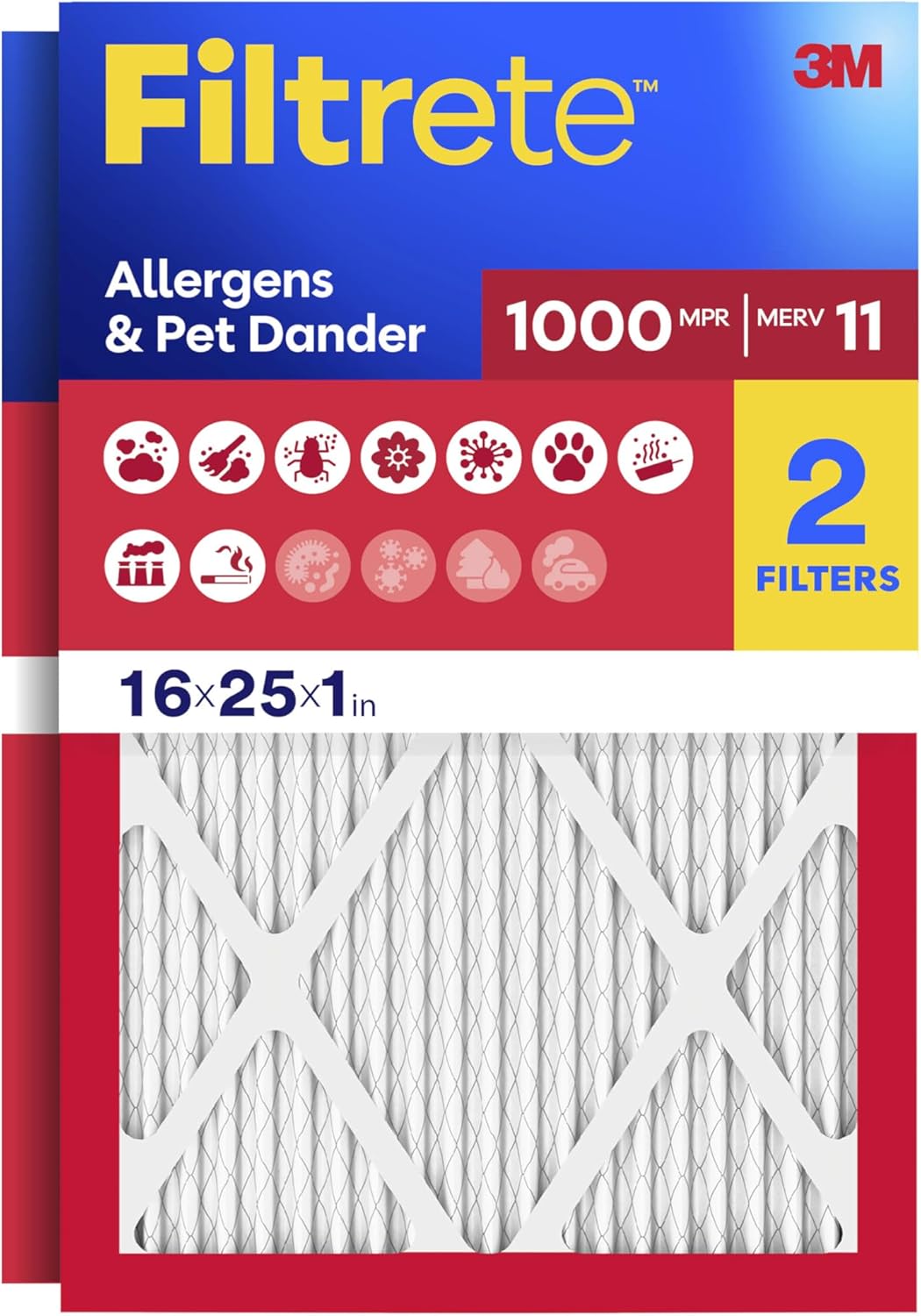
Filtrete 16x25x1 Air Filter, MERV 11, 2-Pack
A 2-pack gives you the spare filter that keeps area 6 on schedule. Check your old filter's size first, because 16x25x1 is only one common size.
Shop now